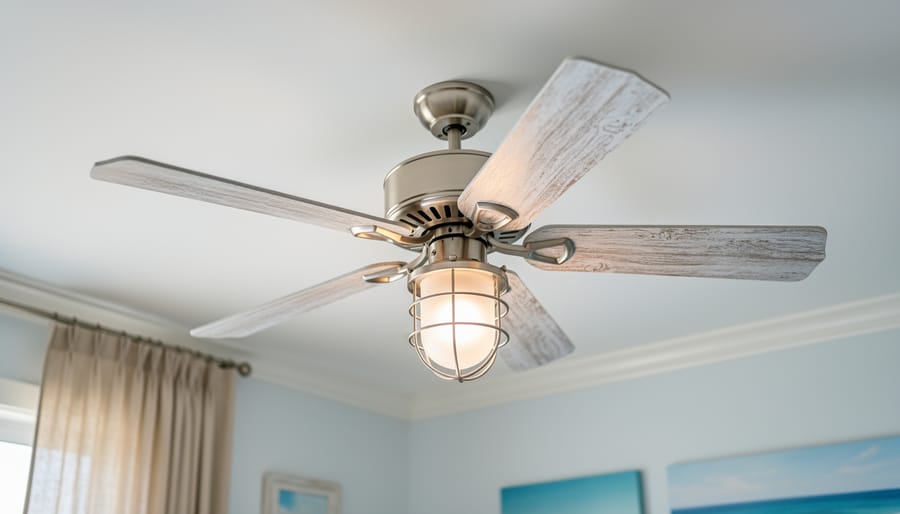
A nautical ceiling fan is one that borrows its look from the water: weathered or whitewashed wood blades, rope or rattan accents, brushed nickel, oil-rubbed bronze, or a crisp white finish, sometimes with a touch of ship’s-lantern lighting underneath. The right one, sized to your room and rated for where it hangs, moves the air and sets the whole coastal mood in one move. Think of it as the porch swing of ceiling lights, doing real work while it looks easy and relaxed.
Folks who love a seaside-inspired home usually land in one of a few camps. Some want that breezy cottage feel with soft whites and driftwood tones. Others lean toward a sturdier, sailor-ready look with dark metal and bold blade shapes. And plenty of us just want something that keeps a screened porch comfortable through a long Southern summer evening without looking like it came from a hardware aisle.
Choosing well comes down to a few simple things: how big your room is, how high your ceiling sits, whether the fan will face damp or covered outdoor air, and which finish plays nicely with what you’ve already got. Sort those out, and the style part gets the fun it deserves.
What Makes a Ceiling Fan Truly Nautical?
Walk into a room with a truly nautical ceiling fan and you can tell right away. It isn’t just a fan that happens to be blue. The whole thing feels like it belongs on a boat, or at least in a cottage with a view of one.
The biggest clue is the hardware. Nautical fans borrow from ships: brass or bronze fittings, riveted details, and light kits shaped like portholes or old ship lanterns. Some wear a bit of rope wrapped around the motor housing or the pull chain, which adds a handmade touch. Then there’s the color story. Think navy, sea-glass blue, crisp white, and weathered finishes that look like they’ve seen a few salty summers.
Here’s a quick glossary of terms you’ll run into while shopping:
- Porthole light kit
- A round, framed glass light fixture that mimics a ship’s window, usually finished in brass or bronze.
- Downrod
- The metal pole that hangs the fan down from the ceiling, available in different lengths to suit your ceiling height.
- Blade pitch
- The angle of the blades, which affects how much air the fan moves.
- Marine-inspired finish
- A color or texture, like weathered white, driftwood, or aged bronze, that echoes seaside materials.
So where does tropical come in? The two styles are cousins, but they have different personalities. Tropical fans lean on palm leaf blades, rattan, and natural wood to suggest an island getaway. Nautical fans lean on structure and tradition, with clean lines and ship-inspired details. If you picture a harbor cottage with crisp stripes, go nautical. If you dream of a breezy lanai with potted palms, tropical is your match. Plenty of homes mix both, and that’s just fine.
This kind of detail ties into the bigger picture of coastal architecture, where every fixture helps tell the story of living near the water.
Nautical Meets Tropical: Popular Design Styles to Know
Classic Seafaring Looks
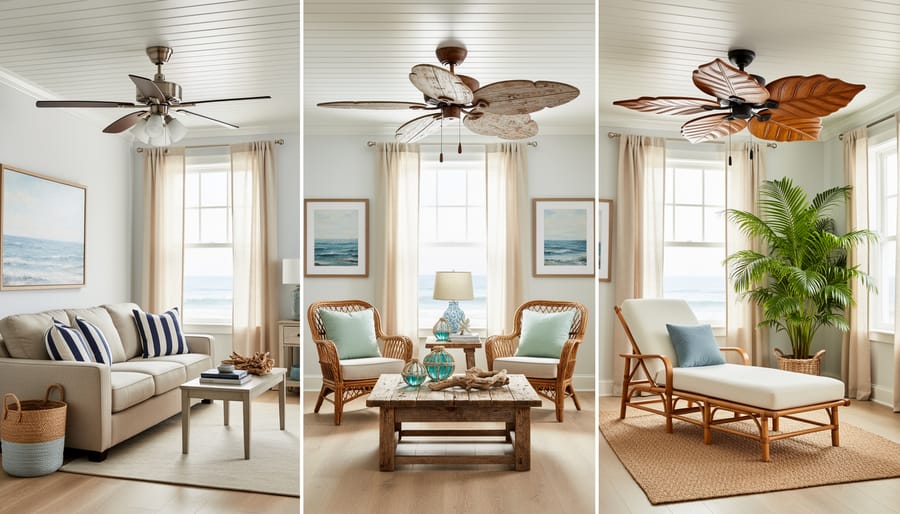
If you picture a sea captain’s cabin, you’ve got the idea behind classic seafaring fans. These lean on polished metal finishes like brass, oil-rubbed bronze, and brushed nickel, the same materials you’d find on a ship’s fittings. Brass brings a warm glow that feels right at home in a traditional cottage, while brushed nickel keeps things cooler and a touch more modern.
The light kit is where the personality really shows. Look for a ship-wheel motif, a hurricane lantern shade, or a clear glass globe that echoes a lighthouse lamp. They give the fan a real focal point without shouting about it.
Blades usually stay simple, often in crisp white, soft navy, or a warm wood tone. That navy-and-white pairing is a coastal favorite for good reason: it’s clean, calming, and plays nicely with striped pillows, linen curtains, and whitewashed trim.
These fans suit traditional beach homes, cozy cottages, and any room where you want a timeless, tidy look that never feels trendy.
Palm Leaf and Island-Inspired Blades
If you love the idea of a nautical fan but want something a little softer and more tropical, palm leaf blades are worth a look. These carved blades are shaped like real palm or banana leaves, with gentle ridges and tapered tips that make the whole fan look like it grew right out of the ceiling. Spinning slowly, they give a room that lazy, island-resort feel without much effort at all.
Natural wood tones do a lot of the heavy lifting here. Think warm walnut, honey oak, and sun-bleached teak, finishes that sit comfortably next to navy stripes and rope-wrapped lamps. Some fans add rattan or wicker touches to the light kit or the blade arms, which brings in a woven, handmade quality that feels right at home on a porch or in a sunroom.
The nice part is how well this style plays with seafaring decor. A palm leaf fan over a room with brass hardware, white slipcovers, and a few weathered oars on the wall looks collected rather than themed, like a house that’s been enjoyed for years.
Relaxed Beach House and Weathered Finishes
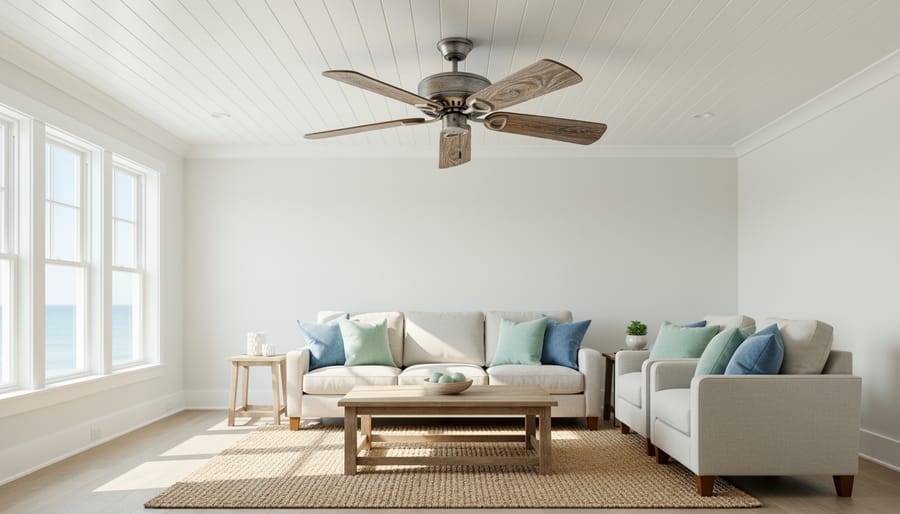
Not every nautical fan needs to look like it just sailed in from a ship’s deck. If your style leans more beach house than yacht club, weathered finishes are where you’ll feel right at home. Think whitewashed wood, soft driftwood grays, and blades that look like they’ve spent a few good summers in the sun.
These finishes have a lived-in charm that fits a screened porch or sunroom beautifully. A pale, sun-faded blade pairs nicely with painted beadboard, wicker chairs, and linen cushions, and it never competes with the view outside. In a cottage-style bedroom, the same soft tones keep the room feeling airy and restful, the kind of space where a slow afternoon nap comes easy.
One thing to keep in mind is that a worn look is a design choice, not a sign of poor quality. Many of these finishes are applied on purpose, so the blades keep their gentle character year after year. Pick a tone that echoes your floors or furniture, and the fan will blend right in.
Choosing the Right Fan for Your Room
Indoor vs. Covered Porch Ratings
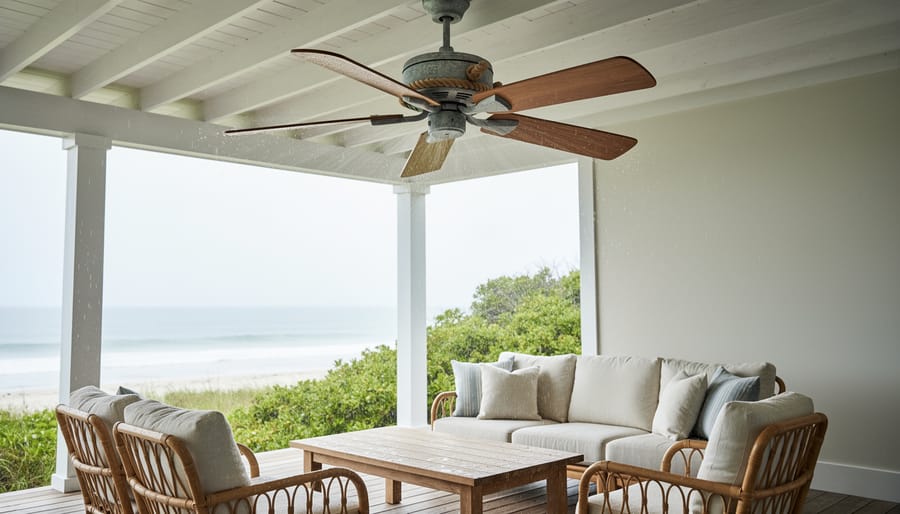
Here’s the thing about salt air: it creeps in further than most folks expect. A fan on a breezy porch or even a sunroom near the water faces moisture that a standard indoor fan just wasn’t built to handle. That’s why the rating on the box deserves a look before you fall for a finish.
A damp-rated fan handles humidity and light moisture, so it suits covered porches, lanais, and bathrooms where rain can’t blow in. A wet-rated fan is made to take direct splashes and driving rain, which makes it the safer pick for open or semi-open spaces near the coast. An indoor-only fan belongs in dry, climate-controlled rooms.
| Rating | Where It Works | Moisture It Handles |
|---|---|---|
| Indoor (dry) | Bedrooms, living rooms | Normal household humidity |
| Damp-rated | Covered porches, lanais, baths | Humidity and light moisture |
| Wet-rated | Open porches, exposed patios | Direct rain and splashes |
Checking the rating now saves you rust and warped blades later, and it pairs nicely with good coastal porch care habits.
Styling Your Nautical Fan With the Rest of the Room
A fan hanging in the middle of the ceiling is hard to ignore, so give it a reason to belong. Start with the hardware you already have. If your cabinet pulls, curtain rods, and lamp bases lean toward brushed nickel, choose a fan in that same finish. Oil-rubbed bronze or brass works the same way. When the metals match, the fan reads as part of the plan rather than something added at the last minute.
Next, let the blades do some quiet echoing. Pull a tone from the blades, whether it’s a soft driftwood gray, warm natural wood, or crisp white, and repeat it somewhere at eye level. A weathered side table, a jute rug, or the frame on a favorite piece of art will do nicely. That little repetition ties the ceiling to the rest of the room, and folks may never notice why it feels so put together.
Textiles help too. Navy and white stripes on a pillow or a throw can nod to the fan’s ship-inspired hardware without shouting about it. Keep the pattern light, and let linen, cotton, and woven textures carry most of the softness. Here’s the secret to avoiding a themed look: pick one or two nautical touches and let natural materials fill in around them. A rope-wrapped lantern is plenty. You don’t need anchors on every shelf.
The same idea carries through the whole house. If you’re already thinking about Southern summer decor, a nautical fan slips right in alongside breezy fabrics, fresh greenery, and sun-washed colors. And if you’re dreaming up a coastal bathroom to match, these beach bathroom ideas show how to keep the same relaxed spirit from room to room.
Finally, let the room breathe. Leave a little empty wall, add a plant or two, and trust the fan to set the mood. The goal is a space that feels like a welcoming porch, not a souvenir shop.
Keeping Your Fan Looking Shipshape
A nautical fan earns its keep by turning all day, so a little care goes a long way. Dust is the biggest culprit. It settles on the blades and gets sticky in humid air, which can dull a weathered finish faster than you’d think. Coastal homes add salt and moisture to the mix, so staying ahead of buildup keeps your brass, bronze, and driftwood tones looking lovely.
Here’s an easy routine to run through each season:
- Switch the fan off and wait for the blades to stop completely before you touch anything.
- Wipe each blade with a soft microfiber cloth or a clean pillowcase slipped over the blade, so the dust gets trapped instead of drifting onto your floors.
- Clean the finish with a barely damp cloth and a drop of mild dish soap, then dry it right away. Skip harsh cleaners, which can strip whitewashed or sun-faded looks.
- Check the mounting hardware by gently tightening the blade screws, blade arm screws, and canopy. Fans work a little loose over time, and a wobble is usually a sign.
- Look over the light kit, rope accents, and any wicker or rattan details for dampness or fraying.
- Flip the direction switch: counterclockwise in warm months for a cooling breeze, clockwise at low speed in cooler months to nudge warm air back down.
If you live near the water, pay extra attention to metal parts. Salt air can leave a chalky film or tiny spots of corrosion on exposed screws and finials, so wipe them down more often than the rest of the fan. Catch a spot early and a quick cleaning usually handles it.
A fan that wobbles, hums, or clicks is asking for attention, and most of the time a snug screw is all it takes. Give it a few minutes each season, and it’ll keep stirring up that easy island breeze for years.
A ceiling fan might seem like a small thing, but it carries a lot of weight. It moves the air, softens the heat, and quietly sets the mood for the whole room. Whether you lean toward crisp navy and brass, sun-bleached driftwood, or carved palm leaf blades, the right nautical or tropical fan gives you comfort and coastal character in one easy upgrade.
So take your time and trust your eye. Check the rating that suits your space, match the finish to the hardware you already love, and pick the style that feels like home to you. Then flip the switch, pour a glass of sweet tea, and settle in. There’s nothing quite like a slow, steady breeze drifting down from overhead.