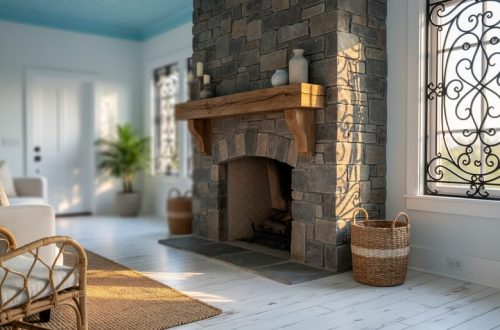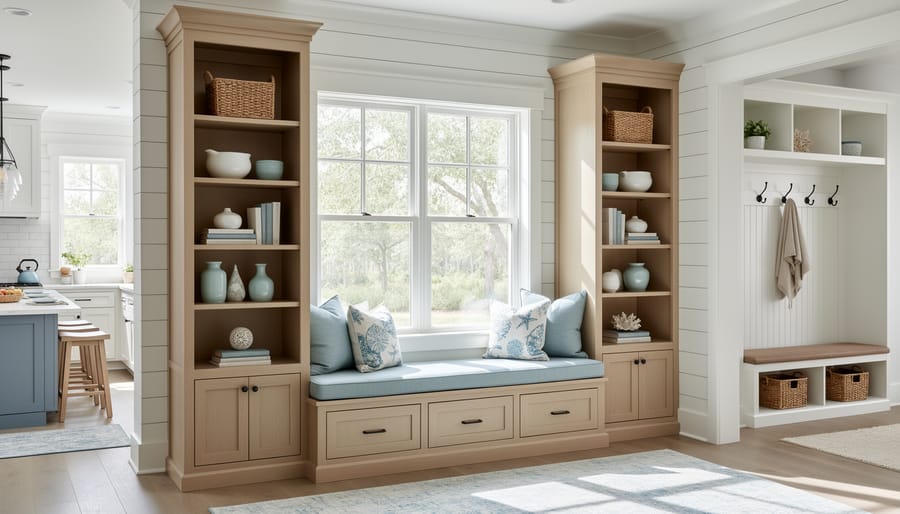
Built-in furniture transforms wasted corners, awkward alcoves, and blank walls into hardworking storage and living spaces that feel like they’ve always belonged in your home. Custom window seats cradle reading nooks with drawers tucked beneath cushions, floor-to-ceiling bookcases frame fireplaces with architectural grace, and kitchen banquettes create cozy breakfast spots while hiding seasonal items below hinged seats.
Southern homes especially benefit from built-ins that honor both heritage and practicality. Think shiplap-backed shelving in coastal cottages, mudroom benches designed for sandy flip-flops and beach bags, or pantry systems that organize mason jars and cast iron with equal reverence. These permanent fixtures add substantial value to your property while solving the universal challenge of making every square foot count without cluttering your living spaces.
The beauty of built-in furniture lies in its tailored fit. Unlike freestanding pieces that leave gaps collecting dust or crowd doorways, custom installations maximize vertical space, follow your room’s exact dimensions, and create seamless transitions between architectural elements. Whether you’re working with a craftsman bungalow’s original woodwork or a modern beach house’s clean lines, built-ins adapt to your home’s character while providing storage solutions that actually match how your family lives. From breakfast room banquettes to bedroom closet systems, these permanent additions blend function with the kind of timeless appeal that makes a house feel truly rooted and complete.
Why Built-In Furniture Works Better Than Freestanding Pieces
When you’re deciding between built-in furniture and freestanding pieces, think about how you actually live in your home. Built-ins offer advantages that go beyond just looking pretty, though they certainly do that too.
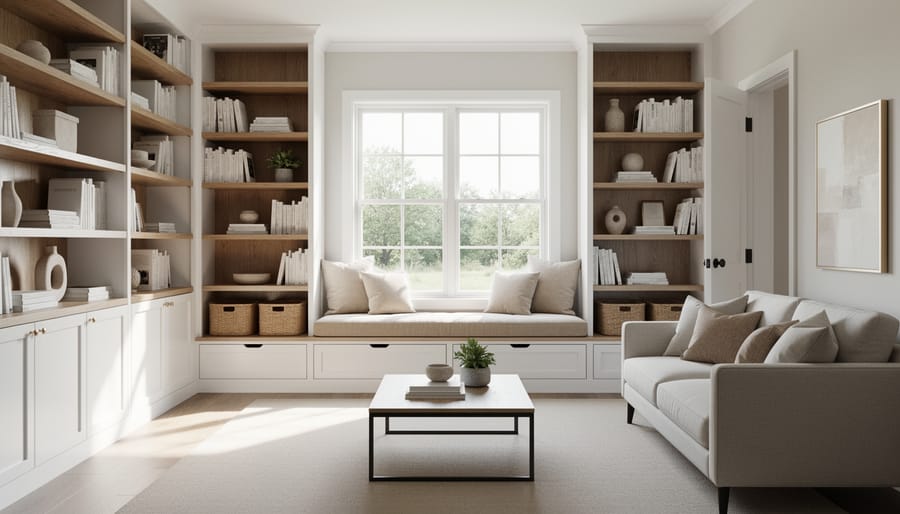
Let’s start with space efficiency, which matters whether you’re in a cozy beach cottage or a sprawling Southern farmhouse. Built-in furniture makes use of every inch available, including those awkward corners and alcoves that would otherwise collect dust bunnies. A custom window seat with storage underneath transforms wasted space into a functional reading nook while hiding away seasonal linens. Floor-to-ceiling bookcases eliminate that dead space between furniture and ceiling that freestanding units leave behind.
The financial benefits deserve attention too. Quality built-ins typically increase your home’s value because they’re considered permanent improvements rather than personal property. Appraisers and potential buyers recognize custom millwork as a premium feature, particularly in Southern homes where architectural detail has always been valued. You’re not just decorating; you’re investing.
Now, many folks worry that built-in means being stuck with one look forever. That’s simply not true anymore. While the structure stays put, you can change hardware, paint colors, and styling to refresh the look as trends evolve. Think of built-ins as the bones of good design, much like the architectural details in historic Charleston or Savannah homes that have remained beautiful through changing decorating trends.
The seamless aesthetic built-ins provide can’t be replicated with store-bought furniture. They become part of your home’s architecture rather than looking like afterthoughts. This integrated approach especially complements Southern and coastal styles, where clean lines and intentional design create that effortless, gracious living feel we all love.
Built-ins also eliminate the visual clutter of multiple furniture pieces competing for attention. Instead of seeing gaps, different heights, and varying styles, you get one cohesive look that makes rooms feel larger and more thoughtfully designed.
Where Built-Ins Make the Biggest Impact in Your Home
Living Rooms and Den Spaces
Your living room deserves furniture that works as hard as it looks good, and built-ins deliver on both fronts beautifully. Custom entertainment centers have come a long way from bulky wall units of decades past. Today’s designs can house your television while providing open shelving for books, family photos, and those cherished seashells collected on beach walks. Consider incorporating shiplap backing or beadboard details for an authentic coastal touch that never goes out of style.
Window seats might just be the most versatile built-in you can add to a den or living space. They create cozy reading nooks, provide hidden storage underneath, and turn awkward architectural features into charming focal points. Top them with cushions in soft blues, sandy neutrals, or classic linen whites to capture that breezy coastal aesthetic we all love down here.
Floor-to-ceiling bookcases bring warmth and character to any room, especially when you style them with intention. Mix books with decorative objects, incorporate natural elements like driftwood or coral, and leave some breathing room rather than cramming every shelf full. Paint them in warm whites or soft grays to keep the space feeling light and airy, or choose a deeper hue like navy for dramatic impact that still feels right at home in Southern interiors.
Kitchen and Dining Areas
The kitchen truly is the heart of any Southern home, where families gather and memories are made over good food and even better conversation. Built-in furniture transforms these spaces into welcoming havens that work as hard as they charm.
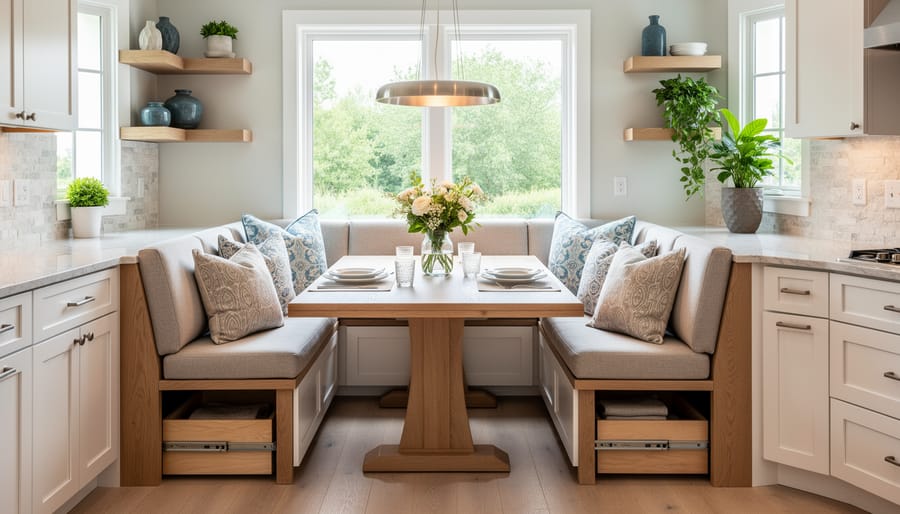
Banquette seating creates an intimate breakfast nook that invites folks to linger over morning coffee or evening dessert. These cozy built-in benches maximize corner spaces while offering hidden storage beneath cushioned seats—perfect for tucking away serving platters, seasonal linens, or the kids’ art supplies. Pair your banquette with a rustic farmhouse table, and you’ve got yourself a gathering spot that feels both casual and special.
Custom pantry systems represent built-in furniture at its most practical. Floor-to-ceiling cabinetry with pull-out drawers, spice racks, and dedicated spaces for small appliances keeps everything organized and within reach. When designed to match your existing cabinetry, these solutions disappear into the kitchen’s overall aesthetic while dramatically improving functionality.
Built-in hutches and buffets offer display space for your grandmother’s china or collected coastal treasures while providing essential serving surfaces during gatherings. These pieces bridge the gap between kitchen and dining areas, creating a seamless flow that makes entertaining feel effortless—exactly what Southern hospitality is all about.
Bedrooms and Closets
Bedrooms deserve to feel like a peaceful retreat, and built-in furniture can help you get there while tackling those tricky storage situations that so many of our Southern homes present. Think about tall ceilings, quirky wall angles, or those charming but narrow closets that weren’t designed for modern wardrobes.
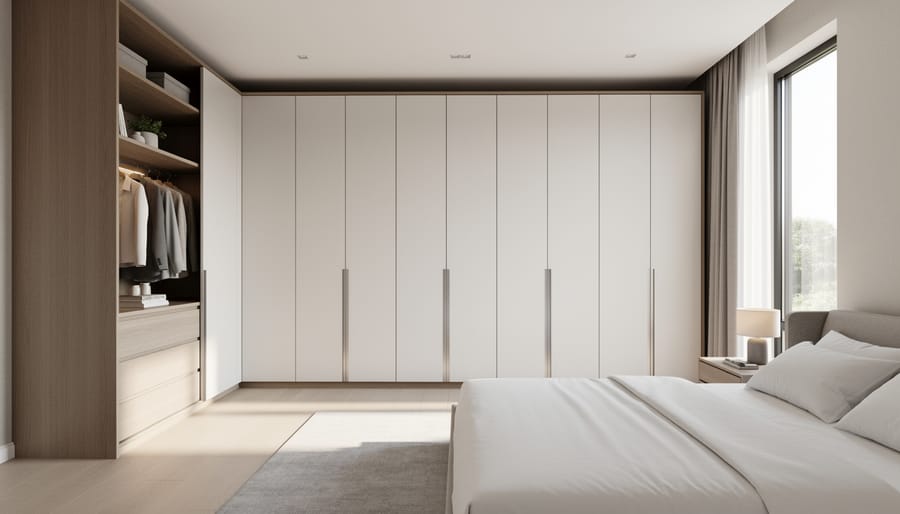
Built-in wardrobes are game-changers, especially in older homes where closet space runs shallow. You can customize them to fit right up to the ceiling, making use of every precious inch. Add drawers for folded items, pull-out hampers, and specialized shoe storage to create a system that actually works for your lifestyle. Choose wood finishes that complement your existing trim, or paint them in soft coastal hues like seafoam or warm white.
Headboards with built-in storage offer another smart solution. Incorporate shelving for books and reading lamps, or add concealed compartments for keeping remotes and charging cables out of sight. This approach works beautifully in guest rooms where you want to provide convenience without cluttering nightstands.
Window seats with lift-up storage underneath bring that storybook charm while hiding extra linens, seasonal clothing, or children’s toys. Position cushions in cheerful patterns or classic ticking stripes, and you’ve created a cozy reading nook that pulls double duty. These thoughtful additions transform bedrooms into organized, inviting spaces that celebrate both function and Southern hospitality.
Mudrooms and Entryways
There’s something wonderful about coming home to a space that actually works with your life instead of against it. Down here, that means creating mudrooms and entryways that can handle sandy flip-flops one day and rain-soaked boots the next.
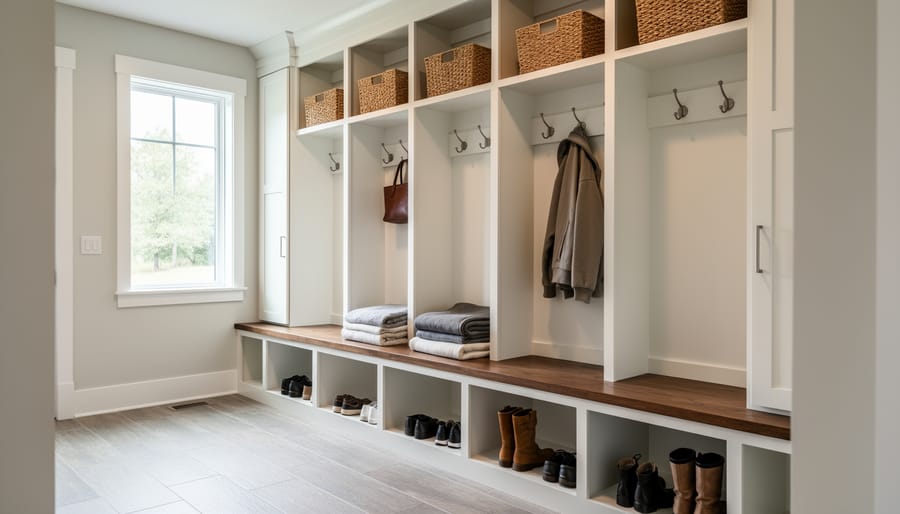
Custom built-in cubbies are perfect for keeping each family member’s essentials organized without taking up precious floor space. Add a few lower cubbies for beach bags and totes, and you’ve got a system that keeps the rest of your home clutter-free. Built-in benches serve double duty as comfortable spots for removing shoes while hiding storage underneath for seasonal items like light jackets and umbrellas.
Don’t underestimate the power of well-placed hooks, either. A sturdy built-in hook system can accommodate everything from everyday purses to those sudden raincoats we all need during afternoon summer showers. Consider adding a small shelf above for sunglasses and keys.
The best mudroom built-ins work quietly in the background, managing the constant flow of coastal living without calling attention to themselves. Think weather-resistant finishes that can handle humidity and the occasional damp towel. When designed thoughtfully, these spaces become the hardworking backbone of your home, keeping everything else running smoothly while maintaining that relaxed Southern sensibility we all cherish.
Materials That Stand the Test of Time (and Southern Humidity)
Living in the South means your built-in furniture needs to work as hard as you do, standing strong against humidity that can make even the best pieces warp, swell, or show wear faster than you can say “August afternoon.” Choosing the right materials isn’t just about looks—it’s about longevity and keeping your investment looking beautiful for years to come.
For hardwood built-ins, opt for naturally moisture-resistant species like white oak, cherry, or maple. These Southern favorites handle humidity changes with grace and can be stained to match any aesthetic, from traditional to coastal contemporary. If you’re near the coast, teak and mahogany offer exceptional resistance to moisture and salt air, though they’ll cost a bit more upfront.
Painted finishes are particularly popular in coastal homes, and for good reason. A quality paint job over properly sealed wood creates a protective barrier against humidity while offering that crisp, clean look we love in beach house design. Marine-grade or exterior paints provide extra protection in high-moisture areas like bathrooms and mudrooms. Just remember that proper preparation and priming are essential—skipping these steps is like building a house on sand.
For shelving and interior components, consider plywood over particleboard or MDF. While MDF takes paint beautifully and costs less, it doesn’t forgive moisture exposure. Quality plywood, especially Baltic birch or marine-grade options, resists swelling and maintains its shape through our humid summers.
Don’t forget the finish work. Multiple coats of polyurethane or conversion varnish create a moisture barrier that protects your investment. For painted pieces, a water-based topcoat adds durability without yellowing over time.
The bottom line? Invest in quality materials suited to our climate, and your built-ins will become heirlooms rather than renovation projects. It’s the Southern way—doing things right the first time so they last for generations.
The Real Cost of Built-In Furniture
Let me be straight with you—built-in furniture isn’t the bargain option, but it’s an investment that often pays dividends when done right.
For those of you with a DIY spirit and some carpentry skills, you might tackle a simple bookshelf project for $500 to $1,500 in materials. That floating window seat you’ve been dreaming about? Budget around $800 to $2,000 if you’re doing the labor yourself. Just remember, your time has value too, and mistakes can get costly real quick.
Professional installations naturally cost more, but you’re paying for expertise and that perfect finish. A custom built-in bookcase typically runs $2,000 to $6,000, depending on size and materials. Full wall entertainment centers can range from $3,000 to $12,000 or more. Those gorgeous mudroom cubbies with bench seating? You’re looking at $1,500 to $5,000. Kitchen banquettes with storage might set you back $3,000 to $8,000.
What affects these numbers? Material choice makes a huge difference—pine and poplar cost less than hardwoods like oak or walnut. Complexity matters too. Simple open shelving costs considerably less than pieces with drawers, doors, and intricate molding. Your location plays a role, as coastal areas often see higher labor costs.
Here’s the good news: quality built-ins typically return 50 to 80 percent of their cost in home value, and they make your space more functional immediately. To budget wisely, get multiple quotes, consider a phased approach if funds are tight, and don’t skimp on materials where it counts. That cabinet-grade plywood might cost more upfront, but it won’t sag or warp down the road.
When DIY Makes Sense and When to Call the Pros
Let’s be honest with each other—there’s a mighty big difference between installing a few floating shelves and building a custom floor-to-ceiling bookcase with intricate millwork. Knowing which projects fall within your wheelhouse and which ones deserve a professional’s touch can save you time, money, and quite a bit of frustration.
If you’re handy with basic tools and have successfully tackled projects like installing cabinets or building simple furniture, you might be ready for straightforward built-ins like basic window seats with storage or open shelving units. These projects typically involve measuring carefully, cutting lumber to size, and securing pieces to wall studs—skills many confident DIYers already possess. Start with something manageable in a less prominent space, like a mudroom or closet, before tackling that grand living room project you’ve been dreaming about.
However, some built-ins really do call for professional expertise. Complex projects involving intricate trim work, custom cabinetry with drawers and doors, or installations that require electrical work or significant structural modifications are best left to experienced craftspeople. If you’re working with expensive materials like heart pine or need your built-ins to match existing historic millwork, a skilled carpenter who understands traditional Southern craftsmanship becomes invaluable.
When searching for the right professional, ask for references and photos of completed projects, particularly those with coastal or traditional Southern aesthetics. Local craftspeople who work regularly in your area understand regional design sensibilities and building codes. Don’t hesitate to discuss your vision in detail—the best carpenters appreciate homeowners who know what they want and can collaborate to bring that vision to life beautifully and safely.
Design Mistakes That Make Built-Ins Look Awkward
Even the most beautiful built-in can fall flat if you overlook a few key design principles. Let’s talk about what can go wrong and how to keep your project looking polished.
The biggest mistake? Ignoring proportion. Built-ins that stretch floor-to-ceiling without visual breaks can feel overwhelming, while units that are too shallow look skimpy and hesitant. In Southern homes with generous room heights, consider adding crown molding or a decorative top rail to anchor tall bookcases. For coastal cottages with cozier dimensions, make sure your built-ins have enough depth—at least 12 inches for display shelves and 18-24 inches for media cabinets.
Color choices matter more than you might think. Stark white built-ins can look harsh against warm wood floors or cream walls, creating an unwelcome contrast that fights your home’s natural character. Instead, try soft whites with warm undertones, or paint your built-ins the same color as your trim for a seamless look that feels original to the house.
Another common pitfall is choosing a style that clashes with your home’s architecture. Sleek, ultra-modern built-ins rarely complement a historic Charleston single house or a traditional coastal cottage. When in doubt, lean toward classic profiles with simple lines—shaker-style doors and traditional moldings work beautifully across different Southern home styles without looking fussy.
Finally, don’t forget about lighting. Built-ins without proper illumination create dark, uninviting spaces. Adding interior cabinet lights or positioning your unit near natural light sources makes all the difference in showcasing your treasures and keeping the space feeling warm and welcoming.
There’s something truly special about a home where everything has its place—where beauty and function dance together as naturally as Spanish moss swaying in a coastal breeze. Built-in furniture and storage solutions offer that perfect harmony, transforming ordinary spaces into extraordinary ones while honoring the Southern tradition of gracious, uncluttered living.
As you walk through your own home today, take a fresh look at those awkward corners, underused nooks, and cluttered spaces that have been nagging at you. Each one represents an opportunity to create something purposeful and beautiful. Whether you’re drawn to the clean lines of contemporary built-ins or the warmth of traditional craftsmanship, custom solutions can be tailored to reflect your personal style while maximizing every precious square foot.
The journey toward a more organized, peaceful home doesn’t have to happen all at once. Start small—perhaps with a single bookshelf or window seat—and let that success inspire your next project. Remember, the goal isn’t perfection; it’s creating a space that welcomes you home and makes daily living feel effortless.
Southern living has always been about more than just aesthetics. It’s about creating homes where families gather comfortably, where guests feel instantly welcome, and where the gentle rhythm of daily life flows smoothly. Built-in furniture helps you achieve that ideal, proving that thoughtful design truly is the foundation of a well-loved home.