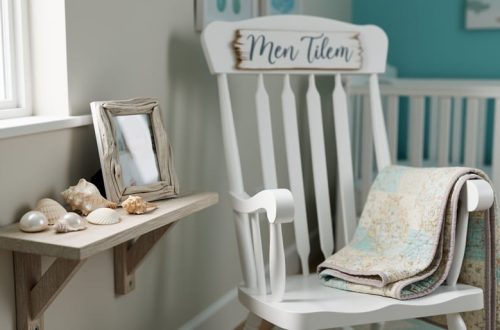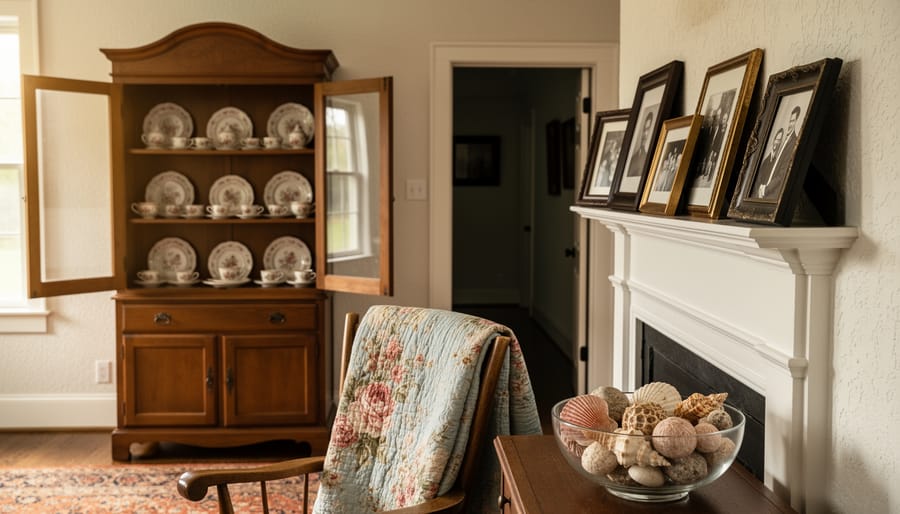
Cultural storytelling is the practice of displaying personal and family heirlooms, meaningful objects, and curated collections in your home to create a living narrative that honors heritage, memories, and the people who shaped your story. Rather than decorating with generic pieces chosen solely for their aesthetic appeal, this approach weaves together intentional layers of history, tradition, and personal meaning to transform your living spaces into authentic reflections of who you are and where you come from.
For those of us rooted in Southern traditions, cultural storytelling comes naturally. We’ve grown up surrounded by grandmother’s china displayed in open cabinets, framed photographs chronicling generations on the mantel, and collections passed down through family hands. These aren’t just decorations. They’re touchstones that connect us to our past while creating warmth and character in the present.
The beauty of cultural storytelling lies in its dual power: it creates visually rich, deeply personal interiors while preserving family legacy for future generations. A coastal cottage filled with salvaged boat cleats, vintage nautical charts, and seashells collected over decades tells a different story than a farmhouse adorned with quilts stitched by great-aunts and vintage seed catalogs. Both approaches honor the concept while remaining completely unique to the families who live there.
This guide walks you through the fundamentals of cultural storytelling in Southern home design, from identifying which pieces carry genuine narrative weight to arranging them in ways that feel organic rather than staged. You’ll learn how to balance sentimental objects with everyday function, create cohesive displays across different rooms, and build a home that tells your story without saying a word.
What Cultural Storytelling Means in Your Home
Cultural storytelling in your home means using the things you own and how you arrange them to share who you are and where you come from. It’s the practice of letting furniture, art, textiles, and even paint colors speak about your family’s journey, your regional roots, and the values you hold dear. Instead of decorating purely for aesthetics, you’re making choices that carry meaning, a grandmother’s quilt draped over a chair, a collection of lowcountry baskets on the wall, porch rockers positioned to welcome neighbors.
- Narrative design
- The intentional use of décor and spatial arrangement to tell a coherent story about identity, place, or heritage rather than following trends alone.
- Heritage décor
- Design elements, objects, colors, materials, or styles, that connect a space to cultural traditions, regional history, or family lineage.
- Intentional curation
- The practice of selecting and displaying items based on their personal or cultural significance rather than filling space or following a catalog.
- Memory keeping through objects
- Preserving and honoring stories by incorporating meaningful possessions into daily living spaces where they remain visible and useful.
Southern homes have always been natural storytelling vessels. The region’s deep connection to place, family, and tradition makes every design choice an opportunity to honor the past while creating comfort in the present. When you choose a farmhouse table because Sunday suppers matter, or hang your great-uncle’s fishing map in the hallway, you’re practicing cultural storytelling. These aren’t just decorative decisions, they’re declarations of what matters, visual reminders of roots that ground a home in something deeper than square footage and finishes.
How Cultural Storytelling Works Through Design
Cultural storytelling works through a simple but powerful principle: every object you choose and where you place it sends a message. When you position your grandmother’s quilt across the back of a reading chair rather than folding it away in a closet, you’re doing more than decorating, you’re creating a visual conversation point that invites questions and shares history. The mechanics are straightforward. Physical objects act as anchors for memory and meaning, while their arrangement creates relationships that deepen the narrative.
The process begins with selection. Southern homes that tell compelling stories don’t display everything they own. Instead, they curate pieces that carry genuine significance, whether that’s a collection of blue willow china that connects to coastal trading history or a hunting print that recalls generations of family land. Each chosen item holds a thread of the larger story you’re weaving about heritage, place, and values.
Placement transforms individual objects into narratives. A single oyster shell on a bookshelf is decorative. That same shell displayed alongside a watercolor of the marsh where you gathered it, near books about Lowcountry ecology, becomes part of a story about connection to coastal landscape. Context matters enormously. Visitors and family members read these spatial relationships intuitively, picking up on the connections you’ve created.
The interplay between beauty and meaning is where Southern cultural storytelling shines. A well-designed space doesn’t sacrifice aesthetics for authenticity. Your great-aunt’s silver julep cups can sit on a modern bar cart, creating visual interest through the contrast of old and new while sparking conversations about mint julep traditions and summer gatherings. The cups remain beautiful objects, but their presence communicates something deeper about continuity and celebration.
This visual reading happens almost unconsciously. When someone enters a room, they absorb dozens of signals, the worn patina on a farm table, the specific blue of painted shutters visible through windows, family photographs in mismatched frames that suggest accumulation over time rather than a single shopping trip. These details accumulate into an impression of who lives here and what matters to them, creating an authentic sense of place that purely decorative choices can’t match.
Elements That Tell Your Story
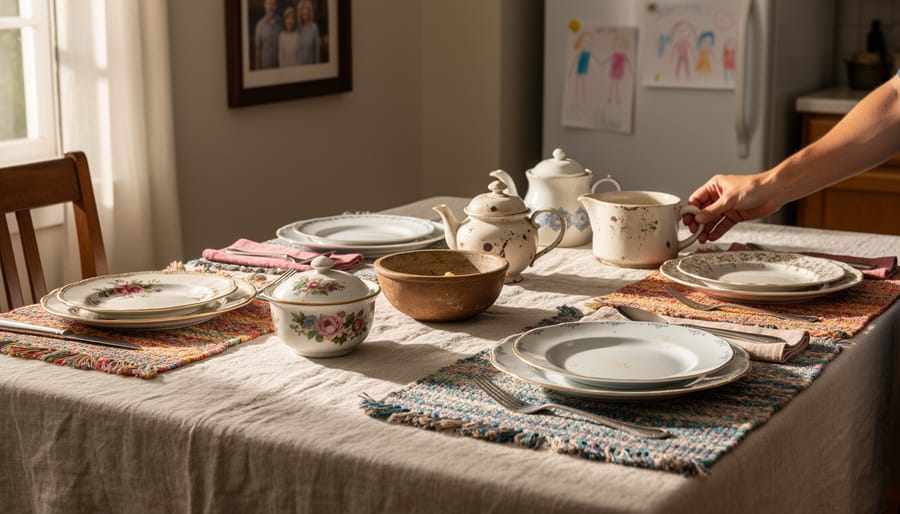
Heirlooms and Family Treasures
That mahogany sideboard holding your grandmother’s china tells a richer story than any mass-produced piece ever could. Heirlooms passed down generations carry the weight of family dinners, celebrations, and everyday rituals, transforming functional furniture into tangible memory.
Inherited pieces work as anchors in Southern homes precisely because they’ve lived other lives. The scratches on a farmhouse table mark decades of meals. Silver serving pieces bear the fingerprints of great-aunts who polished them before holidays. Even chipped transferware platters become conversation starters about Sunday suppers and the hands that once arranged fried chicken on their surfaces.
The power isn’t in perfection but in provenance. A worn quilt stitched by your great-grandmother communicates continuity better than pristine showroom textiles. Wedding china used for Tuesday dinners honors the everyday grace Southern families practice, not just special occasions.
You don’t need a houseful of antiques to make this work. One meaningful piece, a rocking chair, a cast-iron skillet, a framed family recipe, can ground an entire room. Mix these treasures with vintage Southern decor that shares their spirit, and suddenly your space speaks a language that spans generations rather than just reflecting current trends.
Regional and Coastal Design Markers
Regional design markers work like visual shorthand, they signal place and belonging the moment someone enters your home. In Southern spaces, the language is distinct. Painted porch ceilings in haint blue speak to Lowcountry tradition and the belief that the color wards off spirits. Oyster shells collected from local beaches might fill glass vessels or line garden paths, grounding your décor in the very land and water that shaped your region. Shutter hardware, even when decorative, recalls hurricane preparedness and coastal resilience.
These markers don’t shout. They whisper “you’re home” to those who recognize them. Wide-plank pine floors echo vernacular architecture. Wicker and rattan reference centuries of Charleston piazzas and Gulf Coast verandas. Even something as simple as coastal porch details can anchor your entire narrative in regional identity.
The goal isn’t creating a museum of Southern clichés. It’s choosing elements that genuinely connect to your geography and culture. A warm coastal cottage might blend driftwood and vintage quilts, creating dialogue between maritime and agrarian traditions. What matters is authenticity, selecting markers that reflect real connections to place rather than catalog-perfect stereotypes.
Handcrafted and Artisan Pieces
Handcrafted pieces carry the fingerprints of their makers, literally and figuratively. A sweetgrass basket woven in the Lowcountry traditions, a hand-turned bowl from a local woodworker, or quilts stitched using patterns passed through generations all speak to specific skills, regional materials, and community practices. These aren’t mass-produced decorations; they’re documents of craft knowledge and local identity.
When you display pottery from your town’s last remaining kiln or textiles made with techniques unique to your region, you’re preserving more than objects. You’re honoring the people who kept these skills alive and the communities that valued them enough to teach the next generation. The slight imperfections in a hand-forged iron hook or variations in a hand-dyed indigo throw tell richer stories than factory precision ever could, they reveal human hands solving problems, making choices, and leaving marks that connect your home to a living tradition.
Where Cultural Storytelling Lives in Your Home
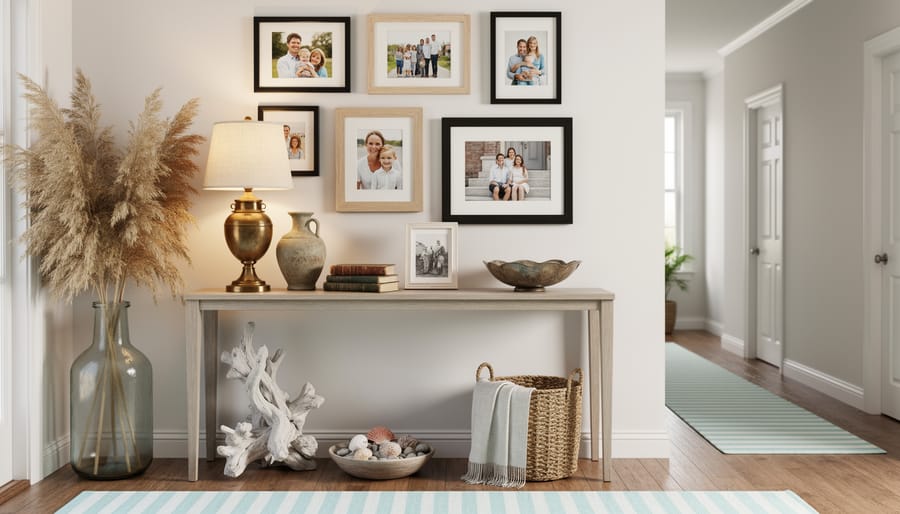
Every room in a Southern home offers a different kind of stage for your family’s story, and understanding what each space naturally communicates helps you design with intention rather than accident.
Your entryway sets the tone before anyone crosses the threshold. A console table holding your grandmother’s silver tray or a gallery wall of family photographs immediately signals that heritage matters here. Coastal homes might display a collection of marsh baskets or a vintage oar, establishing place as part of the narrative from the first step inside. This isn’t decoration, it’s an opening statement about what visitors will find deeper in the home.
Living rooms become the main storytelling arena because people naturally gather and linger there. This is where built-ins for heirlooms earn their keep, displaying china inherited from three generations back alongside books that shaped your family’s thinking. A quilt draped over the sofa arm or framed textile art on the walls can tell the story of women’s work and artistic traditions without a word spoken. The coffee table itself might be a story, a trunk that traveled from Virginia in 1870, refinished but bearing honest wear.
Dining spaces carry special narrative weight in Southern homes, where meals have always meant more than food. The table itself often has history, whether it’s a farmhouse piece your grandfather built or one you found and restored. China cabinets don’t just store dishes; they curate what gets passed down and what gets used, making daily choices about which stories stay active in family life.
Kitchens tell working stories through cast iron skillets seasoned by decades of use, recipe cards in your mother’s handwriting tucked into cookbooks, or open shelving that displays pottery from local artisans you’ve met and supported.
Even outdoor spaces participate in the narrative. A porch furnished with rocking chairs speaks to the Southern tradition of outdoor living and neighborly conversation. Coastal gardens featuring native plants and driftwood collected from meaningful beach walks root your story in the landscape itself. These aren’t just pretty arrangements, they’re chapters in an ongoing family chronicle that unfolds room by room.
Curating Your Own Story
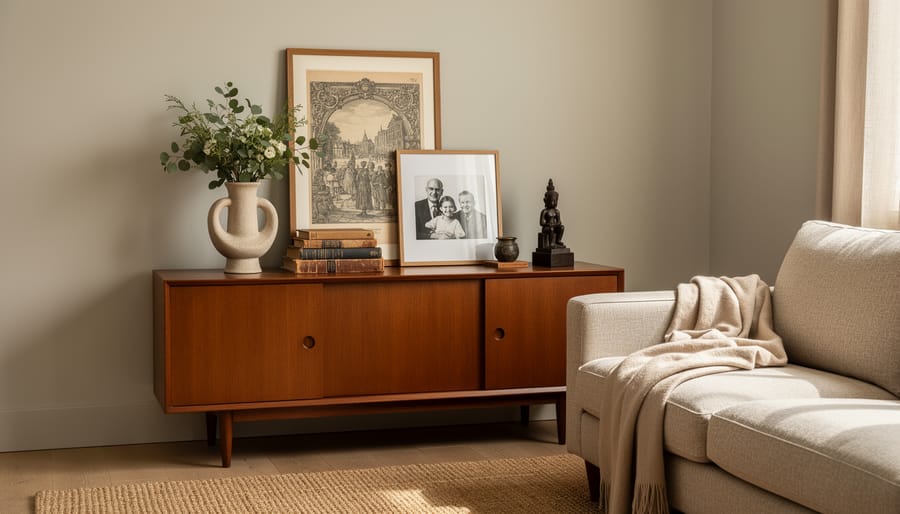
Start with what you already own. Walk through your home and identify pieces that carry personal or family meaning, a grandmother’s quilt, inherited silver, photos from a meaningful place. These items form the foundation of your narrative, not because they’re valuable but because they connect you to something larger than decoration.
Choose pieces that you’ll actually use. Cultural storytelling dies when everything sits behind glass or perches untouched on shelves. Set the table with your great-aunt’s china for Tuesday dinner, drape that handwoven throw across the sofa, display books you’ve actually read. Stories stay alive through touch and everyday interaction, not preservation alone.
Balance heritage with your current life. Your home should reflect who you are now while honoring where you came from. If you inherited dark Victorian furniture but live a casual coastal lifestyle, pair one meaningful piece with lighter, more relaxed elements. Authenticity means being honest about your actual life, not recreating a period room.
Layer in regional and local finds gradually. Visit antique markets, estate sales, and local artisan studios with intention rather than urgency. Look for pieces that speak to Southern or coastal traditions, a basket from a nearby weaver, architectural salvage from an old home in your town, pottery made with local clay. These additions deepen your connection to place without overwhelming your space.
Edit ruthlessly. Not every inherited item deserves display, and not every story needs telling in your main living areas. Choose pieces that work visually and functionally in your space. Store or pass along items that create clutter or make rooms feel like shrines. Even built-in furniture should serve a purpose beyond just looking historically appropriate.
Let your story evolve. Add new chapters through travel souvenirs, commissioned pieces from local artists, or objects that mark important moments. Your home’s narrative should grow with you, not freeze in a single moment. The best cultural storytelling feels lived-in, layered, and genuinely yours.
Common Questions About Cultural Storytelling
Can I mix modern pieces with heritage items?
Absolutely, the contrast often makes both elements more interesting. A contemporary sofa beside your grandmother’s side table creates visual tension that feels collected rather than decorated, and it keeps heritage pieces from reading as costume.
How do I keep my home from feeling like a museum?
Use your meaningful objects instead of just displaying them. Serve dinner on the heirloom china, sit in the antique chairs, and rotate what’s visible seasonally so the space stays dynamic rather than static.
What if I don’t have family heirlooms to work with?
Start your own collection by seeking out pieces that speak to your current values and the place you live now. Visit local artisans, collect regional crafts, or repurpose vintage finds from your area, you’re creating tomorrow’s heirlooms.
How much is too much when it comes to meaningful objects?
If you can’t tell the story behind most items in a room, you’ve crossed into clutter. Each piece should earn its place through genuine connection, not just visual appeal or the fact that it was passed down.
The beauty of cultural storytelling is that there’s no single right approach. What works in a historic Charleston single house won’t necessarily translate to a beach rental in Gulf Shores, and that’s fine. The goal isn’t perfection or adherence to some decorating rulebook, it’s authenticity. Your space should feel like you live there, not like you’re performing “Southern living” for an audience. Start small if the whole concept feels overwhelming. Choose one room or even one wall to focus your storytelling energy, then expand as you figure out what resonates. The stories will deepen naturally as you spend time in the space, add layers, and edit out what stops feeling true.
Cultural storytelling isn’t a new trend you’re adopting, it’s what Southern homes have done naturally for generations. The difference now is doing it with intention, understanding that every piece you choose, every color you paint a wall, every family photograph you frame contributes to the larger narrative of who you are and where you come from.
Your home doesn’t need to be a museum or a shrine to the past. The best storytelling happens when your great-grandmother’s sideboard holds tonight’s dinner plates, when coastal finds from last summer’s beach trip sit alongside inherited silver. These aren’t just decorating choices, they’re chapters in an ongoing story that honors heritage while celebrating the life you’re living right now.
Start small if you need to. Choose one meaningful piece and give it the place it deserves. Then build from there, letting your story unfold room by room, layer by layer, always remembering that the most powerful narratives are the ones still being written.