Southern design in 2026 celebrates a vibrant blend of cultural traditions, from the Spanish Colonial courtyards of Charleston to the French Creole shotgun houses of New Orleans, the mountain craftsmanship of Appalachia, and the breezy elegance of Gulf Coast living. These distinct regional aesthetics share common threads of hospitality, resourcefulness, and deep connection to place, but each brings its own materials, color palettes, and architectural sensibilities shaped by geography, climate, and the many communities that built the South.
The old vision of Southern style, limited to white columns and magnolia wreaths, misses the region’s real story. Diversity in Southern decor emerges from centuries of African American, Indigenous, Latino, and Asian contributions alongside European influences. Gullah Geechee sweetgrass baskets, Lowcountry indigo textiles, and hand-forged ironwork all demonstrate how functional artistry defines authentic Southern homes.
Modern Southern design concepts work because they’re rooted in practical solutions to climate and lifestyle. High ceilings and transom windows weren’t just architectural flourishes but responses to brutal summer heat. Wide porches extended living space outdoors. Natural materials like cypress, heart pine, and tabby concrete came from what grew or could be made locally. These time-tested approaches still solve contemporary design challenges while connecting us to regional history.
What follows are specific design concepts representing the South’s full geographic and cultural spectrum, each offering practical ways to bring authentic regional character into your home.
What Makes These Southern Design Concepts Worth Celebrating
These seven Southern design concepts weren’t plucked from a hat or chosen to reinforce tired clichés. Each one earned its place by representing a distinct thread in the South’s rich, multicultural tapestry, and by offering homeowners real, workable ways to bring authentic regional character into their spaces.
The selection process started with geographic spread. We wanted concepts that honor the South’s incredible landscape diversity, from salt-sprayed coastal cottages to mountain cabins perched in the mist. A truly representative collection had to reflect how place shapes design, how proximity to water, elevation, climate, and local materials create distinct visual languages.
Cultural representation mattered just as much. Southern design owes debts to African American ingenuity, French sophistication, Spanish colonial architecture, Caribbean vibrancy, Native American craftsmanship, and yes, colonial traditions brought across the Atlantic. Any list claiming to celebrate Southern aesthetics that ignores these interwoven influences misses the whole story.
Practical application was non-negotiable. Beautiful theory means nothing if you can’t actually live with it. Each concept needed to translate into specific material choices, color decisions, and spatial arrangements that work in real homes, not just design magazines.
Finally, we looked for concepts that bridge past and present gracefully. The best Southern design doesn’t fossilize tradition or chase trends. It respects heritage while speaking to how we actually live now: with open floor plans, technology, sustainability concerns, and global influences mixing with local roots.
Together, these seven concepts form a more complete, honest picture of what Southern design truly encompasses.
1. Lowcountry Coastal Elegance: Where Water Meets Design
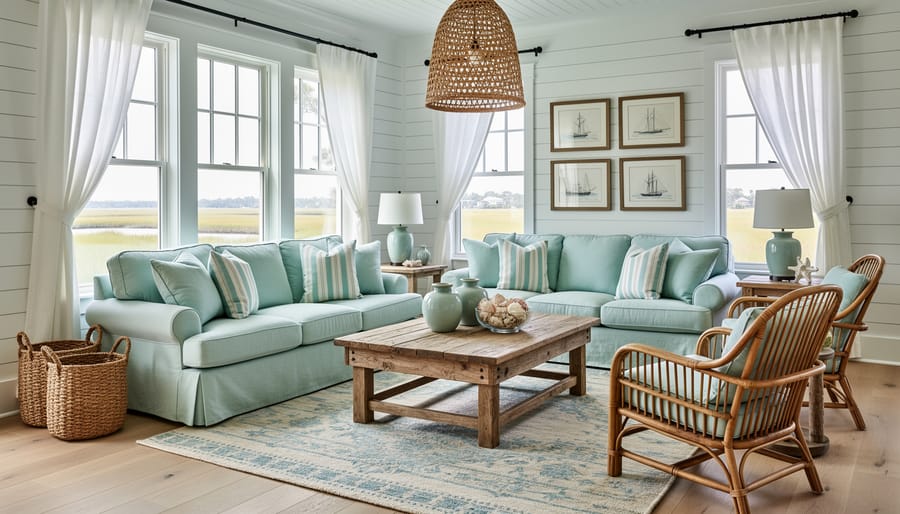
The Lowcountry aesthetic draws its soul from the salt marshes, tidal creeks, and barrier islands stretching along the coasts of South Carolina and Georgia. This isn’t the bright, beachy look you might expect, instead, it whispers rather than shouts, favoring the muted elegance of weathered dock pilings and the silvery-green grasses that bend in coastal breezes.
At its heart, Lowcountry design honors the Gullah Geechee people, descendants of enslaved West Africans who preserved their language, traditions, and artistry in these coastal communities. Their influence appears most notably in sweetgrass basketry, a centuries-old craft that adds both texture and cultural depth to modern interiors. These coiled baskets, once used for rice cultivation, now serve as sculptural wall art or functional storage that tells a story.
The color palette mirrors the landscape itself: soft seafoam greens, weathered grays, warm taupes, and creamy whites with undertones of oyster shell. You won’t find stark white here, everything carries a hint of warmth, as if sunlight has been filtering through sheer linen curtains for decades.
- Colors: seafoam green, driftwood gray, marsh grass tan, oyster white
- Materials: reclaimed cypress and heart pine, natural linen and cotton, woven seagrass, tabby concrete
- Cultural artifacts: sweetgrass baskets, indigo-dyed textiles, shrimp net-inspired textures
- Layout: open floor plans with ceiling fans, wide plank floors, generous porches, tall windows for cross-ventilation
To bring this concept into your home, start with one statement piece, perhaps an authentic sweetgrass basket or a dining table made from reclaimed dock wood. Layer in fabrics with natural texture rather than pattern: raw linen curtains, cotton slipcovers in undyed muslin. Keep furniture low and uncluttered to maintain that sense of coastal openness, and remember that every element should feel like it could withstand humid summers and salt air.
2. Creole-Influenced Interiors: Bold Colors and French Quarter Flair
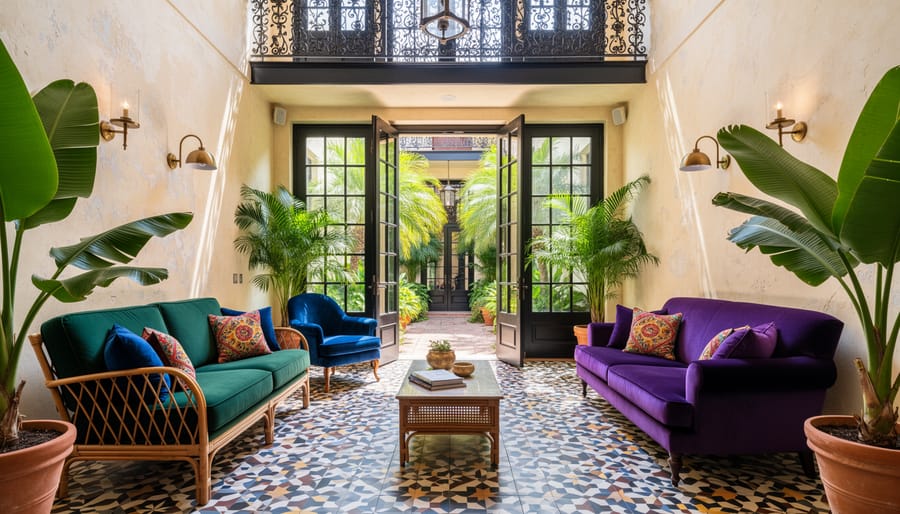
Creole design doesn’t whisper, it announces itself with saturated jewel tones, intricate ironwork shadows, and layers of pattern that would overwhelm anywhere else but feel perfectly at home in New Orleans. This aesthetic emerged from centuries of cultural blending: French architectural bones meet Spanish colonial arches, African textile traditions introduce bold geometric patterns, and Caribbean influences add tropical motifs and vibrant greenery. The result is unapologetically maximalist yet sophisticated, balancing richness with livability.
Color anchors the entire approach. Think deep emerald greens paired with royal purples, burnt orange against peacock blue, or ruby red accents on walls painted in warm ochre. These aren’t timid pastels, Creole palettes embrace the full intensity of jewel tones, often using them on millwork, ceiling medallions, or as dramatic accent walls. Balance comes through natural materials: exposed brick, aged wood floors, and wrought iron details in matte black that ground the vibrancy.
The signature indoor-outdoor flow defines spatial planning. French doors open onto courtyards or balconies, blurring boundaries between rooms and gardens. Inside, you might incorporate courtyard-inspired vignettes, a corner with potted palms, a fountain accent, or built-in fireplace storage flanked by ornate iron candle sconces that echo French Quarter balcony railings.
Layering matters as much as individual elements. Stack patterned textiles, ikat pillows on a damask sofa, topped with a suzani throw. Hang ornate mirrors with gilded frames above carved consoles. Mix ceramic tiles with tropical banana leaf wallpaper. The key is confident abundance that honors each cultural contributor rather than merely collecting exotic pieces. Every layer tells part of the Creole story: resilience, celebration, and the beauty born from diverse traditions cooking together under the Louisiana sun.
3. Appalachian Rustic Charm: Mountain Heritage in Every Detail
Appalachian design draws its soul from the mountain communities who turned scarcity into beauty through sheer ingenuity. This aesthetic celebrates handcrafted authenticity, where every piece tells a story of resourcefulness passed down through Scots-Irish settlers and Cherokee artisans who shaped these highlands.
Reclaimed barn wood anchors this style, its weathered grays and warm honey tones bringing decades of character into modern spaces. Wide-plank floors, exposed ceiling beams, and shiplap walls showcase the natural variations and nail holes that mass-produced lumber can’t replicate. Pair these foundational elements with handwoven textiles, think chunky wool throws, rag rugs in earthy stripes, and table runners with traditional overshot patterns that reference centuries-old weaving techniques.
Appalachian quilting transforms walls and beds into folk art galleries. Log Cabin, Bear Paw, and Double Wedding Ring patterns don’t just add color; they connect your home to a heritage where women gathered for quilting bees, stitching warmth and community into every square. Modern interpretations might simplify traditional patterns or work in unexpected color palettes, but the geometric precision and handmade quality remain central.
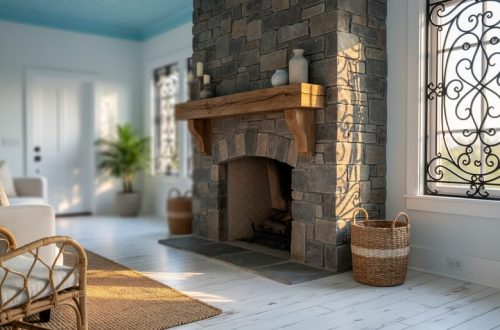
The stone fireplace serves as both practical heating and spiritual hearth, often built from river rock or fieldstone gathered locally. Cherokee basket-weaving traditions influence decorative elements, with white oak and honeysuckle materials creating functional art pieces that bridge cultures.
This mountain aesthetic thrives on sustainability before it became trendy. Furniture makers still craft ladder-back chairs and harvest tables from local hardwoods, applying techniques refined over generations. Layer in wrought-iron accents, pottery in muted glazes, and dried botanicals foraged from mountain trails. The result feels grounded, honest, and refreshingly free from pretense, a home that honors where things come from and the hands that made them.
4. Modern Southern Minimalism: Clean Lines with Warm Hospitality
Modern Southern minimalism proves you don’t need layers of pattern and collections of heirlooms to create a welcoming home. This approach strips away the excess while keeping the soul, clean lines meet genuine warmth through thoughtful material choices and restrained color palettes that still feel inviting.
The foundation starts with neutral tones that lean warm rather than stark. Think creamy whites, soft taupes, warm grays with beige undertones, and natural linen shades. These create calm, uncluttered spaces that don’t feel cold or impersonal. The key difference from generic minimalism is texture: a chunky cotton throw on a simple sofa, rough-hewn wood beams against smooth white walls, or a handwoven jute rug underfoot. These tactile elements add depth without visual noise.
Natural materials anchor every room. Solid wood furniture with simple, honest construction replaces ornate pieces. A single live-edge dining table makes more impact than three smaller accent tables. Stone countertops, ceramic vases, and woven baskets serve both function and form. The materials themselves become the decoration.
Curated collections replace sprawling displays. Instead of filling every surface, choose a few meaningful pieces, perhaps three vintage pottery pieces on a mantel or a single striking piece of Southern folk art. Each item gets space to breathe and be appreciated.
This philosophy extends to hospitality too. A minimalist Southern home still welcomes guests, but through quality over quantity: comfortable seating arranged for conversation, a well-appointed guest room with essentials rather than clutter, and a dining table that seats everyone comfortably. The message is clear, you’re welcome here, and we’ve made space specifically for you.
5. Texas-Mexican Fusion: Southwest Meets Southern Comfort
The wide-open landscapes of South Texas have given birth to a design aesthetic that refuses to choose between its dual heritage. This fusion honors Spanish colonial roots and Mexican craftsmanship while embracing the practical comforts Southerners hold dear.
Start with the foundational palette: sun-baked terracotta tiles underfoot, whitewashed stucco walls that keep interiors cool, and exposed wooden beams overhead that recall both hacienda ceilings and Southern farmhouse construction. These architectural bones create a canvas that works equally well in San Antonio or rural Mississippi.
Leather becomes a bridge material here. Think saddle-brown chairs with nailhead trim, worn ottoman poufs, and tooled panels that reference vaquero traditions. Pair these with the plush comfort of oversized sofas draped in Saltillo-striped throws or serape-inspired pillows in rust, turquoise, and burnt orange.
The indoor-outdoor flow matters tremendously. Covered porches transition into tiled patios where wrought-iron furniture sits alongside painted Mexican ceramics. Arched doorways and windows with heavy wooden shutters allow cross-breezes while maintaining the privacy Southern homes prize.
Don’t shy from pattern mixing. Geometric Zapotec designs layer beautifully with florals, while hand-painted Talavera tiles can accent a backsplash or fireplace surround without overwhelming the space. The key is grounding bold textiles and ceramics with plenty of natural wood and neutral plaster.
This style celebrates gathering spaces where carne asada and barbecue might share the same table, where hospitality transcends borders, and where design becomes a living conversation between cultures that have shaped the South for centuries.
6. African American Heritage Design: Celebrating Roots and Resilience
African American culture has shaped Southern design in ways both profound and often overlooked, from architectural innovations to textile artistry that continues to influence contemporary homes. The shotgun house, born from African and Caribbean building traditions, introduced efficient spatial flow and natural ventilation through its distinctive straight-through layout. Modern designers now reinterpret this linear design with open floor plans that honor the original concept while adapting to today’s living needs.
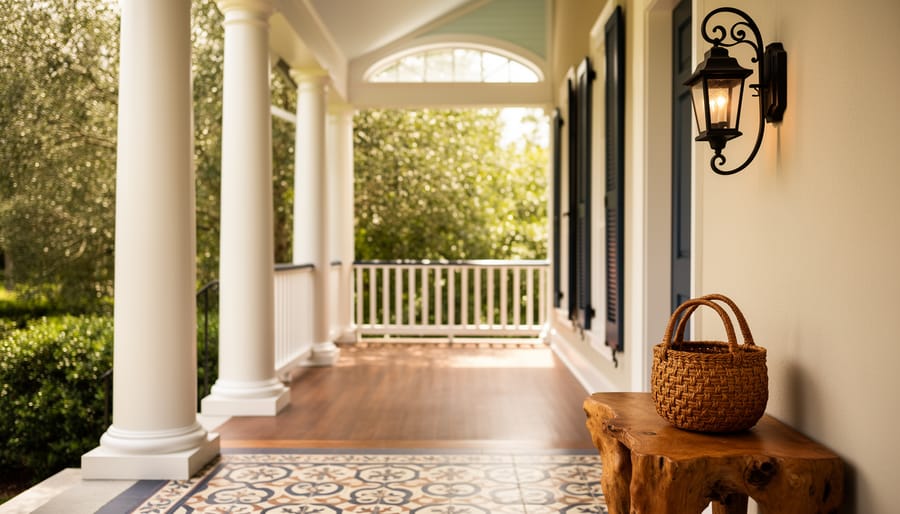
The porch stands as perhaps the most significant contribution to Southern living spaces. More than architectural detail, porches became essential gathering places where communities strengthened bonds, stories passed between generations, and neighbors connected across property lines. This tradition of the porch as social space informs current design choices that prioritize welcoming entryways, comfortable outdoor seating areas, and transitions between home and neighborhood that encourage interaction rather than isolation.
Textile traditions represent another vital thread in this heritage. Quilting wasn’t merely functional, it was storytelling through fabric, with patterns carrying coded messages and preserving cultural memory. Sweetgrass basket weaving, brought from West Africa and refined by Gullah craftspeople, created both practical storage and sculptural art. These techniques inspire contemporary textile choices, from bold geometric patterns echoing African kente cloth to the incorporation of handwoven pieces that add texture and cultural depth.
Bringing these elements into your home means choosing pieces with intention. Display quilts as wall art, select furniture in rich earth tones and vibrant accent colors that reflect African palettes, incorporate wrought iron details reminiscent of Charleston’s skilled blacksmiths, and create gathering spaces that honor the tradition of communal warmth. This design approach celebrates resilience, creativity, and the enduring influence of African American artistry on Southern homes.
7. Gulf Coast Tropical: Laid-Back Luxury Under the Palms
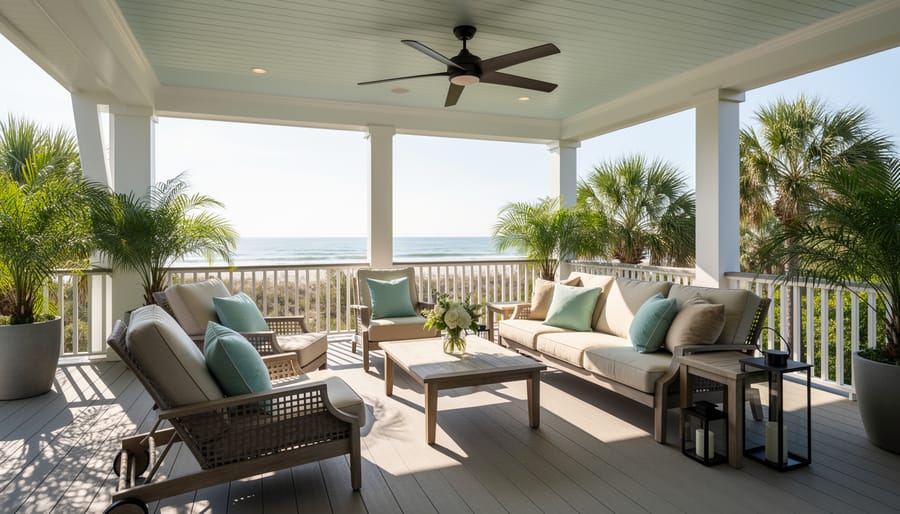
The Gulf Coast stretches like a gentle crescent from the Florida Panhandle to South Padre Island, and its design aesthetic captures that same easy curve. This isn’t the formal, columned South of plantation houses or the rustic charm of mountain cabins. Gulf Coast tropical design breathes salt air and afternoon thunderstorms, blending Caribbean influences with Southern hospitality in a way that feels both indulgent and utterly unpretentious.
Start with color, because the Gulf Coast never apologizes for it. Think turquoise pulled straight from shallow water, coral that matches both sunsets and flamingos, and yellows ranging from Key lime to sunlit sand. These aren’t timid accent walls, they’re full-throated celebrations of a region where the sky competes with the sea for your attention. Pair them with crisp whites and natural wood tones to keep the space from feeling like a tiki bar.
The real genius of Gulf Coast design lies in its hurricane-tested practicality wrapped in beauty. Furniture sits low and sturdy, often rattan or teak that can weather humidity without warping. Tile floors in Spanish or Cuban patterns stay cool underfoot and clean up after sandy feet. Louvered shutters and ceiling fans aren’t decorative choices; they’re climate solutions that happen to look gorgeous.
Indoor-outdoor flow isn’t optional here. French doors open onto screened porches furnished as seriously as any living room. Palm fronds, whether potted or printed, show up in pillows, artwork, and actual planters. This design concept embraces cultural storytelling through details like Cuban tile work, Floribbean architectural elements, and the laid-back luxury of spaces built for both hurricanes and happy hours.
Bringing It All Together in Your Home
You don’t need to choose just one of these Southern design concepts. The most authentic, lived-in Southern homes layer influences from multiple regions and cultures, creating spaces that feel personal rather than like a museum exhibit. Start with the regional style that speaks most strongly to you, whether that’s the breezy calm of Lowcountry coastal or the vibrant energy of Creole interiors, then gradually introduce elements from other traditions that complement your foundation.
The key to mixing these concepts authentically lies in understanding and respecting their cultural origins. When you incorporate African American heritage elements like sweetgrass basket patterns or Gullah Geechee color palettes, learn their history and significance. If you’re drawn to Texas-Mexican fusion pieces, seek out artisans and makers who come from those traditions rather than mass-produced imitations. This approach creates a home that celebrates Southern diversity while honoring the communities who developed these design languages.
Can I mix different Southern regional styles in one home?
Absolutely. Most Southern homes naturally blend influences because the region itself is diverse and interconnected. Just maintain a consistent color story or material palette to unify different regional elements.
How do I honor cultural traditions respectfully in my décor?
Purchase from makers and artisans within those cultural communities, learn the stories behind the designs you’re incorporating, and avoid treating sacred or ceremonial items as mere decoration.
What’s the difference between appreciation and appropriation in Southern design?
Appreciation involves giving credit, supporting authentic sources, and understanding context. Appropriation strips cultural elements of meaning and profits without acknowledging or supporting the originating community.
Where can I find authentic pieces from these Southern design traditions?
Look for regional craft cooperatives, heritage festivals, local artisan markets, and online marketplaces that connect directly with makers from specific cultural and regional backgrounds.
Think of Southern design as an ongoing conversation among cultures, geographies, and generations. Your home becomes part of that dialogue when you curate thoughtfully, mixing a Lowcountry woven chair with Texas leather accents and Appalachian quilts. What matters is that each piece brings meaning and beauty to your space while reflecting the rich, multicultural reality of the South.