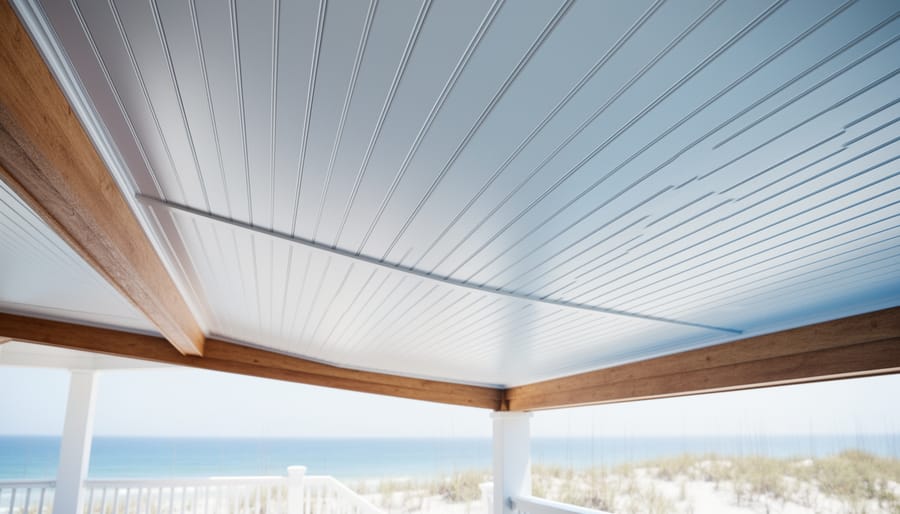
Choose the right porch ceiling material by matching it to your climate conditions first. Coastal porches demand moisture-resistant options like PVC or vinyl beadboard that won’t warp in humid sea air, while inland homes can embrace traditional wood tongue-and-groove for authentic Southern character. Budget-conscious homeowners should expect $2-4 per square foot for basic plywood options, $4-8 for wood alternatives like fiber cement, and $6-12 for premium PVC materials that eliminate painting and maintenance headaches for decades.
Assess your porch’s exposure level before committing to any material. Covered porches protected from direct rain can handle painted wood or fiber cement beautifully, but screened porches or three-season spaces need waterproof solutions that resist mold and mildew. The most common mistake homeowners make is selecting gorgeous wood ceilings for high-moisture areas, then watching them deteriorate within five years.
Consider installation complexity alongside material costs. Tongue-and-groove planks create stunning visual interest but require precise carpentry skills and significant labor hours. Beadboard panels install faster with fewer seams, making them ideal for DIY projects. PVC options snap together with hidden fasteners, delivering professional results without professional prices.
Match your ceiling material to your overall porch design vision. Traditional haint blue ceilings look authentic on wood but equally charming on modern vinyl. Exposed beam designs pair perfectly with rustic wood planks, while clean-lined contemporary porches shine with smooth fiber cement panels. Your ceiling sets the tone for the entire outdoor living space.
What to Consider Before Choosing Your Porch Ceiling Material
Before you settle on a material for your porch ceiling, it’s worth taking a moment to think through what’ll work best for your home and lifestyle. Your porch ceiling isn’t just another decorating decision—it’s one of those permanent architectural features that’ll be part of your home’s character for years to come.
Here are the key factors you’ll want to consider:
- Your local climate conditions, especially humidity levels and temperature fluctuations
- Your budget for both materials and installation
- How much time you’re willing to spend on upkeep and maintenance
- Your home’s architectural style and existing design elements
- The durability you need based on your porch’s exposure to the elements
If you’re living in coastal areas or anywhere with salty sea breezes, you’ll need materials that can stand up to that moisture without warping, rotting, or developing mildew. The same goes for homes in humid Southern climates where moisture is just part of life. Temperature swings matter too—materials expand and contract, and you want something that’ll handle those changes gracefully.
Your budget considerations should look beyond just the initial price tag. A material that costs more upfront might save you money down the road if it requires less maintenance or lasts considerably longer. Think about whether you’re planning to tackle installation yourself or hire professionals, as labor costs can vary significantly depending on the material you choose.
Don’t forget to check your local building codes before making any final decisions. Some areas have specific requirements about fire ratings or materials that can be used in certain applications, especially if your porch is enclosed or located close to property lines.
Finally, consider how your ceiling choice will complement your home’s overall aesthetic. A charming cottage-style home calls for different materials than a sleek modern farmhouse, and your porch ceiling should feel like a natural extension of your home’s personality.
Traditional Wood Ceiling Materials
Tongue and Groove Pine
There’s something undeniably charming about a traditional tongue and groove pine ceiling overhead. It’s been gracing Southern porches for generations, and for good reason—this classic choice delivers warmth, character, and that welcoming feel that makes a porch truly feel like an extension of your home.
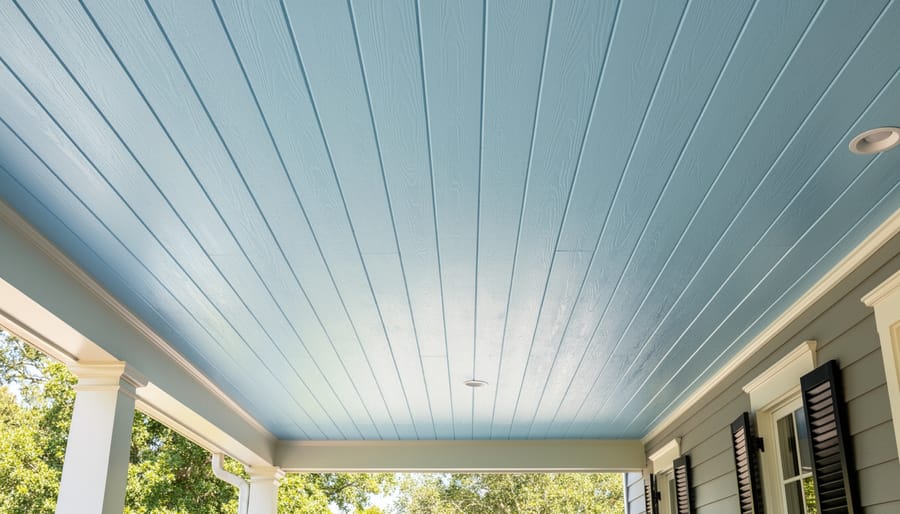
Tongue and groove pine consists of interlocking boards that fit snugly together, creating a seamless, finished look. The natural wood grain adds visual interest and texture that you just can’t get with synthetic materials. One of the biggest advantages is its paintability—you can refresh the look whenever the mood strikes, whether you’re going for crisp white, natural wood stain, or embracing the beloved tradition of haint blue.
Speaking of haint blue, this soft blue-green shade has deep roots in Southern culture. Originally believed to ward off spirits (or “haints”), it’s now a design staple that creates a peaceful, sky-like effect and complements coastal and traditional homes beautifully. Many paint manufacturers even offer specific haint blue shades to help you achieve this authentic look.
Cost-wise, tongue and groove pine sits in the moderate range—typically more affordable than premium materials like cedar but offering superior aesthetics compared to basic options. You’ll spend roughly three to six dollars per square foot for materials alone.
The maintenance requirements are straightforward but necessary. Pine needs regular painting or staining every three to five years to protect against moisture and prevent warping. Proper ventilation and sealing are essential, especially in humid climates where wood can be vulnerable to rot and insect damage.
Cedar and Cypress
If you’re looking for ceiling materials that’ll stand the test of time—especially in our humid Southern climate—cedar and cypress are worth every penny. These premium woods have been gracing coastal porches for generations, and there’s good reason why.
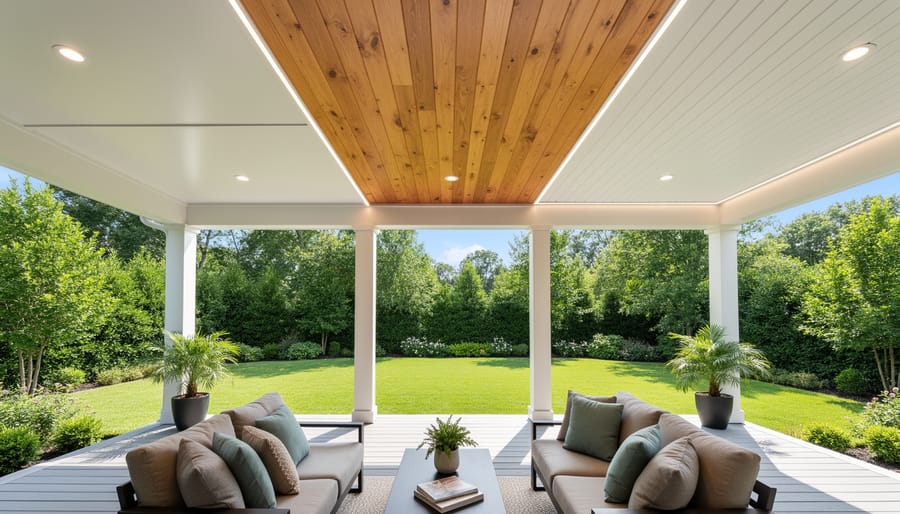
Both cedar and cypress naturally resist moisture, rot, and those pesky insects that love to make themselves at home in lesser woods. You won’t need chemical treatments to keep them looking beautiful, which is a blessing when you’re trying to maintain that natural, healthy porch environment. Cypress, particularly popular along the Gulf Coast, actually gets stronger as it ages, developing a gorgeous silvery patina that tells the story of your home.
Cedar brings its own charm with those lovely reddish tones and that distinct, pleasant aroma that welcomes you home. It’s lighter than cypress, making installation a bit easier on the back.
These woods do come with a higher price tag—expect to invest anywhere from eight to fifteen dollars per square foot—but you’re buying durability that can last fifty years or more with minimal fuss. For folks living near saltwater or in especially humid areas, that longevity makes cedar and cypress smart investments that’ll save you headaches down the road.
Beadboard Panels
There’s something timelessly appealing about beadboard panels that just speaks to the heart of cottage and coastal living. These vertical groove panels bring instant charm and architectural interest to any porch ceiling, creating that relaxed, welcoming feel we all love. The beautiful thing about beadboard is how forgiving it is for DIY installation—the tongue-and-groove system makes it surprisingly manageable, even if you’re not a seasoned carpenter. You’ll find beadboard panels in materials ranging from traditional wood to modern PVC and MDF, each offering different benefits for durability and maintenance. They work beautifully alongside built-in elements like ceiling fans and light fixtures, and the grooves create lovely shadow lines that add dimension without overwhelming your space. Paint them classic white for a fresh coastal look, or go bold with haint blue for authentic Southern character.
Low-Maintenance Synthetic Options
Vinyl Beadboard and Panels
If you’re dreaming of that classic beadboard look without the constant upkeep, vinyl might just become your new best friend. Modern vinyl beadboard panels deliver that charming grooved appearance we all love on Southern porches, but with a maintenance-free twist that’s hard to beat.
The biggest draw here is the moisture resistance. Unlike wood, vinyl won’t rot, warp, or attract mold when humidity levels climb—and goodness knows we see plenty of steamy days down South. You’ll never need to paint, scrape, or seal these panels. A simple wash with soap and water keeps them looking fresh year after year.
Today’s vinyl options have come a long way from that plasticky look of decades past. Many manufacturers now offer surprisingly realistic wood-grain textures in traditional white and soft neutrals that complement coastal cottage aesthetics beautifully.
The trade-off? Vinyl can expand and contract noticeably in extreme temperatures, which means proper installation with enough room for movement is essential. Some folks also find that direct sunlight can cause fading over time, and the material lacks that authentic warmth and character of real wood. Still, for homeowners who’d rather spend weekends enjoying their porch instead of maintaining it, vinyl beadboard offers a practical, budget-friendly solution that keeps on giving.
Fiber Cement Panels
If you’re living along the coast where salt air and humidity team up to test every surface on your home, fiber cement panels deserve a serious look for your porch ceiling. These engineered beauties combine cement, sand, and cellulose fibers to create a material that laughs in the face of moisture, resists fire like a champ, and stands up to our Southern coastal conditions without breaking a sweat.
What makes fiber cement particularly appealing is its versatility. You can find panels that mimic traditional beadboard or ship-lap, giving you that classic porch ceiling look without the maintenance headaches of real wood. They accept paint beautifully and hold that finish far longer than wood alternatives, which means fewer weekends spent on ladder duty touching up peeling paint.
The durability factor is impressive—fiber cement won’t rot, warp, or become a buffet for termites. It’s especially popular in hurricane-prone areas because of its wind resistance and fire-retardant properties. The upfront cost runs higher than basic vinyl or wood, typically ranging from four to eight dollars per square foot, but many coastal homeowners find the longevity worth every penny. Installation does require professional help since the panels are heavy and need proper cutting tools, but once they’re up, you’ll enjoy decades of low-maintenance protection overhead.
PVC and Composite Materials
If you’re looking for a set-it-and-forget-it option that can handle our coastal humidity and salt air without batting an eye, PVC and composite materials might just be your new best friend. These modern marvels were practically designed with Southern porches in mind—they laugh in the face of moisture, won’t ever rot or warp, and they’ll keep looking fresh as a daisy for decades without demanding much from you.
PVC planks offer that crisp, clean look many coastal homeowners adore, and they’re incredibly lightweight, making installation a whole lot easier on your back. Composite materials blend wood fibers with synthetic materials, giving you something that resembles natural wood but without all the upkeep. You won’t need to paint, stain, or seal these beauties—just an occasional wash with soap and water keeps them looking their best. While the upfront cost runs higher than traditional wood, you’ll make up the difference over time with virtually zero maintenance expenses. They’re perfect for those salt-sprayed beach houses or porches that catch afternoon rain showers, letting you spend your weekends sipping sweet tea instead of scraping and painting.
Metal and Alternative Ceiling Materials
Corrugated Metal and Tin
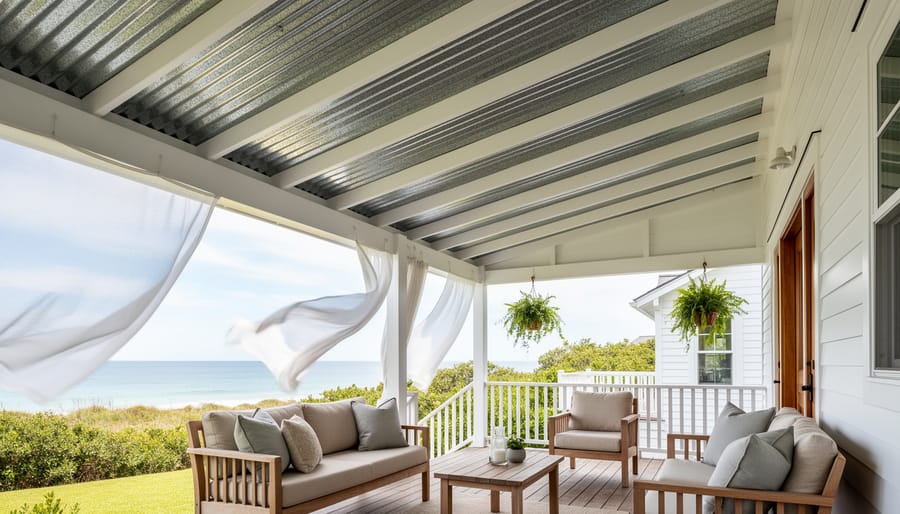
If you’re drawn to that rustic farmhouse look or industrial vibe, corrugated metal and tin ceilings might just steal your heart. These materials have been gracing Southern porches and barns for generations, and they’re making a mighty comeback in modern home design. The durability is hard to beat—metal ceilings can last 50 years or more with minimal maintenance, standing strong against our coastal humidity and summer storms.
The corrugated texture adds wonderful visual interest and depth, catching light beautifully throughout the day. You’ll find them particularly popular in coastal cottages and converted farmhouse spaces where that blend of practical and pretty really shines. Installation is fairly straightforward for folks comfortable with basic carpentry, though you’ll want to ensure proper underlayment for insulation.
Now, here’s something to consider: metal roofs create that distinctive pitter-patter during rainstorms. Some folks find it soothing and nostalgic, while others might prefer something quieter. Adding insulation can dampen the sound if needed. Price-wise, you’re looking at a mid-range investment that pays off handsomely in longevity and character.
Reclaimed Materials
There’s something wonderfully authentic about incorporating reclaimed materials into your porch ceiling—each weathered plank carries its own history and brings genuine Southern character to your outdoor space. Barn wood, salvaged heart pine, or vintage cypress beams create an instant connection to the past while giving new life to materials that might otherwise be forgotten.
These sustainable options appeal to homeowners seeking one-of-a-kind beauty that can’t be replicated with new materials. The natural patina, nail holes, and subtle imperfections tell stories of old tobacco barns, century-old homes, and coastal structures that weathered countless storms. When paired with built-in storage solutions on your porch, reclaimed wood creates a cohesive vintage-inspired aesthetic.
Keep in mind that sourcing quality reclaimed materials requires patience and often costs more than traditional options due to salvage and preparation work. You’ll also want to inspect pieces carefully for structural integrity and treat them properly to prevent insect damage. Still, the environmental benefits and distinctive charm make reclaimed materials a beautiful choice for porches with personality.
Comparing Costs and Longevity
Let’s talk money and longevity, because that’s what really matters when you’re making decisions for your porch, right? Down here where salt air and humidity keep us honest, understanding the full picture helps you invest wisely in your coastal retreat.
| Material | Cost per Sq. Ft. | Expected Lifespan | Maintenance Level |
|---|---|---|---|
| Beadboard/Wood | $2-$6 | 15-20 years | Medium to High |
| Vinyl/PVC | $3-$7 | 20-30 years | Low |
| Fiber Cement | $4-$8 | 25-50 years | Low to Medium |
| Metal (Aluminum) | $5-$10 | 30-50 years | Very Low |
Now, these numbers tell just part of the story. That budget-friendly pine beadboard might seem like a steal at first glance, but factor in repainting every few years and potential replacement boards when moisture takes its toll, and you’re looking at a different calculation altogether.
Vinyl and PVC options sit in that sweet spot many coastal homeowners appreciate. The upfront cost won’t make your wallet weep, and you’ll spend more time enjoying your porch than maintaining it. That’s real value right there.
Fiber cement deserves serious consideration if you’re planning to stay put for the long haul. Yes, you’ll invest more initially, but the durability in our challenging climate means fewer headaches down the road. Think of it as buying quality boots that last versus replacing cheap ones every season.
Metal ceilings represent the premium choice, and for good reason. In saltwater environments especially, that longevity translates to decades of worry-free living. When you calculate the total cost of ownership over thirty years, suddenly that higher price tag makes plenty of sense for many folks building their forever porches by the shore.
Installation Considerations and Professional vs. DIY
Let’s talk straight about who can tackle what when it comes to installing your porch ceiling. Some materials are wonderfully forgiving for weekend warriors, while others need a skilled hand to get right.
If you’re handy with a drill and have helped with a few home projects, tongue and groove wood panels might just become your new favorite challenge. With a saw, nail gun, and a patient afternoon or two, many folks successfully install these beauties themselves. The rhythmic click of each board locking into place is mighty satisfying, I’ll tell you that much.
Bead board panels are another DIY-friendly option, especially the pre-finished varieties. They’re lightweight, cut easily, and forgive minor mistakes better than you’d expect. You’ll need basic carpentry tools and a steady ladder, but the process is straightforward enough for most confident homeowners.
Now, certain materials deserve professional attention. PVC and vinyl systems often require specialized tools and precise measurements to achieve that seamless look that makes them worthwhile. Metal ceilings, particularly standing seam or corrugated options, demand experience with fastening systems and proper expansion gaps to prevent buckling in our Southern heat.
Drywall ceilings absolutely call for professional installation on a porch. Between moisture concerns, proper ventilation, and the messy finishing work, this isn’t the project to learn on.
Consider your comfort level honestly, the time you’ve got available, and whether you’d enjoy the process or resent every minute. Sometimes hiring out means your porch gets finished before summer ends, and that’s worth plenty.
Finishing Touches: Paint Colors and Design Details
Your choice of porch ceiling material opens up a world of finishing possibilities, each creating its own special atmosphere for your outdoor sanctuary. Whether you’re drawn to the time-honored tradition of haint blue or prefer a crisp white canvas overhead, understanding how your material selection influences your finish options will help you create the porch of your dreams.
The beloved Southern tradition of painting porch ceilings sky blue dates back generations, with roots in Gullah culture where the soft blue-green shade was believed to ward off restless spirits. Today, this charming custom continues not just for its folklore, but because that gentle blue truly does make a porch feel like an extension of the sky itself. Wood materials take paint beautifully, allowing you to achieve that authentic haint blue finish with ease. Tongue and groove pine or beadboard readily accepts multiple coats, creating a smooth, luminous surface that seems to glow in the filtered sunlight.
Popular Southern porch ceiling colors each carry their own story and practical benefits:
- Haint blue – Traditional spiritual protection and wasp deterrent with calming coastal vibes
- Soft white or cream – Reflects light beautifully and brightens shaded porches
- Sky blue – Creates the illusion of endless summer days overhead
- Seafoam green – Brings gentle coastal charm and complements natural surroundings
- Pale gray – Modern take on tradition that hides dirt and aging gracefully
Your material choice directly impacts how light dances across your porch throughout the day. Painted wood creates a matte finish that softens sunlight, while vinyl panels with subtle sheen can brighten darker spaces. Natural wood left unsealed develops a honey-toned patina that warms the entire porch atmosphere, pairing wonderfully with custom built-in features like window seats or storage benches.
Consider ventilation needs too – beadboard and tongue and groove allow subtle air movement between boards, while solid panels require intentional ventilation planning. The right finish and material combination transforms your porch ceiling from simple overhead protection into a design element that sets the mood for countless sweet tea afternoons and evening conversations to come.
Choosing the right porch ceiling material is more than just a practical decision—it’s an investment in the heart of your home. Your porch is where sweet tea gets sipped, stories get shared, and memories get made, so the ceiling overhead deserves thoughtful consideration. By balancing your aesthetic dreams with your practical needs and budget, you’ll create a space that truly works for your lifestyle.
Remember to factor in your local climate conditions, especially if you’re dealing with coastal humidity or intense summer heat. A material that stands strong against the elements while looking beautiful year after year is worth every penny. Whether you’re drawn to classic beadboard, low-maintenance vinyl, or rustic wood planks, your choice should complement other integrated design elements throughout your home.
A well-chosen porch ceiling transforms an outdoor space into a genuine extension of your living area—a welcoming haven where neighbors become friends and family gatherings become traditions. So go ahead and create that inviting retreat you’ve been dreaming about. Your porch is calling, and it’s ready to become everyone’s favorite gathering spot.