Burnt orange home decor transforms living spaces with a warm, sophisticated palette that bridges vintage Southern charm and contemporary coastal elegance. This earthy terracotta shade works beautifully across every room in your home, from accent walls and upholstered furniture to throw pillows and table linens. The key to mastering burnt orange lies in thoughtful pairing: it harmonizes effortlessly with cream and ivory neutrals, deepens beside navy and forest green, and creates striking contrast against soft blush or sage tones.
Southern homes have long embraced warm, welcoming color stories, and burnt orange fits naturally into that tradition. It carries the richness of autumn harvests and sunset skies without the aggressive intensity of true orange or the coolness of rust. If you’re drawn to vintage Southern decor burnt orange serves as an ideal bridge color that honors heritage while feeling fresh for 2026.
The shade’s versatility extends beyond seasonal decorating. Burnt orange grounds airy coastal interiors with needed warmth, softens modern farmhouse spaces, and adds depth to traditional Southern settings. Whether you’re considering a bold velvet sofa or simply testing the waters with table accessories, understanding how to balance this color’s intensity with your existing palette makes all the difference. The following guidance walks you through room-by-room applications, foolproof color combinations, and styling strategies that ensure burnt orange enhances rather than overwhelms your home’s character.
Why Burnt Orange Works in Southern and Coastal Homes
Burnt orange thrives in Southern and coastal interiors precisely because it works with, rather than against, the materials and palettes that define these spaces. The shade’s earthy undertones harmonize with the warm woods, heart pine floors, cypress paneling, weathered oak furniture, that anchor many Southern homes, creating a visual thread that feels intentional and grounded. Where coastal design leans into whitewashed walls and sun-bleached neutrals, burnt orange adds necessary warmth without the heaviness of deeper browns or the coolness of grays, offering depth that prevents spaces from feeling sterile or overly minimal.
The color’s compatibility with natural textures amplifies its effectiveness. Jute rugs, rattan chairs, woven baskets, and linen upholstery all carry subtle variations in tone, creams shift toward beige, whites read warmer in certain light, and burnt orange picks up these warm undertones, tying disparate elements together. In a sunroom with abundant natural light, burnt orange throw pillows or pottery can soften the brightness without blocking it, creating inviting pockets of color that draw the eye without overwhelming the breeziness of the space. Similarly, in dining areas where families gather, burnt orange table runners or ceramic serving pieces introduce richness against painted shiplap or brick accent walls, reinforcing the welcoming atmosphere central to Southern hospitality.
This shade also plays well with the coastal palette’s sandy neutrals, soft terracottas, and muted greens. It doesn’t compete with seafoam or aqua accents; instead, it grounds them, providing a warm counterbalance that keeps coastal interiors from skewing too cool or monochromatic. The result is layered, lived-in spaces that honor regional tradition while feeling current and purposeful.
The 2026 Burnt Orange Revival: What’s Driving the Trend
Burnt orange is having its moment, and it’s not by accident. The 2026 IKEA Style Guide, which launches today, places this earthy hue front and center in its IKEA PS 2026 collection. The guide pairs burnt orange with maroons, browns, and dusty tones, creating a layered warmth that feels both nostalgic and fresh. These aren’t bright, punchy shades, they’re muted, grounded colors that bring depth without demanding attention.
The timing aligns with a broader shift happening across interiors right now. Designers are revisiting the 1970s warmth palette, pulling in avocado green, mustard yellow, and yes, burnt orange. But this isn’t a straight replica of your grandmother’s den. Instead, these retro hues are being reinterpreted with cleaner lines, natural materials, and lighter backdrops. Think cream walls anchoring brown furnishings with burnt orange accents, a setup the IKEA guide highlights for living rooms. The effect is sophisticated rather than kitschy.
What makes burnt orange particularly appealing for Southern and coastal homes is its adaptability. The IKEA collection showcases it across living rooms, bedrooms, and hallways, often paired with natural wood and rattan. These materials already anchor many Southern interiors, so burnt orange slips in easily, adding warmth without clashing with existing coastal palettes of sand, cream, and weathered gray.
This revival reflects a larger hunger for comfort and authenticity in our spaces. After years of stark minimalism and cool grays, homeowners want color that feels lived-in and inviting. Burnt orange delivers that warmth while maintaining enough restraint to work in modern settings. It’s a color that nods to the past without getting stuck there, which is exactly what makes it work for homes that balance tradition with contemporary ease.
Room-by-Room: Where Burnt Orange Shines Brightest
Living Rooms: Accent Pillows to Statement Pieces
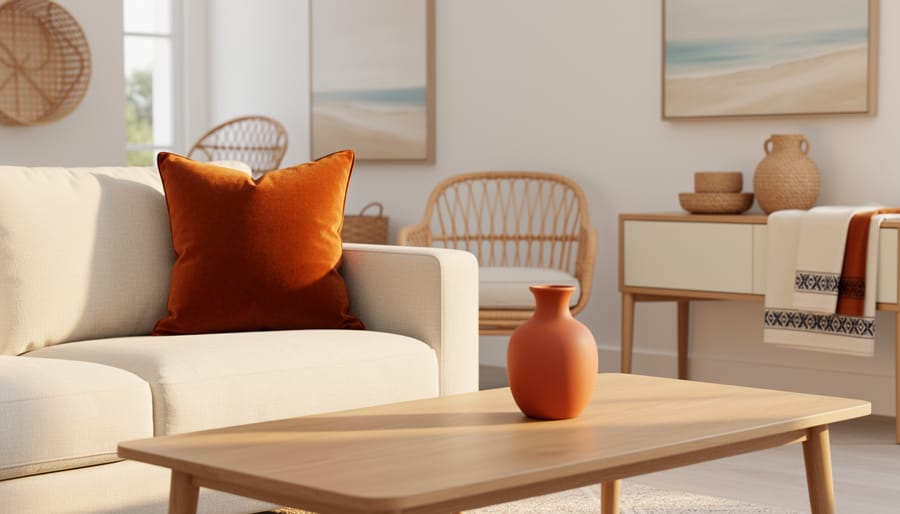
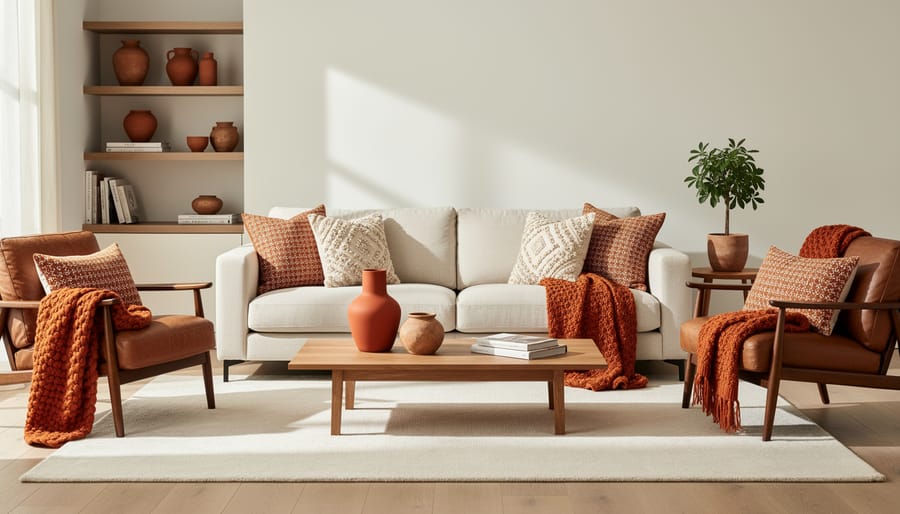
The living room offers the perfect canvas for burnt orange because it welcomes experimentation without long-term commitment. Start with throw pillows, they’re the quickest way to test the shade against your existing palette. Pair two or three burnt orange pillows with cream or natural linen on a brown sofa, and you’ll immediately see how the warmth plays against your walls and flooring.
If pillows feel right, move to curtains or a throw blanket draped over an armchair. These textiles add movement and softness while expanding the color’s presence without overwhelming the room. For Southern living spaces with abundant natural light, burnt orange curtains in a linen or cotton weave filter sunshine beautifully, casting a warm glow throughout the day.
Ready for something bolder? Consider an accent chair upholstered in burnt orange velvet or a woven ottoman that doubles as a footrest and coffee table companion. The 2026 IKEA Style Guide showcases exactly this approach, cream walls anchoring brown furnishings with strategic burnt orange accents that feel both current and rooted in timeless warmth.
Larger pieces work best when you’ve already tested the shade elsewhere. A burnt orange sofa makes a statement, but it demands commitment. Balance it with neutral walls and natural textures like jute rugs and rattan side tables to keep the room from feeling heavy. The goal is warmth that invites conversation, not color that commands all the attention, much like thoughtful touches in beach bathroom ideas that bring personality without overwhelming the space.
Bedrooms: Creating Cozy Retreats
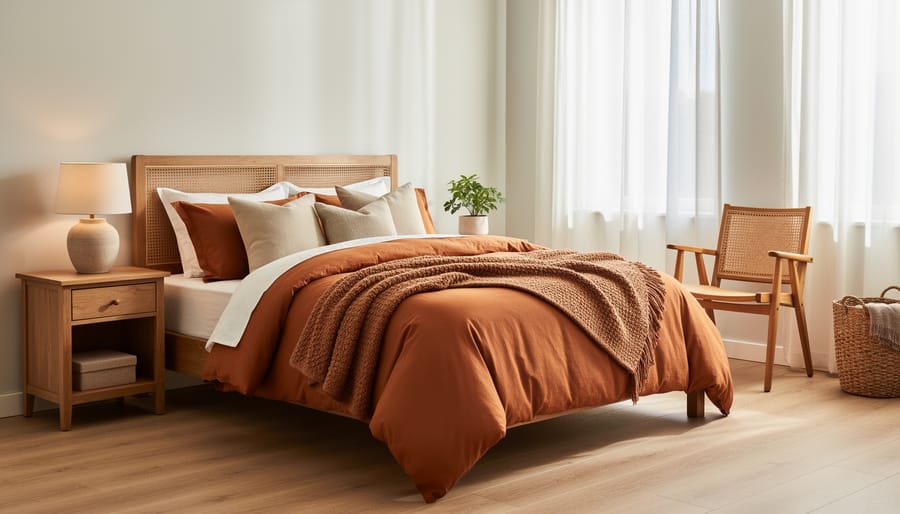
Bedrooms thrive on balance, warmth that invites rest without tipping into overstimulation. Burnt orange delivers exactly that when you layer it thoughtfully. Start with bedding: a linen duvet in burnt orange paired with cream or oatmeal sheets creates depth while keeping the palette calm. If a full duvet feels bold, try burnt orange throw pillows or a chunky knit blanket draped across the foot of the bed.
An accent wall behind the headboard anchors the room without overwhelming it. Choose a muted burnt orange rather than a saturated rust, especially in smaller bedrooms where intense color can shrink the space. Balance it with natural wood nightstands, a rattan headboard, or woven baskets that echo the earthy warmth without competing for attention.
Texture matters here. Velvet cushions, linen curtains, and jute rugs soften the visual weight of burnt orange while adding layers that feel cozy rather than cluttered. Keep lighting warm, brass or wood fixtures enhance the palette, while cool-toned metallics can flatten the whole effect.
The key is restraint. One or two burnt orange elements, bedding and a wall, or pillows and artwork, create a retreat that feels grounded and restful, not chaotic.
Hallways and Entryways: First Impressions That Welcome
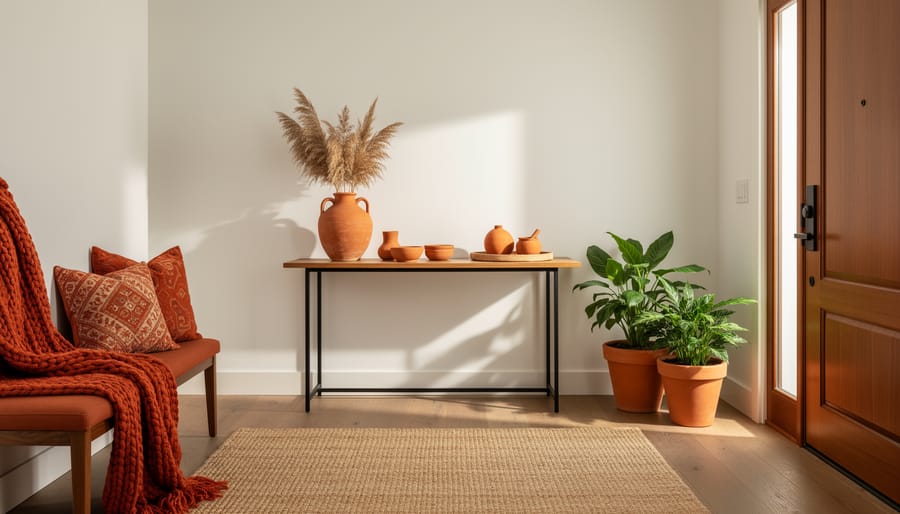
Your hallway sets the tone before guests even step into the main living spaces, and burnt orange offers the perfect welcome, warm enough to feel inviting, rich enough to make a statement. A runner in burnt orange anchors the space and guides the eye forward, especially striking when paired with natural wood floors or light, neutral walls. If your entry opens directly into a hallway, consider a console table styled with burnt orange accents: a ceramic vase, a stack of vintage books with burnt orange spines, or a tray in terracotta tones. Wall art is another high-impact choice. A single large canvas or a gallery wall featuring burnt orange hues creates visual interest without overwhelming the narrow footprint most hallways offer.
Pair burnt orange with natural materials like rattan baskets for storage or a jute wall hanging to enhance that Southern, earthy warmth. The key is restraint, hallways don’t need saturation, just intentional pops that feel cohesive with the rest of your home. A burnt orange throw draped over a bench, a mirror with a warm wood frame, or even a single piece of pottery on a shelf can transform a pass-through space into a memorable moment that reflects genuine hospitality.
Kitchens and Dining Spaces: Warmth Where You Gather
Kitchens and dining rooms are where Southern families naturally gather, making them ideal spots for burnt orange home decor that radiates hospitality. Table linens offer the easiest entry point, try burnt orange placemats against a whitewashed table, or linen napkins that pick up the warmth of natural wood chairs. These textiles bring instant coziness without commitment, and they’re simple to swap seasonally.
Pottery and serveware in burnt orange add vintage charm to open shelving or dining hutches. A collection of earthenware bowls or a ceramic pitcher displayed alongside cream dishware creates visual interest while staying rooted in Southern tradition. Bar stools upholstered in burnt orange velvet or linen work beautifully at kitchen islands, especially when paired with butcher block countertops or aged brass fixtures.
For a bolder statement, consider burnt orange subway tiles as a backsplash accent, just a single row behind the stove or around a window can anchor the entire space. This nod to 1970s warmth feels fresh again in 2026, particularly when balanced with cream cabinetry and natural materials like jute pendant lights or woven baskets.
The key is layering these elements thoughtfully. Burnt orange should complement the gathering experience, not compete with it, creating a backdrop that makes every meal feel a little more intentional.
Pairing Burnt Orange: Colors, Materials, and Textures
Burnt orange home decor reaches its full potential when paired thoughtfully with materials and colors that amplify its natural warmth. The key lies in balancing richness with restraint, letting burnt orange anchor a palette rather than compete within it.
Start with neutrals that won’t fight for attention. Cream walls provide the perfect backdrop, allowing burnt orange accents to glow without overwhelming the space. Soft whites and warm beiges work similarly, creating breathing room around bolder pieces. For depth, layer in terracotta pottery or dusty rose textiles that echo burnt orange’s earthiness while adding subtle variation.
Natural materials are burnt orange’s best friends. Jute rugs ground the color with organic texture, while rattan furniture introduces airy contrast that keeps rooms from feeling heavy. Woven fibers in baskets, lampshades, or wall hangings pick up burnt orange’s rustic warmth and enhance the relaxed, coastal-meets-Southern aesthetic many homeowners crave. Natural wood tones, especially walnut and oak, provide the structural backbone that makes burnt orange feel intentional rather than trendy.
| Material or Color | Design Effect | Best Room Applications |
|---|---|---|
| Cream and warm whites | Creates breathing room, softens intensity | Living rooms, bedrooms, any primary space |
| Jute and rattan | Adds organic texture, prevents heaviness | Living rooms, sunrooms, entryways |
| Olive green | Echoes vintage warmth, grounds the palette | Kitchens, dining areas, hallways |
| Velvet and linen | Introduces tactile richness and depth | Bedrooms, living spaces, reading nooks |
Texture elevates burnt orange from flat to luxurious. Velvet throw pillows catch light beautifully, shifting from deep rust to bright copper depending on the angle. Linen curtains or cushion covers offer a more casual, lived-in feel that suits coastal homes perfectly. The 2026 IKEA Style Guide pairs burnt orange with dusty tones and maroons for a layered, sophisticated look that recalls 1970s warmth palettes without feeling dated.
Olive green deserves special mention as a complementary color. It grounds burnt orange’s vibrancy while nodding to the avocado-and-mustard revival happening alongside this trend, creating spaces that feel both current and rooted in design history.
Small Changes, Big Impact: Easy Burnt Orange Updates
You don’t need to overhaul your entire space to bring in burnt orange. Small, intentional swaps let you test the trend without commitment or expense.
Start with throw pillows. Swapping out cushions on your sofa or bed takes minutes but instantly shifts the room’s warmth. Look for burnt orange in linen or cotton blends that work year-round, not just fall. Two or three pillows layered with cream or terracotta create that lived-in, collected look Southern homes do best.
Pottery and vases offer another low-risk entry point. A single burnt orange ceramic vase on your dining table or console brings color without dominating the space. Fill it with dried grasses or eucalyptus rather than bright florals to keep the palette cohesive. Stoneware bowls in burnt orange work beautifully on open kitchen shelves alongside your everyday dishes.
Artwork gives you flexibility too. A large framed fabric wall art piece in burnt orange and cream can anchor a hallway or bedroom without painting a single wall. You control the scale and intensity.
Don’t overlook planters. Burnt orange pots for your fiddle leaf fig or snake plant add warmth to corners that feel flat. Terracotta naturally complements burnt orange, so mixing the two feels intentional rather than matchy. These small updates let you live with the color before committing to larger pieces.
What to Avoid: When Burnt Orange Goes Wrong
Burnt orange loses its charm when it dominates every surface. A room drenched in this warm hue feels heavy and dated rather than inviting. Stick to the accent approach, pillows, artwork, a single upholstered chair, and let neutral backgrounds do the heavy lifting.
The shade also clashes painfully with cool grays, icy blues, and stark whites. If your home leans coastal-modern with crisp white walls and cool-toned furnishings, burnt orange will feel jarring. Choose terracotta or rust tones for cooler spaces, or warm up your palette first with creams and natural woods before introducing burnt orange accents.
Intensity matters. A deep, saturated burnt orange works in small doses, but covering large areas demands a softer, dustier version. Test paint samples and fabric swatches in your actual lighting before committing to curtains or upholstery.
Finally, don’t force burnt orange into every room just because it’s trending in 2026. It shines brightest in living rooms, bedrooms, and hallways where warmth feels intentional, not arbitrary. Skip it in bathrooms or home offices where calm, focused energy serves you better.
Burnt orange isn’t just having a moment, it’s proving itself as a lasting choice for Southern and coastal homes that value warmth, character, and a connection to heritage. Whether you’re drawn to the 1970s revival palette or simply want to soften your space with earthy tones, this hue offers flexibility that works across styles and budgets.
The beauty of burnt orange home decor lies in its ability to adapt. A single throw pillow can test the waters, while a velvet accent chair makes a bolder statement. Pair it with the natural materials already present in your home, rattan, jute, warm woods, and you’ve got a palette that feels both timeless and current.
Start small if you’re hesitant. Swap out a few accessories, add pottery in terracotta shades, or layer in textiles that echo the warmth of a coastal sunset. Southern homes have always celebrated color that tells a story, and burnt orange fits right into that tradition. Give yourself permission to experiment, trust your instincts, and let this inviting hue bring the kind of warmth that makes a house feel like home.