Planning a coastal home requires balancing architectural vision with the practical demands of oceanside living. Salt air, high winds, and moisture don’t just influence your paint choices, they dictate foundation types, material selection, and structural engineering. In 2026, coastal home design plans have evolved beyond simply copying New England cottage blueprints or California beach bungalows. Today’s best plans integrate climate-resilient construction methods with the relaxed, sun-drenched aesthetic that makes coastal living so appealing.
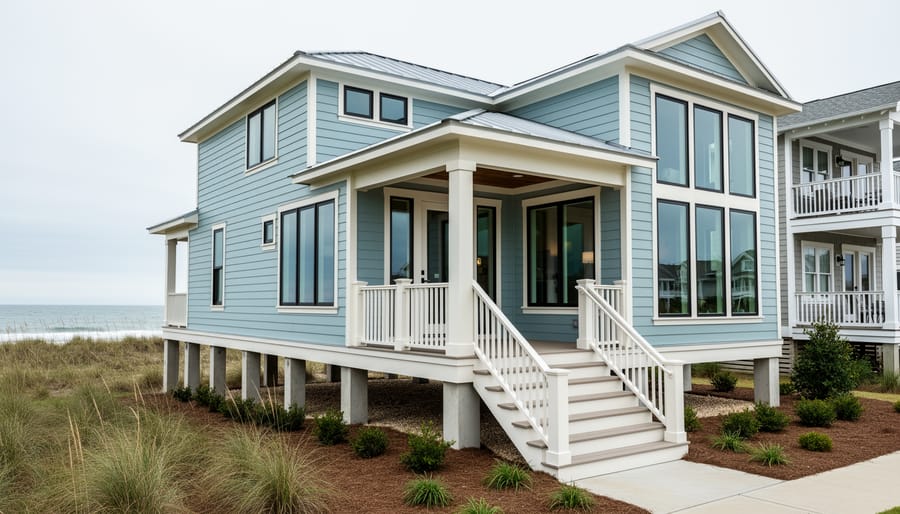
Start by selecting elevated foundation systems that protect against storm surge and flooding while creating natural flow between indoor and outdoor spaces. Most successful coastal designs in flood zones now incorporate pilings or raised concrete slabs that meet FEMA guidelines without sacrificing curb appeal. Your plan should specify corrosion-resistant hardware, impact-rated windows, and breathable exterior materials like fiber cement siding or marine-grade wood treatments.
The interior layout matters just as much as the structural bones. Open floor plans maximize natural light and ocean views, while strategic window placement captures cross breezes to reduce cooling costs. Include covered porches, widow’s walks, or rooftop decks in your blueprints. These aren’t just charming details; they’re functional spaces that extend your living area and connect you to the coastal environment.
Work with architects who understand regional building codes for coastal construction. Requirements vary dramatically between Gulf Coast communities and Atlantic barrier islands. The right professional will deliver plans that satisfy local regulations while capturing that breezy, barefoot elegance you’re after.
What Makes a Home Design Plan Truly Coastal
A coastal home design plan goes far beyond slapping some blue paint on the walls and calling it beachy. The most authentic coastal plans are built from the ground up with specific architectural features that respond to waterfront living, honoring both the practical demands of coastal environments and the relaxed aesthetic we all crave.
Before you build it’s worth understanding what truly sets these plans apart. Traditional Southern homes might feature formal dining rooms and enclosed kitchens, but coastal designs prioritize openness and flow. Think fewer walls, more windows, and spaces that breathe.
The signature elements that define a genuine coastal home plan include:
- Elevated foundations that protect against flooding and storm surge while creating sheltered parking or storage below
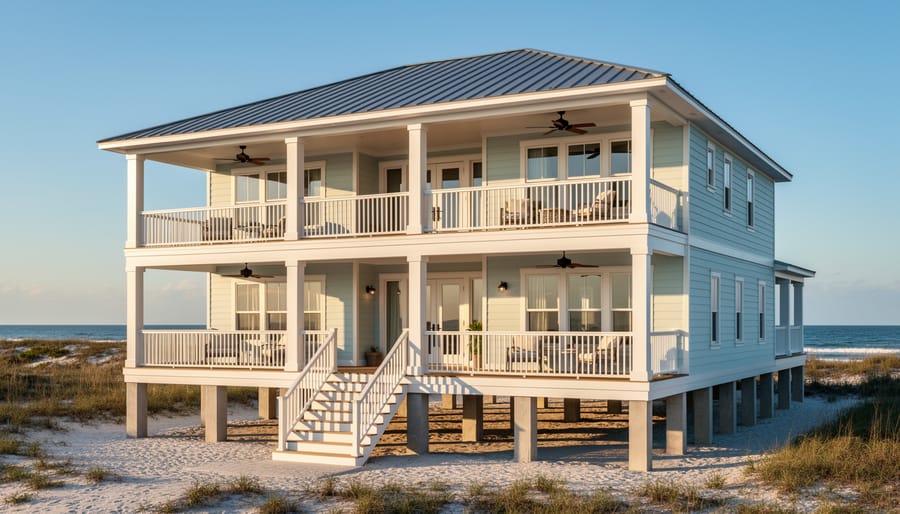
- Expansive porches and decks that extend living space outdoors, often wrapping multiple sides of the home
- Generous windows positioned to capture ocean breezes and natural light from multiple angles
- Open floor plans that eliminate barriers between kitchen, dining, and living areas
- Cathedral or vaulted ceilings that enhance the sense of airiness and space
- Outdoor shower stations and mudroom entries designed for sandy feet and beach gear
Elevation matters more than most folks realize. Coastal engineers consider elevating structures essential protection against flooding, but it also creates that iconic coastal profile we associate with beach houses. This practical requirement becomes an architectural advantage, allowing for breezy ground-level gathering spaces and dramatic approaches to main living areas.
Window placement deserves particular attention in coastal plans. Smart designers use ocean-facing windows strategically to harness natural ventilation, reducing reliance on air conditioning while filling spaces with that coveted connection to the outdoors. Cross-ventilation becomes your best friend in Southern coastal climates, where humidity can turn a poorly planned home into a sweatbox.
The magic happens when these structural elements work together. A properly designed coastal plan doesn’t fight the environment or the regional building traditions, it embraces both. You get hurricane-resistant construction that doubles as design character, and practical features like covered outdoor living spaces that honor Southern porch culture while protecting against intense sun and sudden storms.
Room-by-Room Coastal Design Planning
Living Areas That Flow Like the Tide
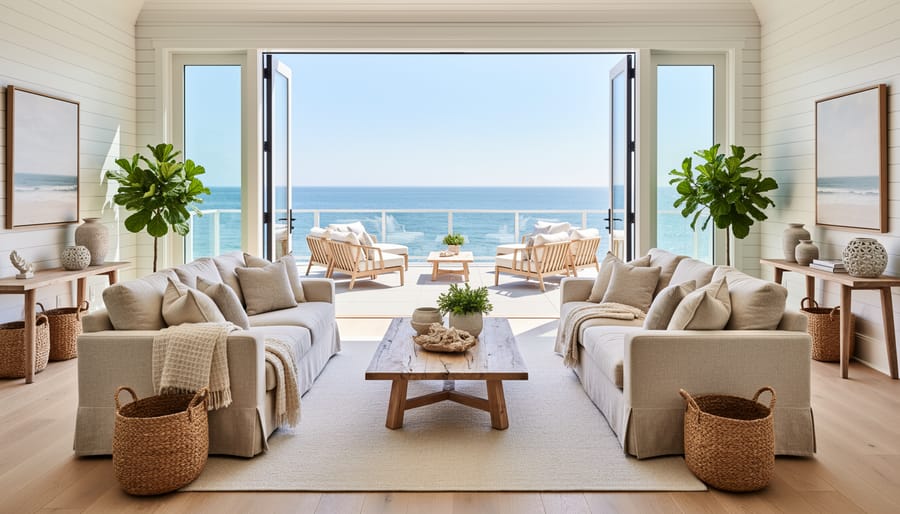
The heart of any coastal home lies in living spaces that refuse to feel boxed in. Open-concept plans that unite the living room, dining area, and kitchen create the airy, uninterrupted flow that mirrors the horizon where ocean meets sky. When you’re sketching your layout, eliminate unnecessary walls and half-walls that chop up sightlines, coastal living thrives on visual continuity and the sense that one space breathes into the next.
Window placement deserves careful thought at the planning stage, not as an afterthought. Position large windows and glass doors to capture prevailing breezes and frame water views or lush coastal landscapes. Consider floor-to-ceiling windows on the side facing outdoor living areas, and plan for pocket or sliding glass doors that disappear completely, erasing the boundary between inside and out. This isn’t just about aesthetics; it’s about designing for cross-ventilation that keeps Southern coastal homes comfortable without over-relying on air conditioning.
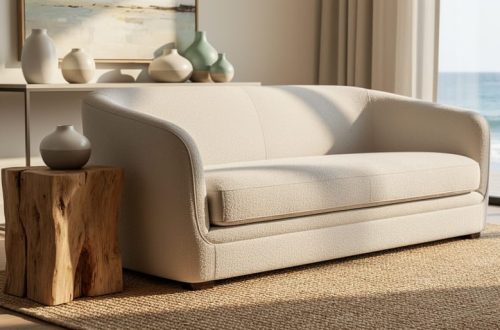
Build coastal architectural elements into your plans from the start rather than tacking them on later. Shiplap or beadboard can be specified for ceilings to add texture overhead while keeping walls clean and bright. Plan for reclaimed wood beams in vaulted living areas, which add warmth without heaviness. Choose natural materials like wide-plank oak or hickory flooring that ground the space in organic tones, and design built-in shelving with open cubbies that showcase coral, driftwood, and collected treasures without cluttering counters. Your design plans should create a backdrop where woven jute rugs, linen sofas, and sea-glass accents feel perfectly at home, not forced into a space that fights the coastal vision.
Bedrooms as Coastal Retreats
A coastal bedroom plan should position the bed where you’ll wake to natural light, ideally angled toward a window that frames morning sun or distant water views. Skip the typical bed-against-the-wall placement if the room’s layout allows; floating the bed or positioning it to capture cross breezes transforms the space from ordinary to retreat-worthy. Plan your window treatments during the design phase, not after move-in: consider transom windows above standard ones to flood the ceiling with light while maintaining privacy, or position windows on adjacent walls to create that airy, wrapped-in-sunshine feeling coastal bedrooms need.
Built-in storage deserves serious consideration in coastal bedroom plans. Design window seats with lift-top compartments for extra blankets and beach towels, or flank the bed with built-in cubbies that hold books, shells, and the sundries that tend to pile on nightstands. If your plan includes a walk-in closet, incorporate open shelving for woven baskets, they’re prettier than plastic bins and perfect for organizing beach gear, seasonal linens, and that collection of sun hats. A well-planned bedroom hits storage perfection when everything has a home but nothing feels hidden behind closed doors.
Material choices matter during planning, too. Specify durable flooring that tolerates sandy feet, wide-plank oak or luxury vinyl in weathered driftwood tones. Choose ceiling fans with substantial blades that actually move air, not decorative spinners that look coastal but perform poorly in humid climates.
Bathrooms with Spa-Like Coastal Vibes
Your bathroom should feel like a private coastal spa the moment you step inside. Start by planning a walk-in shower with a generous footprint, ideally at least four by five feet, so you can incorporate a rainfall showerhead that mimics standing under a gentle summer rain. Position the shower to receive natural light if possible, or plan for a frosted window that preserves privacy while letting sunshine filter through.
Material selection during the design phase sets the entire tone. Sea glass tiles in soft aqua, seafoam, or sandy beige create stunning accent walls without overwhelming the space. For larger surfaces, consider white subway tile with light grout that keeps things bright and breezy. Weathered wood vanities bring that driftwood aesthetic indoors, though you’ll want to specify marine-grade finishes that handle Southern coastal humidity without warping or deteriorating.
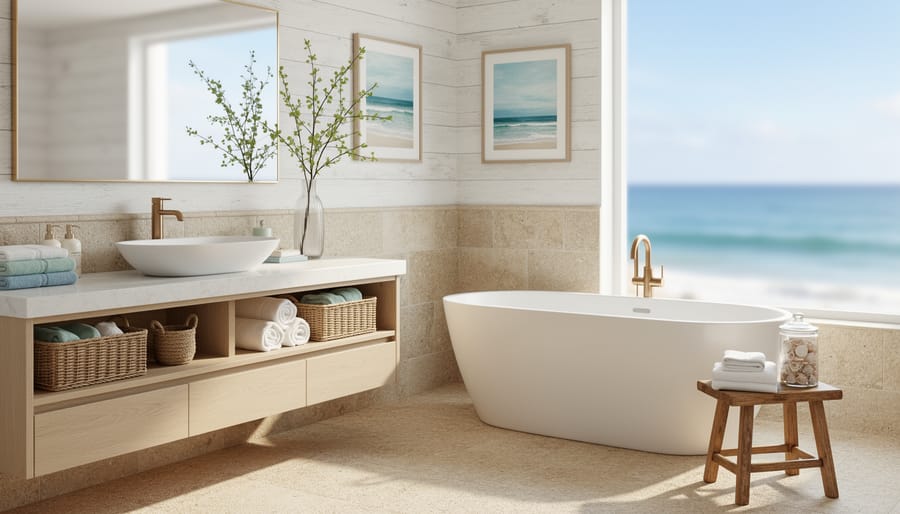
The vanity itself deserves thoughtful planning. Opt for floating designs that create an airy feel and make cleaning easier, or choose open shelving underneath where you can display rolled towels in coastal whites and blues. Plan for dual sinks if space allows, morning routines flow smoother when everyone has their own territory.
Incorporate plenty of natural textures through your material choices. Pebble tile flooring for the shower floor feels wonderful underfoot and provides excellent slip resistance. Consider a freestanding soaking tub positioned near a window if your floor plan permits, creating a focal point that channels resort-style relaxation.
Don’t forget the practical details that support your beach bathroom ideas. Plan adequate ventilation to handle moisture, specify corrosion-resistant fixtures in brushed nickel or oil-rubbed bronze, and include thoughtful storage for beach towels, sunscreen, and sandy-day essentials that coastal living demands.
Color Palettes and Material Selections in the Planning Phase
Locking in your coastal color scheme and materials during the planning phase saves headaches down the road. Too many folks pick paint colors after construction wraps, only to realize their dream seafoam green clashes with builder-grade oak cabinets. Smart planning means your structural choices and decorative vision work together from day one.
Start with your color palette as a planning tool, not just a decor decision. Whites, soft blues, sandy beiges, and weathered grays aren’t just pretty, they reflect light and heat, which matters in Southern coastal climates where afternoon sun can turn a dark-walled room into an oven. Specify these colors in your design documents for trim, cabinetry, and built-ins. That custom navy island in your kitchen sketches becomes reality when your contractor orders the right finish upfront.
Material choices deserve equal attention during planning. Coastal homes face humidity, salt air, and occasional storms, so your beautiful vision needs to withstand real conditions. Engineered hardwood holds up better than solid oak in moisture-prone areas. Quartz countertops resist the etching that can plague marble near the beach. Porcelain tile that mimics driftwood delivers coastal charm without the warping risks of real wood in bathrooms.
| Material Type | Coastal Aesthetic Fit | Humid Climate Durability | Maintenance Level |
|---|---|---|---|
| Engineered Hardwood Flooring | Natural warmth, beachy texture | High (moisture-resistant core) | Low to moderate |
| Quartz Countertops | Clean, beachy whites/grays | Excellent (non-porous) | Low |
| Shaker-Style Painted Cabinets | Classic coastal simplicity | Good with proper sealing | Moderate |
| Porcelain Tile | Versatile (stone/wood looks) | Excellent | Low |
Fixture finishes matter more than you’d think. Brushed nickel and matte black hold their appearance better than polished chrome in salty air. Oil-rubbed bronze adds warmth but needs regular cleaning to maintain its coastal cottage appeal. Specify these finishes in your plans so plumbers and electricians order the right pieces before installation day.
Think about practical coastal living when selecting cabinetry finishes. White painted shakers remain the gold standard for coastal homes, they bounce light around, hide fingerprints better than dark stains, and create that airy beach house feel. But request a durable paint grade that stands up to humidity. Your designer or contractor should spec marine-grade or exterior-rated finishes for cabinets in high-moisture areas.
Outdoor Living Spaces in Coastal Home Plans
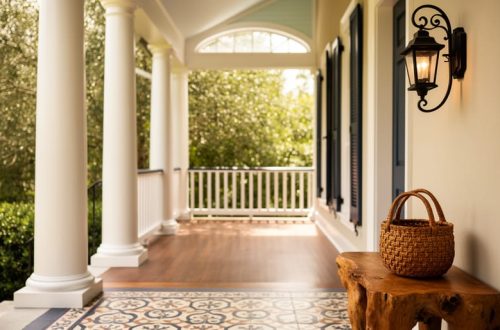
Outdoor spaces in coastal home plans deserve the same careful planning as interior rooms, they often become the heart of Southern beachside living. A wraparound porch offers multiple vantage points to enjoy ocean breezes while creating natural gathering spots for morning coffee or evening conversation. Position decks on the windward side to capture cooling air during hot summers, and plan their dimensions generously enough for full dining sets rather than token café tables.
When designing these spaces, hurricane-resistant elements aren’t optional extras in coastal regions. Specify impact-resistant railing systems, anchored pergolas that can withstand 120+ mph winds, and drainage solutions that channel heavy rainfall away from foundations. The porch ceiling material you select affects both longevity and aesthetics, tongue-and-groove treated pine or marine-grade beadboard stands up to salt air while maintaining that classic coastal look.
Shade structures require strategic placement. A fixed roof over the primary seating area provides reliable protection, while retractable awnings offer flexibility for catching winter sun. If you’re incorporating an outdoor kitchen, position it near an interior wall to minimize plumbing runs and create a natural service connection to your indoor kitchen. Include covered storage for cushions and outdoor entertaining essentials, exposed coastal weather deteriorates fabrics quickly.
Design these outdoor rooms to mirror your interior coastal palette. Whitewashed decking complements weathered gray siding, while planters filled with salt-tolerant grasses and succulents soften hardscaped edges. Built-in bench seating with lift-top storage maximizes space while hiding beach toys and equipment. Every square foot of your outdoor plan should work as hard as your interior spaces, creating seamless transitions that let you live both inside and outside throughout the seasons.
Where to Find Inspiration and Professional Help in 2026
Planning a coastal home transformation can feel overwhelming when you’re staring at blank walls and trying to envision weathered wood beams overhead. The good news is that 2026 offers excellent opportunities to connect with professionals who specialize in translating coastal dreams into workable design plans.
Home shows remain one of the most valuable resources for homeowners in the planning phase. You can walk through full-scale room vignettes, touch actual materials, and most importantly, speak directly with designers who understand the unique challenges of coastal architecture in Southern climates. Two upcoming events deserve a spot on your calendar if you’re serious about getting your coastal home design plans right.
| Event | Dates | Location | What to Bring |
|---|---|---|---|
| Living Luxe Design Show | April 16-19, 2026 | Toronto Congress Centre, Etobicoke | Floor plan sketches, inspiration photos |
| Fall Home Show 2025 | September 26-28, 2025 | Enercare Centre, Toronto | Space photos, room measurements, design drawings |
The Fall Home Show, presented by The Toronto Home Shows, has historically offered Reno+Decor Designers and Decorators for free consultations. Visitors are encouraged to bring photos and drawings of their space for these Ask a Professional sessions. With 250+ vendors, it’s a treasure trove for sourcing coastal materials and seeing design concepts in person.
The Living Luxe Design Show runs Thursday through Sunday in mid-April at the Toronto Congress Centre’s North Building. This event tends to attract designers who work with higher-end coastal aesthetics, making it ideal for homeowners planning comprehensive renovations rather than quick refreshes.
Beyond these events, consider tapping into local coastal communities along the Southern shores. Many architects and designers who specialize in hurricane-resistant coastal construction maintain portfolios online and offer virtual consultations. Your regional home builders association can also connect you with professionals experienced in elevated foundations and flood-zone requirements that are essential to authentic coastal home planning.
Creating a home that truly captures the essence of coastal living starts long before you pick out throw pillows or hang nautical art. When you invest time in thoughtful design planning, mapping out room flow, choosing materials that echo the shore, and building in those signature coastal elements from the ground up, you’re setting yourself up for a space that feels effortlessly beachy rather than staged.
The beauty of approaching coastal design holistically is that your structural choices and decorative touches work together instead of competing. That vaulted ceiling you planned for natural light? It makes your white oak beams shine. The window placement you agonized over? It frames those blue-and-sand color palettes perfectly. When architecture and decor speak the same language, your home feels cohesive and genuinely lived-in.
Remember, there’s no single blueprint for coastal living. Your Southern coastal sanctuary might lean toward breezy minimalism or embrace a collected, layered look that tells your family’s story. What matters is that you’re building something authentic, a place where hospitality meets relaxation, where every room invites you to slow down and breathe in that salt air, real or imagined. Take your time with the planning, trust your instincts about what feels right for your life, and don’t be afraid to blend coastal charm with the warmth that makes a house truly Southern. You’re not just designing rooms; you’re creating the backdrop for years of memories and moments of peace.