If you’ve spent any time scrolling through design feeds lately, you’ve noticed farmhouse decor has split into two distinct camps. What started as a single aesthetic has evolved into traditional farmhouse with its weathered woods and antique finds, and modern farmhouse with its cleaner lines and neutral palettes. The confusion is real, and choosing between them matters because your home deserves a cohesive look that reflects who you actually are.
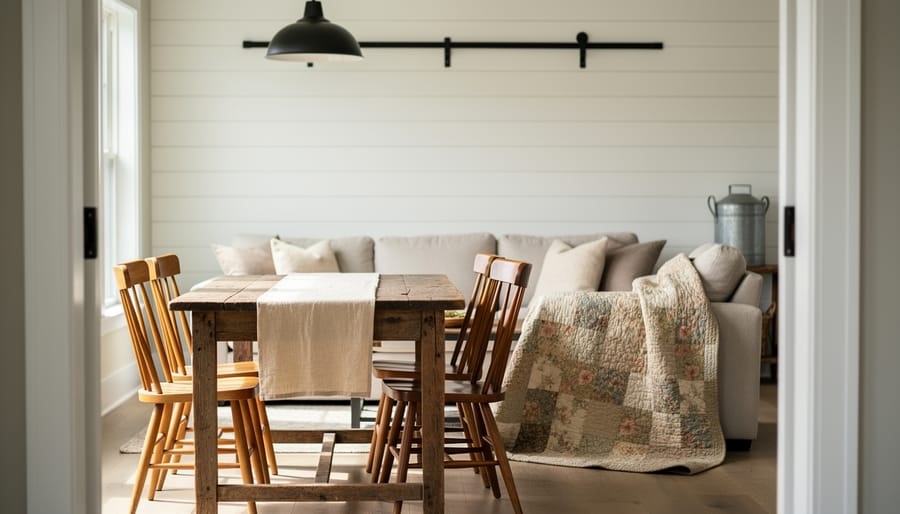
Traditional farmhouse draws from authentic agricultural roots. Think exposed ceiling beams, vintage farm tables, mismatched chairs collected over time, and that lived-in patina you can’t fake. Enamelware, galvanized metal buckets, and heirloom quilts complete the picture. This style speaks to homeowners who value history and aren’t afraid of a little roughness around the edges.
Modern farmhouse stripped away the clutter and kept the warmth. Shiplap remains, but it’s painted crisp white. Furniture lines are simpler. The color story stays tight, usually white, gray, and black with natural wood tones. Industrial touches like metal light fixtures and sleek hardware balance the rustic elements. It’s farmhouse for people who want the coziness without the collection.
Here’s what most design blogs won’t tell you: you don’t need to pick one and stick to it rigidly. Southern homes have always mixed eras and styles with confidence. The key is understanding the principles behind each approach so you can blend them intentionally rather than accidentally creating visual chaos.
Your home’s architecture offers the first clue about which direction suits you best. A 1920s bungalow naturally leans traditional. A new construction with open floor plans works beautifully with modern farmhouse bones. But personal lifestyle matters more than you might think. Do you collect things, or do you prefer clear surfaces? That answer alone will steer you toward your authentic farmhouse style.
Understanding Traditional Farmhouse Style
Core Elements That Define Traditional Farmhouse
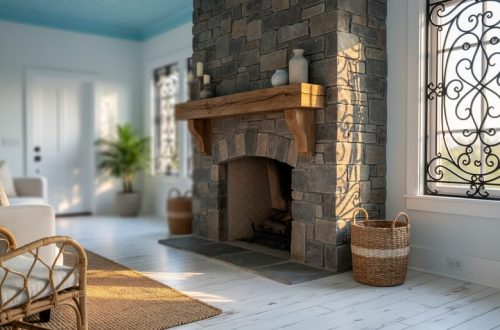
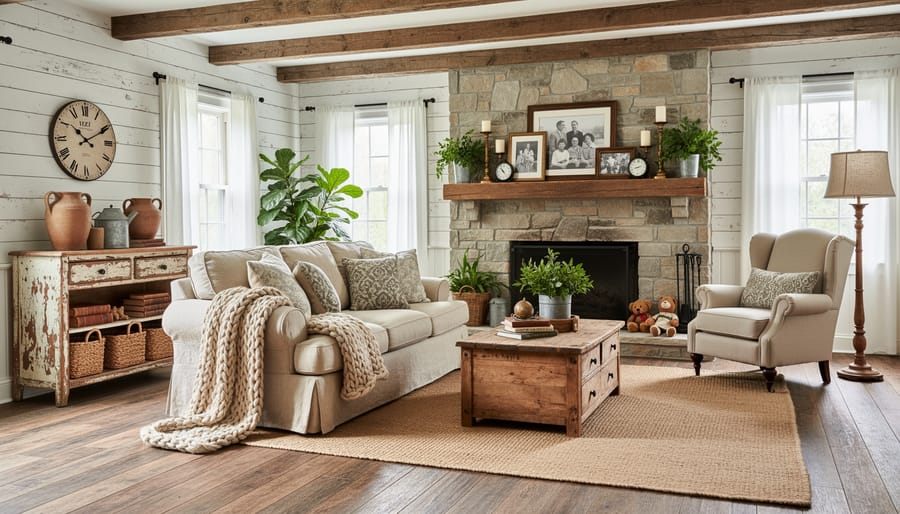
Traditional farmhouse style lives through its materials and details. Walk into an authentic farmhouse home, and you’ll immediately notice the reclaimed wood, ceiling beams that show their age with honest weathering, planked walls that tell stories through their imperfections, and floors worn smooth by generations of footsteps. This isn’t distressed lumber made to look old; it’s genuine salvaged wood from barns, warehouses, and old buildings, carrying real history into your space.
The farmhouse sink anchors the kitchen like no other fixture can. These deep, apron-front basins in white fireclay or porcelain have served farms for over a century, large enough to wash everything from dinner dishes to freshly picked vegetables. They’re functional pieces that happen to be beautiful, which perfectly captures the farmhouse philosophy.
Open shelving displays everyday items as decor. Instead of hiding dishes behind cabinet doors, traditional farmhouse kitchens put ironstone platters, stoneware crocks, and Mason jars right where you can see them. It’s practical storage that doubles as visual warmth.
Barn doors bring architectural character whether they’re original salvaged pieces or thoughtfully crafted replicas. These sliding doors on exposed metal tracks add rustic texture while saving space, a farm-born solution that’s genuinely clever, not just trendy.
Vintage accessories complete the look. Think galvanized metal buckets, wooden crates stamped with farm names, enamelware pitchers, and antique scales. These aren’t random thrift store finds thrown together; they’re carefully chosen pieces that reference actual farm life and create layers of authentic character throughout your home.
Color Palettes and Textures
Traditional farmhouse color palettes draw inspiration from the land itself, creating spaces that feel naturally connected to Southern countryside living. Think soft creams that recall cotton fields, warm grays reminiscent of weathered barn siding, and gentle sage greens pulled from kitchen gardens. These aren’t the stark whites of modern design, they’re warmer, with undertones that shift throughout the day as light changes.
The beauty lies in layering muted shades rather than creating high contrast. Butter yellows pair with faded blues, rust oranges nestle beside deep browns, all working together like a well-loved quilt. Reds tend toward brick and terracotta rather than fire-engine brightness. Even darker accents keep their warmth, leaning into chocolate browns and charcoal grays rather than cool blacks.
Texture does as much work as color in traditional farmhouse spaces. Rough-hewn beams contrast with smooth cotton curtains. Nubby linen slipcovers invite you to sink in, while jute rugs ground the room with natural fibers underfoot. Weathered wood surfaces show their age proudly, whether on a farmhouse table or open shelving. You’ll find basket-weave patterns in throws, grain visible in flooring, and the gentle wear of time on painted furniture. Consider incorporating framed fabric art featuring vintage feedsack prints or flour-sack towels to add another layer of authentic textile interest.
This textural richness keeps traditional farmhouse from feeling flat or one-note, even within its deliberately limited color range.
Decoding Modern Farmhouse Aesthetic
The Shiplap Revolution and Beyond
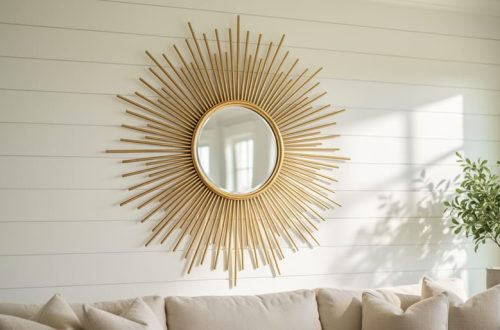
Shiplap transformed modern farmhouse from a niche aesthetic into a design phenomenon that swept through Southern homes, and there’s a good reason why. Those horizontal planks create instant architectural interest without overwhelming a space, striking that perfect balance between rustic texture and clean simplicity that defines the modern farmhouse look.
But shiplap is just the beginning. The modern farmhouse toolkit includes black-framed windows and doors that add crisp definition against white or neutral walls, creating a graphic quality traditional farmhouse rarely achieves. These dark frames mirror the industrial-inspired light fixtures, think oversized barn lights, metal cage pendants, or simple black chandeliers, that anchor modern farmhouse spaces with updated character.
Mixed metals have become another signature move. You’ll see brass cabinet pulls paired with matte black faucets, or nickel light fixtures alongside wrought iron curtain rods. This layering prevents the monotony that can happen when everything matches too perfectly, adding depth while maintaining the style’s streamlined sensibility.
The genius of these elements is how they work together to create spaces that feel both intentional and comfortable. Shiplap provides texture and warmth, black accents ground the airiness, and mixed metals add subtle complexity. The result is rooms that photograph beautifully but don’t feel staged for company, they’re designed for real living.
Modern farmhouse also embraces white oak flooring over the darker woods traditional farmhouse favors, along with quartz countertops that mimic marble but handle Southern humidity and daily wear without complaint. These practical choices reflect how this style evolved for contemporary homeowners who want character without constant maintenance.
Modern Farmhouse Meets Coastal Living
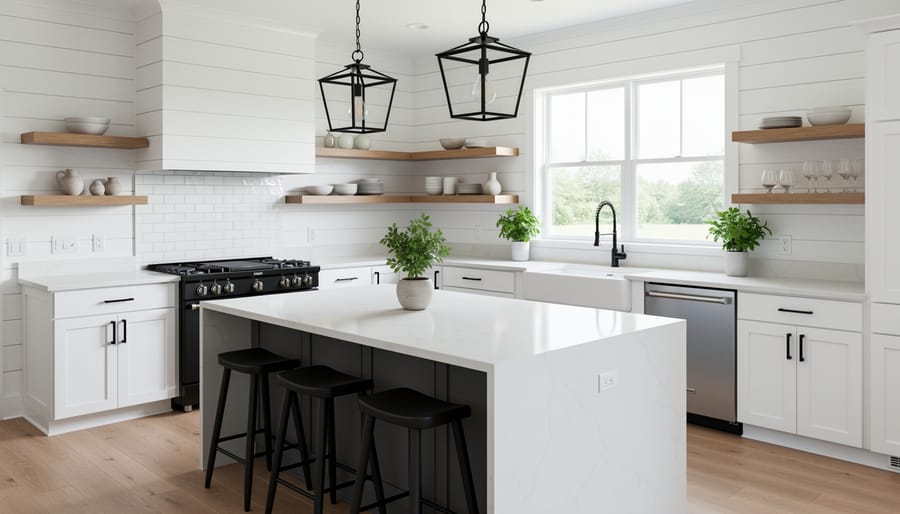
Along the Southern coast, where salt air meets Southern hospitality, modern farmhouse decor has found its perfect match. The crisp lines and clean aesthetic of modern farmhouse create an ideal framework for coastal elements without the heaviness that can weigh down beachside homes.
This pairing works because both styles share a love of light and openness. White shiplap walls reflect the brightness of coastal living while maintaining that farmhouse structure. Natural fiber rugs in jute or sisal bring texture that feels equally at home in a farmhouse or beach cottage, grounding spaces without the visual weight of traditional wool.
The neutral palette of modern farmhouse becomes a canvas for coastal accents. Weathered driftwood pieces sit beautifully alongside sleek black fixtures, while linen curtains in soft whites and grays flutter in the sea breeze. You can introduce ocean-inspired blues through throw pillows or artwork without overwhelming the clean farmhouse foundation.
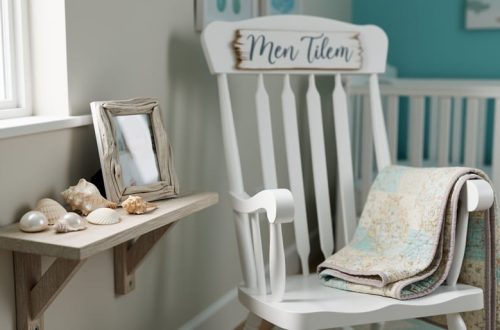
Furniture choices lean lighter too. A streamlined farmhouse table in whitewashed pine feels more appropriate for a coastal home than a heavy antique oak piece. Open shelving displays collections of shells and pottery without the clutter that traditional farmhouse sometimes embraces. The result is a space that breathes with both farmhouse warmth and coastal ease, perfectly suited to Southern homes where the two worlds naturally overlap.
Side-by-Side: Key Differences That Matter
When you’re standing in a furniture showroom or scrolling through home decor websites (which accounts for 38% of sales in 2026), the differences between traditional and modern farmhouse can feel subtle at first. But understanding these distinctions helps you invest wisely in pieces that’ll work together rather than clash.
The easiest way to spot the difference is through your initial gut reaction. Traditional farmhouse whispers “come sit a while” with its collected-over-time warmth, while modern farmhouse says “relax in style” with its curated simplicity. Both invite you in, just through different doors.
| Design Element | Traditional Farmhouse | Modern Farmhouse |
|---|---|---|
| Color Palette | Warm creams, barn reds, sage greens, weathered blues | Crisp whites, black accents, soft grays, minimal color |
| Furniture Style | Distressed wood, varied pieces, visible wear, ornate details | Clean lines, matching sets, smooth finishes, simple forms |
| Accessories | Vintage finds, collections, quilts, farm tools, floral patterns | Minimal greenery, metal accents, geometric shapes, curated displays |
| Overall Feel | Cozy clutter, lived-in comfort, nostalgic warmth | Airy openness, intentional simplicity, fresh elegance |
Your color choices tell the biggest story. Traditional farmhouse embraces the full spectrum of country life, think faded barn red cabinets, buttery yellow walls, and soft robin’s egg blue accents. These colors layer together like a patchwork quilt, creating depth and visual interest in every room. Modern farmhouse strips this down to a foundation of whites and grays, then adds drama through black window frames, light fixtures, and hardware. It’s the difference between a paint chip collection and a carefully edited palette.
Furniture selection reveals your philosophy. Traditional farmhouse celebrates mismatched charm, a pine harvest table paired with different chair styles, an antique hutch alongside a newer sideboard. Each piece has a story, and that variety creates character. Modern farmhouse prefers intentional coordination. That same dining space might feature a sleek wooden table with matching benches, creating visual calm rather than collected eclecticism.
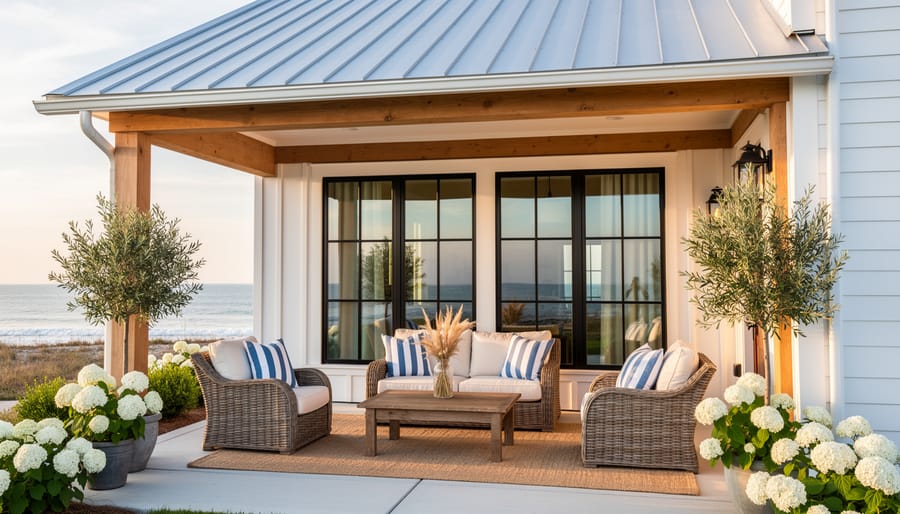
The atmosphere shifts dramatically between these approaches. Walk into a traditional farmhouse room and you’ll spot collections on open shelving, vintage signs on walls, and layered textiles creating cozy nooks. A modern farmhouse space feels more breathable, with negative space as important as the furniture itself. Even outdoor elements differ, traditional farmhouse might feature classic wood porch ceiling options in natural tones, while modern farmhouse leans toward painted finishes in crisp white or haint blue for clean contrast.
Neither approach is better, they just serve different needs. If you love hunting flea markets and displaying treasures, traditional farmhouse gives you permission to celebrate those finds. If you prefer simplified surfaces and easy maintenance, modern farmhouse offers structure without stuffiness.
Choosing the Right Style for Your Home
Questions to Ask Before You Commit
Before you settle on traditional farmhouse or modern farmhouse, or start mixing both, take a moment to consider how each style will work in your actual life. Your answers to these questions will point you in the right direction.
How much time do you want to spend maintaining your decor? Traditional farmhouse’s vintage pieces and layered textures require regular dusting and care. Those charming open shelves need tidying, and weathered wood finishes might need occasional refinishing. Modern farmhouse’s cleaner lines and built-in storage generally demand less fuss.
Are you a collector or a curator? If you love hunting for antique crocks, vintage signs, and grandfather’s tools to display, traditional farmhouse gives you permission to showcase it all. If you prefer selecting a few meaningful pieces and keeping surfaces clear, modern farmhouse’s restraint will feel like breathing room.
What’s your formality comfort zone? Picture yourself hosting Sunday dinner. Does the scene include mismatched chairs around a weathered farm table, or upholstered seating around a clean-lined wood table? Your gut reaction matters more than any design rule.
Where do you see yourself in five years? Trends shift, but your home shouldn’t feel dated quickly. Traditional farmhouse has stayed relatively consistent for decades. Modern farmhouse’s popularity exploded recently, which means some elements might eventually feel tied to this era. Choose what you’ll still love when the next big trend arrives.
When Your Home’s Architecture Decides for You
Sometimes your home makes the style decision for you, and that’s actually a gift. A 1920s bungalow with original crown molding and hardwood floors practically begs for traditional farmhouse charm; fighting that architectural narrative with stark modern elements feels forced. Those vintage details want the warmth of antique crocks and worn wooden bowls, not minimalist white subway tile everywhere.
Conversely, if you’re in a new coastal build with open-concept living and floor-to-ceiling windows, modern farmhouse’s clean lines and airy neutrals enhance what you’ve already got. High ceilings and contemporary architecture look awkward when cluttered with too many vintage collectibles or heavy rustic pieces.
Historic Southern homes with original beadboard, deep porches, and pocket doors shine brightest when you honor their traditional roots. Meanwhile, properties with industrial-style exposed beams or concrete floors bridge beautifully into modern farmhouse territory, those raw materials are already halfway there.
Pay attention to what your home is telling you. If you’ve got architectural bones from another era, lean into them rather than covering them up. Your walls, floors, and windows already point you toward the style that’ll feel most authentic.
Blending Both Styles: The Best of Both Worlds
Room-by-Room Blending Strategies
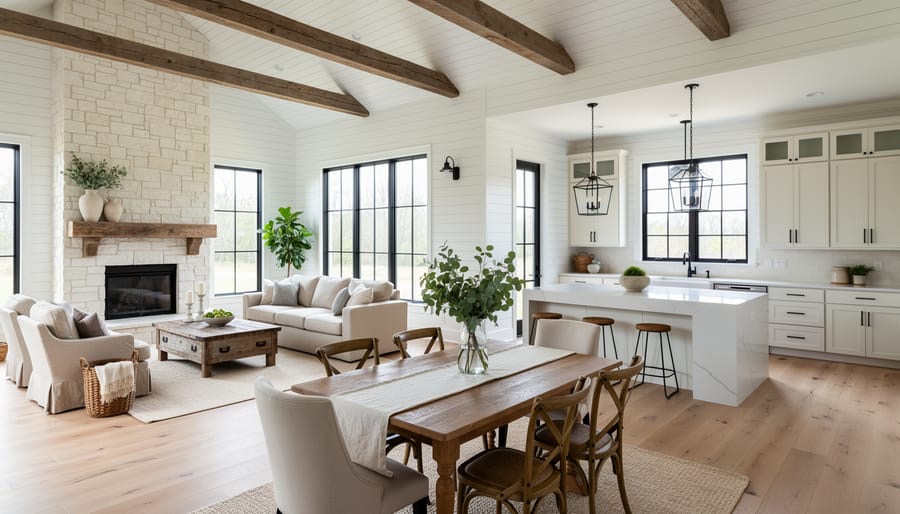
The kitchen pairs beautifully with traditional elements, think butcher block counters, open shelving stocked with vintage crockery, and a farmhouse sink, while your adjoining dining room leans modern with sleek black metal chairs and a streamlined table. The contrast creates visual interest without feeling disjointed because both spaces share a neutral foundation.
Your living room works well with modern farmhouse bones: clean-lined sofas, shiplap accent walls, and minimal window treatments. Layer in traditional warmth through vintage quilts draped over chair backs, weathered wooden side tables, and farmhouse-style candles clustered on reclaimed wood trays. The modern structure keeps it from feeling cluttered, while traditional accessories add soul.
Bedrooms thrive on this mix. Start with a sleek platform bed and crisp white bedding (modern), then pile on vintage pillows, a woven throw, and an antique dresser (traditional). The blend feels both restful and collected.
Bathrooms offer prime blending territory, especially in coastal homes where you can merge coastal bathroom ideas with farmhouse charm. Pair a modern floating vanity with traditional beadboard walls, or install a classic clawfoot tub alongside contemporary black fixtures. The key is choosing one dominant style per room, then seasoning it with accents from the other.
Shopping Smart in 2026’s Home Decor Market
The home decor market size reaching $258.1 billion in 2026 means you’ve got unprecedented access to farmhouse pieces at every price point. With furniture commanding 42% of product purchases, manufacturers are investing heavily in both traditional and modern farmhouse styles, making quality options more available than ever before.
Online retail’s 38% market share has transformed how we shop for farmhouse decor. You can browse hundreds of modern farmhouse options on major furniture sites, compare prices instantly, and read real reviews before committing. But here’s where smart shoppers get an edge: save online browsing for new modern farmhouse pieces where consistency matters, then hit local sources for traditional farmhouse character.
For authentic traditional farmhouse finds, nothing beats estate sales, architectural salvage yards, and Southern antique shops. That weathered barn door or vintage farmhouse table carries stories that new pieces can’t replicate. Yes, you’ll invest time hunting, but you’ll discover one-of-a-kind pieces at fraction-of-retail prices.
Budget strategically by investing in anchor pieces, your farmhouse dining table, quality reclaimed wood shelving, or that perfect vintage hutch, then fill in with affordable accents. Traditional farmhouse thrives on collected-over-time appeal, so resist buying everything at once. Modern farmhouse benefits from cohesive sets, making retailers’ room packages worth considering if they align with your vision.
Watch for seasonal sales, particularly after major holidays and during end-of-summer clearances when retailers refresh inventory. The market’s steady 6.9% growth rate means competition keeps prices competitive, especially online where comparison shopping takes seconds.
The beauty of farmhouse decor, whether traditional, modern, or somewhere in between, is that there’s no wrong answer. Your home should tell your story, and both styles offer that warmth and authenticity that make Southern living so special.
Maybe you’re drawn to the lived-in comfort of traditional farmhouse, where every vintage piece carries history and character. Or perhaps the clean lines and airy feel of modern farmhouse better suit your lifestyle. You might even discover that the perfect solution is your own blend, mixing grandmother’s antique dresser with sleek subway tile backsplash.
The farmhouse trend isn’t going anywhere, with the home decor market growing steadily and homeowners continuing to invest in creating spaces that feel genuine and inviting, both styles have staying power. That’s good news whether you’re fully committed to one aesthetic or still figuring out what speaks to you.
Trust your gut. Walk through your home and notice what makes you smile. Consider how you actually live in your spaces, not just how they photograph. Talk to your family about what comfort means to them.
Your farmhouse journey doesn’t require perfection or strict adherence to design rules. It requires heart. Choose pieces that make you happy, create spaces that welcome the people you love, and remember that the best-decorated home is one that feels like yours. That’s the real farmhouse spirit, no matter which style hangs on your walls.