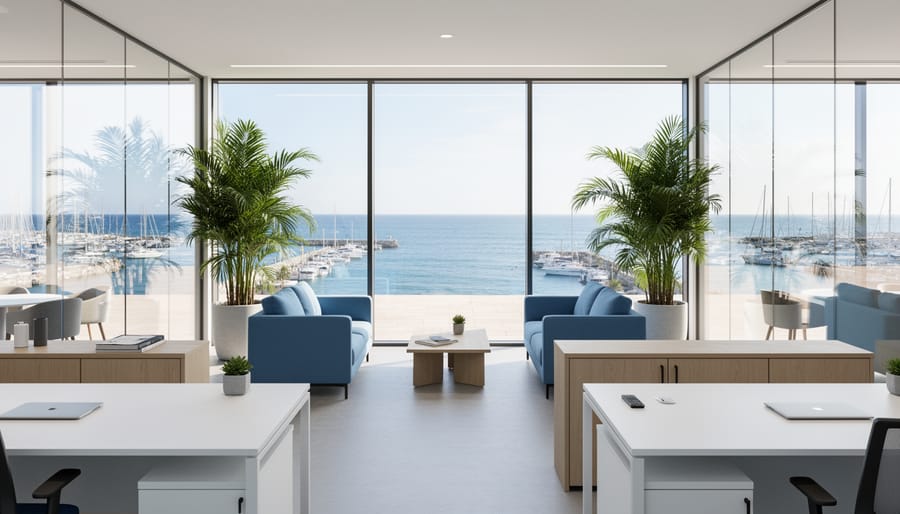
Position your coastal commercial property to catch buyers’ eyes by incorporating natural light-maximizing techniques—remove heavy window treatments, polish glass surfaces until they sparkle, and arrange furniture to create clear sightlines toward water views. Commercial spaces along the coast face unique challenges: salt air damage, humidity concerns, and buyers who expect that breezy, sophisticated aesthetic they’ve seen in high-end resort properties.
Transform empty office suites by adding coastal-inspired furnishings in whites, soft blues, and natural textures that suggest professional success without the stuffiness of traditional corporate design. Potential tenants need to envision their team thriving in the space, which means creating functional zones that demonstrate how the square footage works for modern business needs while maintaining that relaxed coastal vibe.
Address weather-related wear immediately—repaint water-stained walls, replace rusted fixtures, and ensure HVAC systems combat that coastal humidity buyers worry about. Commercial properties, whether they’re office buildings, retail storefronts, or warehouses to rent, require strategic presentation that balances the property’s functional capabilities with the lifestyle appeal coastal locations naturally provide.
Showcase outdoor spaces as premium amenities by staging patios, balconies, or courtyards with weather-resistant furniture and potted palms that suggest year-round usability. These areas often become the deciding factor for coastal commercial properties, as they offer employees or customers that connection to the waterfront environment that justifies premium lease rates and creates lasting impressions during property tours.
The Commercial Property Problem Nobody Talks About
Here’s a truth that’ll stop you in your tracks: commercial properties sit empty far longer than residential ones, and it’s not always about location or price. Y’all, I’ve watched gorgeous storefronts and office spaces in prime coastal locations languish on the market for months, sometimes years, while less impressive residential properties down the street sell within weeks.
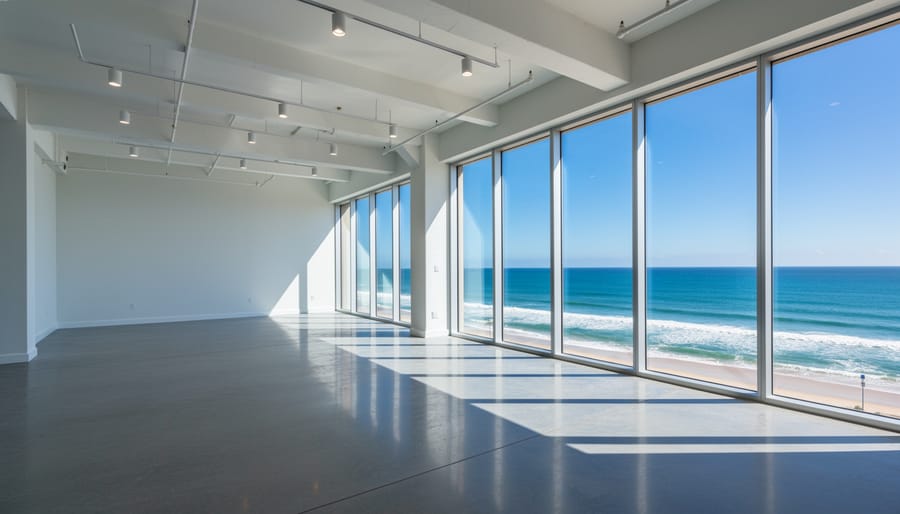
The difference? People can’t see themselves in a commercial space the way they can imagine Sunday dinners in a dining room or morning coffee on a front porch. When potential buyers or tenants walk into an empty commercial property, they’re met with echoing footsteps, blank walls, and cold concrete floors. Even with those million-dollar ocean views, an unstaged commercial space feels about as welcoming as a parking garage.
That’s the emotional disconnect right there. A restaurant owner can’t picture the bustle of happy diners when they’re staring at empty corners and fluorescent lighting. A boutique owner struggles to envision merchandise displays when confronted with nothing but vast, lifeless square footage. And that spa owner? Well, they certainly can’t feel the tranquil coastal retreat vibe when they’re looking at industrial carpeting and bare drywall.
Here’s what makes commercial staging so necessary: buyers and renters aren’t investing in what is—they’re investing in what could be. But unlike homebuyers who’ve toured dozens of staged properties and understand the concept, commercial property seekers often haven’t developed that imaginative muscle. They need to see the transformation already done, to feel the energy of a thriving business before they’ll commit their capital and dreams to the space.
What Makes Coastal Commercial Staging Different
Playing to Your Location’s Strengths
Your coastal location isn’t just a backdrop—it’s your property’s greatest selling point. The key is letting those natural assets shine without overwhelming the professional atmosphere potential tenants expect.
Start by maximizing those water views. Position furniture and workspaces to face windows that showcase the ocean or harbor. Remove any visual obstructions that block sightlines to the water. Even in a commercial setting, those glimpses of blue can transform an ordinary office into a coveted workspace.
Embrace the natural light and breezes that make coastal properties so desirable. Keep window treatments simple and functional—think crisp white plantation shutters or light linen drapes that filter sunlight without blocking it entirely. If your property has operable windows that catch that salt air, make sure they’re clean and working smoothly.
The coastal vibe doesn’t mean sacrificing professionalism. Choose a color palette inspired by the shoreline—soft sandy neutrals, weathered wood tones, and touches of seafoam or slate blue. These colors evoke that relaxed coastal feeling while maintaining the polished look commercial clients need. Add subtle nods to the location through artwork featuring local landmarks or natural textures like rope accents and driftwood pieces, keeping everything tasteful and understated.
The Balance Between Business and Beach
Here’s the sweet spot y’all need to find: coastal charm that still means business. When staging commercial properties near the water, you’re walking a fine line between embracing that breezy, sun-kissed atmosphere and maintaining the professional credibility potential buyers or tenants expect.
Think about it this way—nobody wants their office space looking like a beach house rental. The goal is to hint at the coastal lifestyle without turning the space into a permanent vacation mindset. Use a refined color palette inspired by the shore—soft grays, warm whites, and weathered blues—rather than loud tropical prints or beach-themed décor. Natural textures like jute rugs, linen upholstery, and whitewashed wood bring in that waterfront appeal while keeping things sophisticated.
The furniture should be functional and business-appropriate, but with clean lines that echo coastal minimalism. A waiting area might feature comfortable seating in sandy neutrals, while conference rooms stay crisp and professional with just a touch of maritime inspiration in the artwork or lighting fixtures. This balanced approach helps buyers envision success in a space that also celebrates its beautiful location.
Staging Strategies That Work for Different Commercial Spaces
Retail Storefronts and Boutiques
When staging a retail storefront in a coastal market, that first impression is everything. Your goal is to help prospective tenants envision shoppers strolling in from a beach day or weekend getaway, eager to browse. Start by creating an inviting entryway that beckons customers inside—think fresh coastal wreaths on the door, potted palms flanking the entrance, or a charming chalkboard sign that suggests the kind of welcome a future business might offer.
Inside, use coastal elements strategically to paint a lifestyle picture without overwhelming the space. A few carefully placed items like woven baskets, light wood fixtures, or soft linen displays can suggest the relaxed elegance that draws both tourists and locals. Consider the natural flow of foot traffic through the space. Arrange simple furnishings or display pieces to guide potential tenants through the layout, helping them visualize how customers might move from browsing to checkout.
Keep window displays fresh and uncluttered—natural light is your best friend in coastal retail spaces. A simple vignette featuring nautical rope, driftwood accents, or sea glass can spark imagination without dictating a specific retail concept, allowing various business owners to see their own vision taking shape.
Office Spaces and Professional Suites
Professional spaces near the coast deserve staging that honors both the need for credibility and the relaxed elegance of waterfront living. When you’re preparing office suites or medical practices for the market, think of it as creating an environment where folks feel instantly at ease while maintaining complete confidence in the business itself.
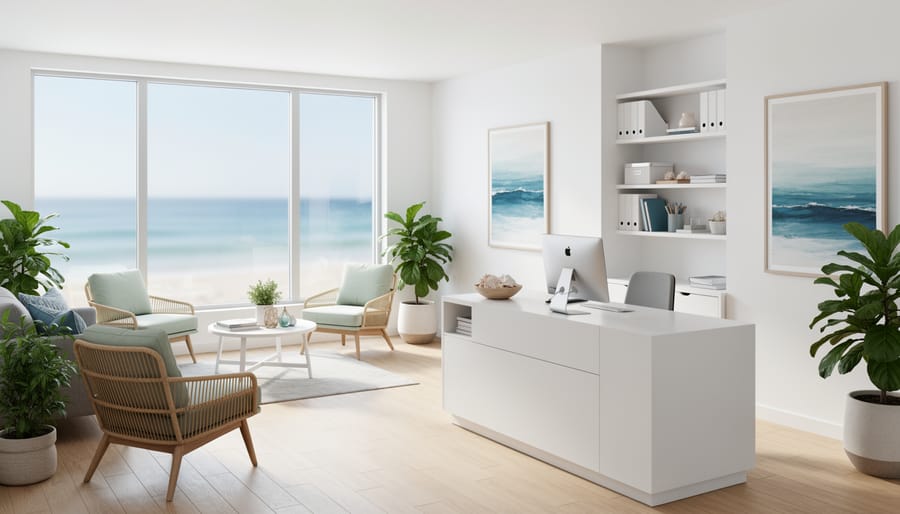
Start with your reception area—it’s the handshake of your property. A clean-lined desk in weathered oak or driftwood-toned finish sets a professional tone without feeling stuffy. Add seating upholstered in easy-care fabrics featuring soft blues, sandy neutrals, or sage greens that whisper coastal without shouting beach party. A few carefully chosen pieces like a coral sculpture or framed coastal photography bring visual interest without cluttering the space.
Conference rooms benefit from uncluttered tables and comfortable seating that encourages productive meetings. Keep window treatments simple to maximize those water views—they’re your best selling point. Natural light streaming through clean windows does more for productivity than any fluorescent fixture ever could.
Private offices should feel competent yet inviting. A tidy desk, one or two coastal accent pieces, and plenty of natural light create spaces where professionals can envision themselves thriving. Remember, you’re selling the lifestyle along with the square footage—that perfect balance of getting down to business while enjoying the coastal good life.
Waterfront Restaurants and Hospitality Venues
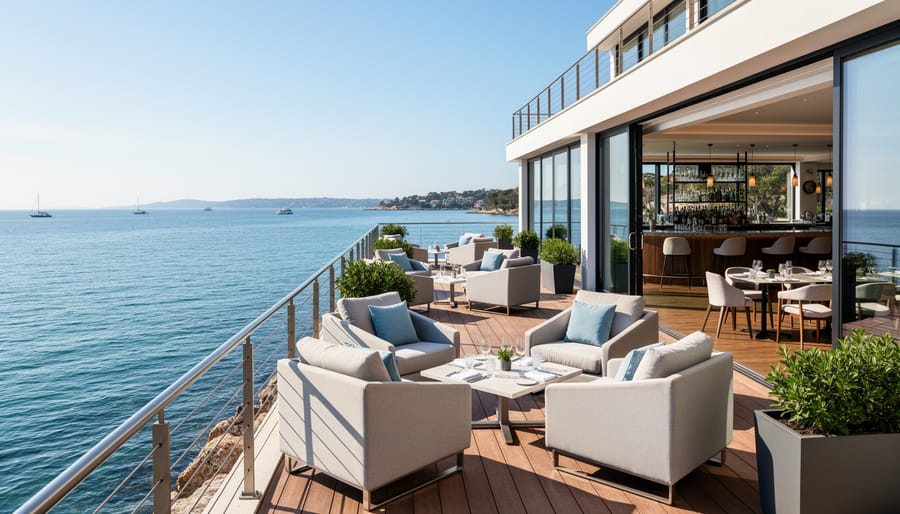
When it comes to waterfront dining establishments and hospitality spaces, the view is your star attraction, and everything else should support that leading lady. Start by ensuring every window is sparkling clean—salt air and coastal breezes can leave residue that diminishes those breathtaking water vistas. Remove any dated signage or promotional materials that might distract potential buyers from envisioning their own concept.
Create intimate seating vignettes near windows to showcase the connection between indoor comfort and outdoor beauty. A simple bistro table set for two with coastal-inspired place settings tells a story of romantic evenings and memorable gatherings. Choose neutral linens with subtle nautical touches—think crisp whites with navy accents rather than loud patterns that lock buyers into one specific theme.
Lighting plays a crucial role in hospitality staging. Demonstrate how the space transitions from bright, cheerful lunch service to warm, intimate dinner ambiance. Consider adding dimmers if they’re not already installed, and showcase attractive pendant fixtures that complement coastal architecture without overwhelming the space.
Fresh flowers, preferably local coastal varieties, add life and suggest the possibility of farm-to-table freshness. The goal is helping prospective buyers see themselves welcoming happy guests to a thriving establishment where good food, beautiful views, and Southern hospitality naturally come together.
The Cost Reality and Return on Investment
Let’s talk real numbers, because staging a coastal commercial property is an investment that deserves honest consideration. The typical staging budget runs anywhere from $3,000 to $15,000, depending on the property size and how much work needs doing. Now, before you get sticker shock, consider this: properly staged coastal commercial properties often sell or lease 30-50% faster than unstaged ones, and many command premium prices that more than offset those initial costs.
The sweet spot in coastal markets comes from understanding where to put your dollars. Save money on basics like fresh paint in soft, neutral coastal tones and thorough deep cleaning—these you can handle yourself or hire locally at reasonable rates. Where you’ll want to open the wallet a bit more is on quality furniture placement that showcases the space’s flow and potential, especially in high-traffic areas and those stunning water-view spots that make coastal properties special.
Budget-friendly approaches work beautifully when you’re strategic. Consider renting furniture instead of buying, which cuts costs by half or more. Partner with local artisans for coastal-inspired artwork rather than big-name galleries. Use natural elements like driftwood, sea glass, and native plants to bring that beachy feel without breaking the bank.
The real return comes from positioning. A well-staged coastal office building that sits empty for six months costs you far more in lost rent than a $10,000 staging investment that gets it leased within weeks. Commercial tenants and buyers in coastal areas expect a certain aesthetic—they’re drawn to that breezy, sophisticated vibe that says “success lives here.” When you deliver that vision through thoughtful staging, you’re not just decorating; you’re accelerating your return and maximizing your property’s market value in a competitive coastal landscape.
Working With What’s Already There
There’s something mighty special about a coastal commercial space with good bones, and honey, the best staging doesn’t try to hide those beautiful architectural features—it celebrates them.
Those soaring ceilings? They’re not a decorating challenge, they’re your ticket to creating an airy, open atmosphere that buyers dream about. Hang pendant lights at varying heights to draw the eye upward and make the space feel intentional. Large windows deserve center stage, so resist the urge to cover them with heavy treatments. Keep window dressings minimal—sheer linen panels or even leaving them bare lets that gorgeous natural light do the heavy lifting.
If you’re blessed with weathered wood or exposed beams, don’t even think about painting over that character. These elements tell a story about the property’s coastal heritage, and potential buyers eat that up. Instead, let them shine by keeping surrounding colors neutral and complementary.
Original brick or concrete? Perfect. These textures add authenticity that new construction simply can’t replicate. Work with these materials by incorporating soft textiles and organic elements that balance the hard surfaces without fighting them.
The key is stepping back and asking yourself what makes this space uniquely coastal and commercial. Then build your staging around those elements rather than trying to transform them into something they’re not. It’s like cooking with fresh local ingredients—you don’t need fancy techniques when you’re starting with quality.
When you think about it, staging your coastal commercial property isn’t really an expense—it’s an invitation. You’re welcoming the right tenant or buyer to see past empty walls and imagine their dream business thriving in that sun-drenched space overlooking the water. Whether you’re working with a harborside restaurant shell or a beachfront retail opportunity, the right presentation bridges the gap between what is and what could be.
We’ve seen time and again how thoughtfully staged commercial properties spend less time on the market and command better lease terms. That’s not just good business sense—it’s smart stewardship of your coastal investment. By honoring the natural beauty of your waterfront location while showcasing the practical possibilities within those walls, you’re doing more than decorating. You’re storytelling.
For property owners and brokers working in our cherished coastal communities, staging represents your best chance to stand out in competitive markets. It shows respect for potential tenants who are searching for their perfect spot, and it demonstrates confidence in the property itself. The ocean has always drawn dreamers and doers to our shores—your beautifully staged space might just be the lighthouse that guides them home to their next business venture.