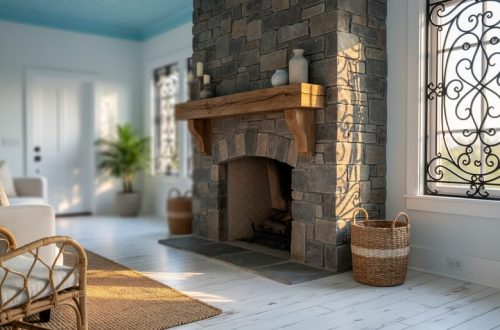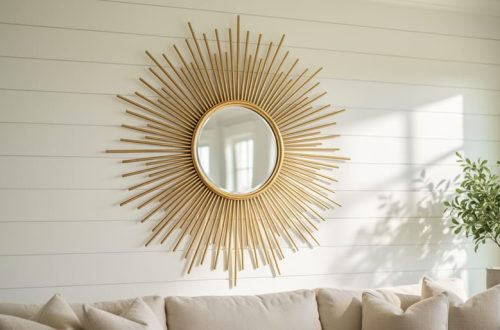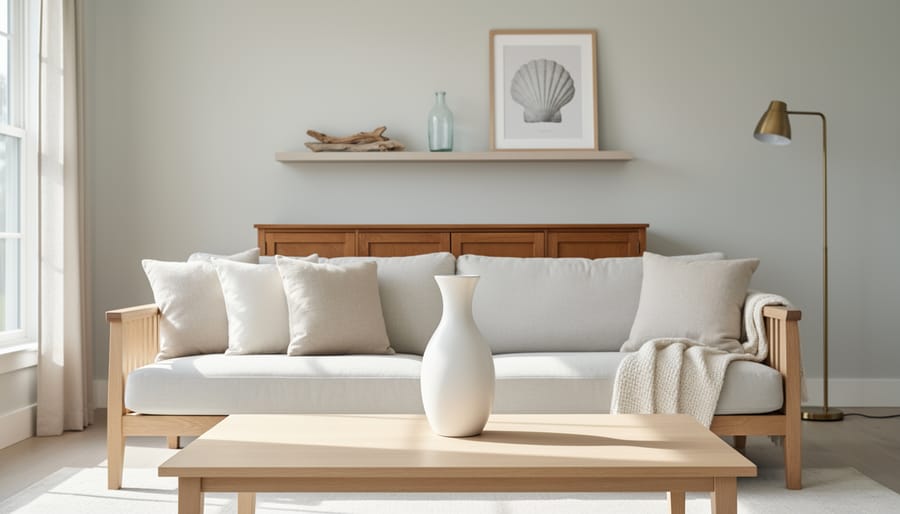
Minimalist home decor strips away the excess to reveal what truly matters: clean lines, intentional choices, and spaces that breathe. The approach centers on three principles that work beautifully in any home: keeping only what serves a purpose or brings joy, choosing quality over quantity, and creating visual calm through neutral palettes and uncluttered surfaces. For Southern homeowners, this doesn’t mean abandoning warmth or hospitality. It means letting your grandmother’s heirloom sideboard shine without competing with a dozen other pieces, or showcasing that collection of coastal finds on a single floating shelf rather than crowding every surface.
The beauty of minimalist design lies in its flexibility. You’re not required to paint everything white or toss your favorite pieces. Instead, you’re making deliberate choices about what stays and how it’s displayed. A room with five carefully selected items tells a clearer story than one packed with twenty. The extra breathing room actually makes your space feel larger and more inviting, which aligns perfectly with Southern hospitality. Guests can appreciate your home’s character without visual overwhelm.
Getting started requires honest assessment of each room and a willingness to part with duplicates, broken items, and pieces that no longer serve you. Begin with surfaces, clear the clutter magnets like coffee tables and countertops, then move to larger furniture arrangements. The process takes time, but the result is a home that feels both peaceful and purposeful, where every element earns its place.
The Southern Shift Toward Simplicity
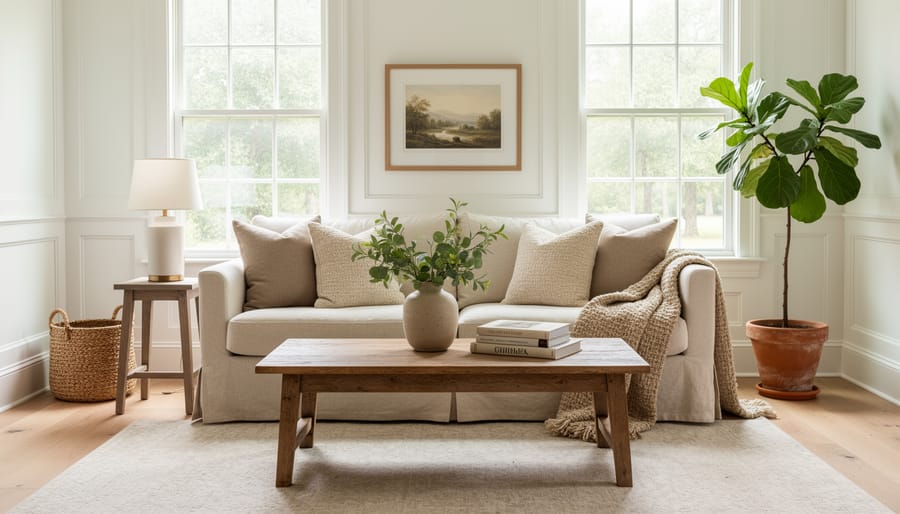
Something interesting is happening in Southern homes. Walk through neighborhoods from Charleston to Savannah, and you’ll notice a shift in what catches your eye through those front windows. The heavy drapes are coming down. The tchotchke-covered surfaces are clearing. The formula of “more is more” that defined traditional Southern interiors for generations is giving way to something quieter.
This isn’t about abandoning who we are. Southern homeowners are discovering that minimalist design actually supports the way we live now, not in spite of our traditions, but because of changing priorities. Younger families are choosing experiences over accumulating things. Empty nesters are downsizing from sprawling colonials to coastal cottages. Remote work means our homes serve more functions than ever, and visual calm matters when your dining table doubles as your office.
Coastal living has played an unexpected role here. The breezy, pared-down aesthetic of beach houses, where sand and salt air naturally discourage clutter, is migrating inland. People are asking: if I can breathe easier in my beach place with half the stuff, why am I drowning in my everyday home?
The beauty of minimalist principles in Southern spaces is that they don’t demand we abandon warmth for sterility. A single treasured quilt displayed on a wall carries more impact than a dozen scattered pillows. Grandmother’s dining table gets the attention it deserves when it’s not competing with layers of seasonal centerpieces. Clean lines and breathing room don’t erase Southern hospitality, they create the canvas for it. The welcome is still there. It’s just not shouting anymore.
Core Principles of Minimalist Home Decor with Southern Soul
The Edit: What to Keep and What to Let Go
The hardest part of embracing minimalist home decor isn’t deciding what to keep, it’s giving yourself permission to let go. Start by pulling everything out of a single room and asking one question about each item: Does this serve a purpose or bring genuine joy? Not guilt, not obligation, but actual happiness when you look at it.
Your grandmother’s quilt that still graces the guest bed? Keep it. The set of commemorative plates from a vacation you barely remember, collecting dust in the hutch? Those can go. The difference matters. Southern homes carry stories, and minimalism doesn’t mean erasing them. It means letting the meaningful pieces breathe instead of competing with clutter.
Create three piles: keep, donate, and decide later. That third pile is your grace period. Box it up, date it, and store it out of sight for three months. If you haven’t missed a single item, you have your answer. This works particularly well for inherited collections, you might discover you’re keeping things out of guilt rather than genuine attachment.
For sentimental items you can’t display, take high-quality photos and create a digital album. You’ll preserve the memory without surrendering floor space. And here’s the real secret: the fewer things you own, the more each one gets to shine. That silver tea service becomes a statement piece rather than one more thing on a crowded sideboard.
Color Palettes That Work in Southern Light
Southern light has a particular quality, golden, persistent, and unforgiving of color missteps. The abundant sunshine streaming through your windows will amplify whatever palette you choose, making warm whites the smartest foundation for minimalist Southern spaces. Skip the stark, cool whites that work in Northern lofts; they’ll read sterile under our sun. Instead, reach for creams with subtle yellow or pink undertones, shades like ivory, linen white, or warm cotton that glow rather than glare in afternoon light.
Coastal blues anchor minimalist palettes without overwhelming sparse rooms. Think faded denim, weathered sage-blue, or soft seafoam as accent colors in textiles or a single statement piece. These hues reference the region’s waterways while maintaining restraint. Natural wood tones, honey pine, bleached oak, warm walnut, add necessary warmth and prevent minimalist spaces from feeling cold. Southern humidity actually benefits natural wood finishes, developing a patina that enhances minimalist authenticity.
Layer your neutrals rather than relying on a single shade. Pair warm white walls with oatmeal linen curtains and caramel leather seating. Test paint samples on different walls and observe them throughout the day; Southern light shifts dramatically from morning’s soft glow to midday’s intensity. The right palette should feel calm at noon and inviting at dusk.
Room-by-Room Minimalist Approach for Southern Homes
Living Spaces: Conversation Over Clutter
Southern living rooms have always been about gathering people together, and minimalism doesn’t change that, it just removes the distractions. Start by arranging seating to face each other rather than just pointing at a television. A quality sofa paired with two comfortable chairs creates conversation zones without filling every wall. Choose pieces with clean lines but generous proportions; Southern hospitality doesn’t mean cramped seating.
Keep surfaces clear by designating one beautiful tray or bowl for remotes and essentials, then resist the urge to crowd end tables with decorative items. A single statement lamp provides both function and visual interest without clutter. Built-in furniture along one wall can hide books, games, and entertaining supplies while maintaining clean sight lines across the room.
The real test of minimalist Southern living rooms is whether they still feel welcoming when guests arrive. Leave space to pull up extra seating, maintain good lighting for conversation, and resist filling empty corners just because they’re empty. That breathing room is what makes people want to settle in and stay awhile.
Kitchens: Function Meets Southern Hospitality
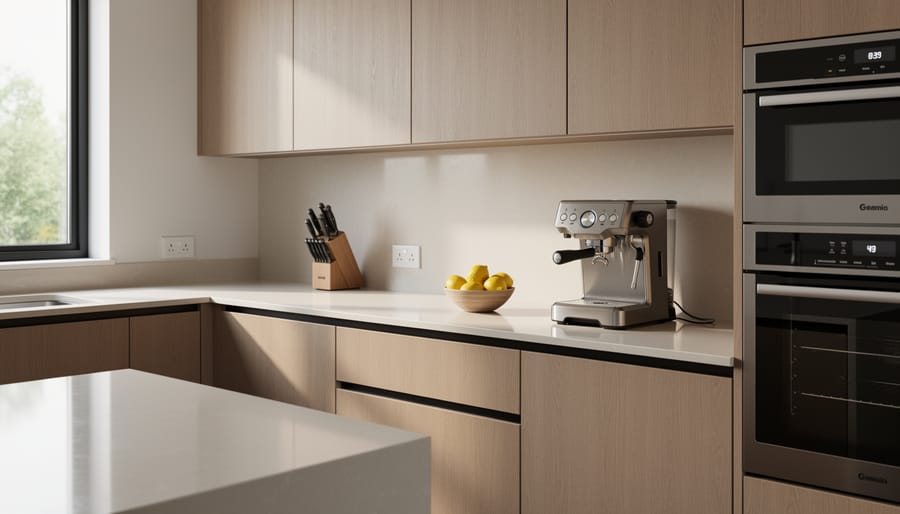
Southern kitchens have always been the heart of the home, where biscuits rise and Sunday suppers come together. A minimalist approach doesn’t change that, it just gives you more room to work. The key is concealing what you don’t need to see while keeping essentials within reach.
Start with your countertops. Clear everything except your coffee maker or one beautiful cutting board. Those matching canisters collecting dust? Most of what’s inside probably lives unused for months. Store dry goods in pull-out pantry drawers or behind cabinet doors instead. Install deep storage shelving in your pantry to maximize vertical space without visual clutter.
Your appliances deserve the same scrutiny. That bread maker you used twice in 2024? Donate it. Keep only what you actually use weekly, and store occasional-use items like your stand mixer in a lower cabinet. Choose simple open shelving for everyday dishes, white plates, clear glasses, and limit what you display to pieces you genuinely love.
The result? A kitchen where you can spread out when you’re making Sunday dinner for twelve, with clean surfaces that make weeknight cooking feel less chaotic. You’re not abandoning Southern hospitality; you’re making room for it to breathe.
Coastal-Inspired Bedrooms and Bathrooms
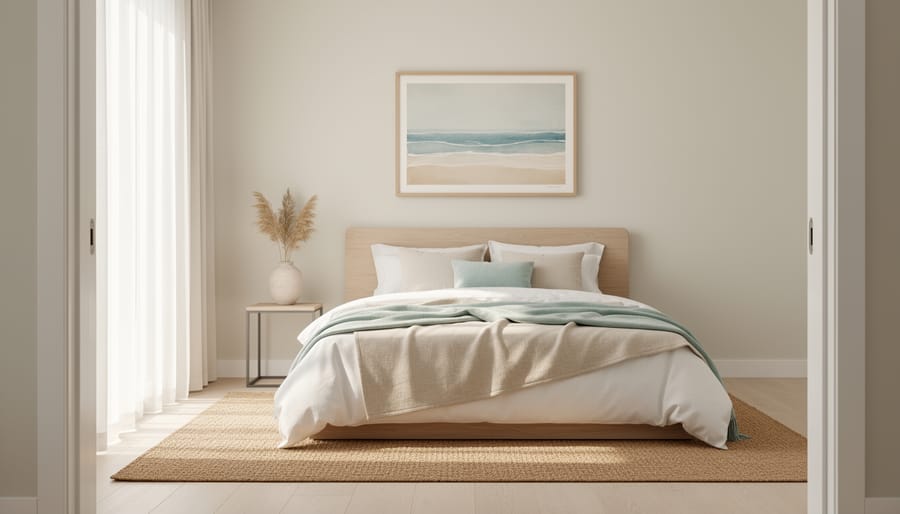
Your bedroom and bathroom should feel like a coastal retreat, the kind of place where you exhale the moment you walk in. Start with the bed: crisp white or oatmeal linens in linen or cotton, layered simply without a dozen throw pillows. One textured throw at the foot, maximum two pillows for sleeping, and you’re done. A low-profile bed frame in natural wood or even a simple platform keeps the floor visible and the room airy.
In bathrooms, think spa rather than storage showroom. Tuck toiletries into drawers or a single woven basket under the sink. Display only what earns its place, a glass soap dispenser, white towels rolled in a shallow tray, maybe a small succulent on the windowsill. Swap busy shower curtains for a simple white or striped linen version, and replace plastic bottles with matching ceramic pump dispensers.
Paint both spaces in warm whites, soft sand, or pale gray-blue, colors that catch Southern morning light without glaring. A single piece of coastal art or a driftwood mirror is enough. The goal isn’t sterile; it’s serene. These rooms should quiet your mind, not demand attention.
Sourcing Minimalist Decor: Quality Pieces Worth the Investment
The home décor landscape has changed dramatically, with the online market alone projected to reach $134.52 billion in 2026. That growth means more choices than ever, but for minimalist home décor, the goal isn’t to buy more, it’s to buy better.
Start by identifying your anchor pieces: the sofa that’ll anchor your living room for the next decade, the dining table where your family will gather for years to come, the bed frame that makes you smile every morning. These foundational items deserve your biggest investment because they set the tone for every other decision. Look for solid wood construction, classic lines that won’t feel dated in three years, and neutral upholstery in natural fabrics like linen or cotton that age gracefully. A $2,000 sofa that lasts fifteen years costs less per year than a $500 one you replace every three.
For shopping strategies, blend online convenience with in-person assessment. Browse online retailers to research styles, dimensions, and price ranges, but visit showrooms to test furniture comfort and examine construction details. Check joinery on wooden pieces, sit on chairs for longer than feels normal, open drawers to assess glide quality. Southern brick-and-mortar stores often carry brands suited to our climate, humidity-resistant finishes and breathable fabrics matter here.
Consider artisan markets and local craftspeople for unique pieces that add personality without clutter. A single handmade ceramic bowl or a locally crafted side table brings more character than a shelf full of mass-produced accessories. Focus your budget on items you touch daily, kitchen essentials, seating, bedding, and save on purely decorative elements. Quality doesn’t always mean expensive; it means thoughtfully made, honestly constructed, and built to last beyond the next design trend.
Common Minimalist Mistakes in Southern Homes
The rush to declutter can strip a home of its soul faster than you’d think. Southern homeowners new to minimalism often swing too far in the opposite direction, creating spaces that feel more like sterile showrooms than lived-in homes. The most common mistake is treating minimalism as a rigid aesthetic rather than a thoughtful approach to living.
Going too stark is the cardinal sin. White walls, white furniture, and nothing else might photograph well, but they don’t hold up to Southern humidity, muddy paws after rain, or the reality of family life. This is especially true in coastal areas, where you need to consider coastal home factors like salt air and moisture before choosing materials that can’t handle the environment.
Another pitfall is tossing everything with history. Your grandmother’s quilt or your grandfather’s hunting prints aren’t clutter, they’re memory and meaning. Minimalism asks you to be intentional, not emotionless. Keep pieces that tell your story and display them properly rather than surrounding them with visual noise.
Climate considerations matter more than design blogs suggest. Floor-to-ceiling windows without curtains might look clean and modern, but they’ll bake you alive in July and drive up your cooling bills. Southern minimalism needs to accommodate shade, airflow, and practical living.
Finally, don’t abandon hospitality in pursuit of perfection. A minimalist home shouldn’t make guests afraid to sit down or put their glass on a table. Keep comfort and warmth, just edit the excess.
Making Minimalism Work on Any Budget
Contrary to what the booming home decor market might suggest, with projections reaching $258.1 billion in 2026, minimalism doesn’t require a massive budget. In fact, the philosophy itself pushes back against endless spending. You’re buying less, which frees up resources to choose better when you do purchase.
Start by recognizing that decluttering costs nothing but time. Removing what doesn’t serve you creates instant transformation. That ornate side table you inherited but never loved? Sell it and put the money toward a single piece you’ll actually use. Facebook Marketplace, estate sales, and consignment shops across the South are goldmines for quality secondhand furniture that fits minimalist aesthetics, solid wood pieces, vintage brass lamps, and simple ceramics that cost a fraction of retail.
Here’s a strategic approach that won’t drain your savings:
- Begin with a thorough declutter of one room, removing everything that doesn’t serve a purpose or bring genuine joy.
- Invest in one statement piece per room, a quality sofa, a handcrafted dining table, or a beautiful rug that anchors the space.
- Repurpose what you already own by stripping away excess: remove decorative pillows, clear countertops, and edit bookshelves down to favorites.
- Shop secondhand first for additional pieces, focusing on solid construction and timeless design over trendy finishes.
- Gradually upgrade items as budget allows, replacing lower-quality pieces with investments that’ll last decades.
DIY projects work beautifully within minimalist spaces. Paint an old dresser in warm white, recover chair cushions in natural linen, or frame simple botanical prints. The online home decor market’s growth to $134.52 billion in 2026 means more accessible options than ever, but resist the temptation to fill every corner. Wait until you know exactly what a space needs, then find it intentionally. Your grandmother understood this instinctively, she bought once and bought well, which is minimalism’s heart.
Minimalist home decor isn’t about erasing who you are or where you come from. It’s about creating space for what matters most, whether that’s your grandmother’s sideboard, Sunday suppers with the whole family, or simply breathing a little easier in rooms that used to feel cluttered and overwhelming.
The beauty of Southern minimalism lies in its flexibility. You don’t have to choose between clean lines and genuine warmth, between hospitality and simplicity. Start with one room, one drawer, one surface. Keep what tells your story and serves your life. Let go of what doesn’t.
Your home should feel like yours, not a catalog page, not a designer’s portfolio, but a reflection of how you actually live and what you genuinely love. Minimalism gives you permission to honor that, to edit thoughtfully rather than fill mindlessly.
The porch swing stays. The open counters welcome guests. The breathing room just makes everything else shine brighter. That’s minimalism with a Southern soul, and it’s been waiting for you all along.