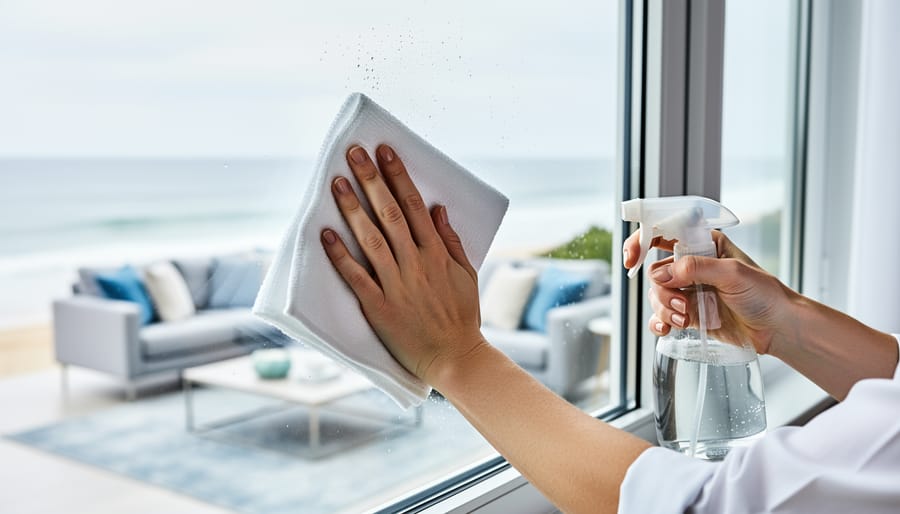
Keeping your windows crystal clear year-round requires a simple routine, not heroic weekend efforts. A proper home window upkeep schedule combines monthly quick cleans with seasonal deep scrubs, using the right tools and techniques to prevent buildup before it becomes stubborn grime. For those of us in Southern coastal homes, where salt spray and humidity wage constant war on glass, this routine becomes even more essential to preserving that pristine coastal curb appeal.
The secret isn’t working harder. It’s working smarter with a consistent schedule that fits your life. Most homeowners can maintain sparkling windows with just 15 minutes of attention each month, plus two deeper sessions timed with spring and fall. This approach prevents the buildup that makes window cleaning feel like an impossible chore and keeps natural light flooding your rooms the way it should.
Think of window maintenance the same way you think about sweeping floors or wiping counters. Nobody waits six months to clean their kitchen, yet windows often get ignored until you can barely see through them. The truth is, regular light maintenance takes far less time than scrubbing months of accumulated dirt, pollen, and water spots.
In coastal regions, where afternoon thunderstorms leave mineral deposits and morning dew carries salt from the ocean breeze, this routine becomes your best defense against permanently etched glass and corroded frames. The good news? Once you establish the rhythm, cleaning windows inside and out becomes second nature.
What You’ll Need for Proper Window Care
Gathering the right supplies before you start makes window cleaning far less frustrating and helps you achieve that streak-free shine without multiple trips to the hardware store. The good news is you don’t need expensive specialty products to keep your windows sparkling, though a few quality tools make the work faster and easier.
For basic cleaning, you’ll need:
- Two buckets (one for washing, one for rinsing)
- A squeegee with a rubber blade, 10 to 14 inches wide
- Microfiber cloths or lint-free rags for detailing
- A soft-bristle brush or sponge for scrubbing
- An extension pole for second-story windows
- A sturdy stepladder rated for your weight
- Rubber gloves to protect your hands
- A spray bottle for spot cleaning
For cleaning solutions, you have choices. Commercial window cleaners work well, but many Southern homeowners swear by a simple mixture of one part white vinegar to ten parts water. This DIY solution cuts through salt residue and hard water spots without harsh chemicals. Add a drop of dish soap if you’re dealing with stubborn grime or pollen buildup. Some folks still use crumpled newspaper for the final buff, though microfiber cloths have largely replaced this old-school method.
Exterior windows need more aggressive cleaning, especially if you’re battling coastal salt spray. Keep a separate bucket and scrub brush designated for outside work, since you’ll encounter dirt, cobwebs, and debris you don’t want tracking indoors. For homes with multiple stories, invest in a quality extension pole that locks securely. Telescoping poles that reach twelve to twenty feet let you clean upper windows from the ground, which is safer than climbing a ladder on every window.
Before You Start: Safety and Weather Considerations
Window cleaning might seem straightforward, but working at heights and dealing with older fixtures requires serious attention to safety. Before you grab your squeegee and climb that ladder, take time to assess your situation and plan for the unique conditions Southern coastal homes present.
If you’re working on second-story windows, ladder stability is non-negotiable. Place your ladder on firm, level ground, never on loose soil or grass softened by coastal humidity. The base should extend one foot away from the house for every four feet of height. Have someone spot you, and don’t overreach to the side, which shifts your center of gravity.
Windows that won’t open easily deserve patience, not force. Older Southern homes often have windows painted shut or swollen from humidity. Run a utility knife along painted seams before attempting to open them, and tap gently with a rubber mallet rather than prying with tools that might crack the glass or damage the frame. Understanding coastal home basics helps you anticipate these moisture-related challenges before they become problems.
Weather timing matters enormously in coastal climates. Never clean windows in direct sunlight, the solution dries too quickly, leaving streaks and spots. Early morning or overcast days work best. Avoid windy conditions that blow dust onto wet glass, and check your windows for storm damage after hurricane season before you start cleaning. Cracked panes or compromised seals need repair first, not just a wipe-down.
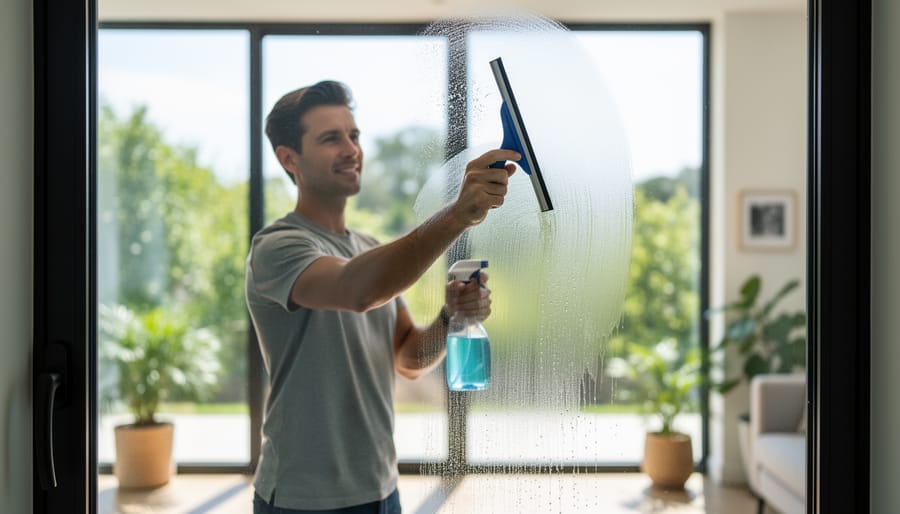
Your Step-by-Step Window Cleaning Process
Tackling Coastal Challenges: Salt and Humidity
Salt spray and humidity create a persistent hazy film on coastal windows that standard cleaning won’t fully remove. This residue isn’t just dirt, it’s a combination of salt crystals, mineral deposits, and moisture that bonds to glass over time.
For salt buildup, start with a vinegar solution (one part white vinegar to four parts water). The acidity breaks down mineral deposits without scratching. Spray generously and let it sit for two to three minutes before wiping. For stubborn areas, use a paste of baking soda and water, rubbing gently in circular motions with a soft cloth.
Mildew typically appears around window frames and sills first. Mix one cup bleach with one gallon water, apply to affected areas, and let stand for ten minutes before rinsing thoroughly. Always work in a ventilated space and wear gloves.
To prevent that cloudy film from returning quickly, rinse windows with distilled water as your final step, tap water contains minerals that compound the problem in humid climates. Some coastal homeowners apply a thin coat of car wax to exterior glass every few months, creating a barrier that repels salt spray and makes future cleaning easier.

Seasonal Maintenance: When and How Often to Clean

The rhythm of window cleaning in Southern coastal homes follows nature’s calendar more than any rigid schedule. Spring demands your immediate attention, pollen coats windows in a thick yellow-green film that blocks light and triggers allergies. Plan a thorough cleaning in late March or early April, right after the worst pollen storms pass but before summer humidity makes outdoor work uncomfortable. You’ll likely need a second spring touch-up in May.
Summer brings its own challenges. Clean windows thoroughly in late August or early September as part of hurricane season preparation. Clear glass lets you assess storm damage afterward, and you’ll want to remove any salt spray immediately following coastal storms. The same salt air damage that affects masonry and metal works on windows too, leaving a hazy film that becomes harder to remove the longer it sits.
Fall offers ideal cleaning conditions. Cooler temperatures, lower humidity, and calmer weather make October perfect for a thorough session. This cleaning maximizes brightness heading into shorter winter days when natural light becomes precious.
Winter maintenance can be lighter, a quick interior wipe-down monthly keeps glass clear without braving cold snaps. However, if you’ve had particularly stormy weather or notice visibility declining, don’t wait for spring.
For realistic upkeep, aim for four deep cleans yearly (one per season) with monthly quick wipes of high-traffic interior windows and glass doors. Coastal homes within a mile of the beach need more frequent exterior attention, every six to eight weeks, due to constant salt exposure. Homes farther inland can often stretch to quarterly exterior cleaning unless specific weather events demand it.
The goal isn’t perfection, it’s consistency. Regular light maintenance beats infrequent marathon sessions, and you’ll actually enjoy the view you’re working to preserve.
Protecting Your Investment Between Cleanings
Between your regular cleaning sessions, a few simple habits can dramatically reduce how often you need to break out the squeegee, particularly valuable when you’re dealing with the relentless combination of salt air and humidity that comes with coastal living.
Start by checking your window tracks and weep holes every few months. These small drainage openings at the bottom of your window frames are designed to channel water away, but they clog easily with dirt, pollen, and dead insects. When blocked, water pools against the glass and frames, leaving stubborn mineral deposits and encouraging mold growth. A quick pass with a toothbrush or pipe cleaner keeps them flowing freely.
Consider applying a rain-repellent coating to exterior glass, especially on windows that face prevailing winds or catch the most salt spray. These treatments, similar to what you’d use on a car windshield, help water bead and roll off rather than drying into spots. They typically last three to six months in coastal conditions and can cut your cleaning frequency in half.
Your landscaping plays a bigger role than you might think. Here are preventive measures that protect your windows between cleanings:
- Trim shrubs and tree branches at least two feet away from windows to prevent scratching and reduce moisture trapped against glass
- Redirect sprinklers so they don’t spray windows directly, avoiding hard water buildup
- Install gutters or repair leaking ones to prevent splash-back that carries dirt onto lower windows
- Apply a thin layer of car wax to frames and sills to repel moisture and make future cleaning easier
- Check window seals annually for cracks or gaps where humid air can penetrate and cause interior condensation
Finally, wipe down your screens monthly rather than waiting for your full cleaning routine. Clean screens filter the air better and prevent dirt from transferring back to freshly cleaned glass. A dry microfiber cloth takes just minutes per window and makes a noticeable difference in how quickly grime accumulates.
Checking Your Work and Troubleshooting Common Issues
Step back from your windows and check them from multiple angles, side light reveals streaks that look invisible head-on, and viewing from both inside and outside catches spots you missed. Walk through rooms at different times of day, since morning sun highlights issues that afternoon light hides.
Streaking usually means too much cleaning solution or dirty squeegee blades. Rewash with plain water and a fresh blade. Spotting that returns quickly points to minerals in your water, switch to distilled water for the final rinse. Fine scratches from improper tools can’t be fixed with cleaning; they require professional buffing or glass replacement.
Cloudiness between panes signals seal failure, not dirt. If the haze won’t wipe away from either side, moisture has infiltrated the unit. This problem worsens in humid coastal climates and demands window replacement, not more elbow grease. Similarly, visible cracks, frame rot, or windows that won’t open or close properly exceed DIY territory.
When your windows stay stubbornly dull despite proper cleaning, consider whether interior light needs boosting, sometimes brighten with mirrors positioned opposite windows rather than scrubbing glass harder. But if cleaning reveals deteriorating glazing, persistent condensation between panes, or frames pulling away from walls, call professionals. Knowing when your routine maintenance has uncovered bigger problems saves money in the long run.
Quick Answers to Window Care Questions
Homeowners regularly ask similar questions about maintaining clear windows, so let’s tackle the most common concerns that come up in Southern coastal communities.
What’s the best time of day to clean windows?
Early morning or late afternoon works best, you’ll avoid direct sunlight that causes cleaning solutions to dry too quickly and leave streaks. Overcast days are actually ideal for window cleaning.
Does newspaper really work better than paper towels?
Traditional newspaper can work well because it doesn’t leave lint, but modern inks sometimes smear. Microfiber cloths offer the best of both worlds, they’re lint-free, reusable, and won’t transfer any residue to your glass.
Can I clean windows without removing the screens?
You can spray and wipe the glass through the screen for quick touch-ups, but you won’t get truly clear windows this way. Screens trap dirt and block access to edges, so remove them at least twice a year for thorough cleaning.
How do I reach second-story windows safely?
Extension poles with microfiber pads work for many exterior windows without climbing. For windows you can’t reach safely from the ground, either clean from inside or hire professionals, ladder falls aren’t worth the risk.
Professional window cleaning typically costs between two and eight dollars per window, depending on your home’s size and accessibility. It’s worth considering once or twice a year if you have a multi-story home, especially before hosting events or during seasons when you’ll have windows open. Most homeowners find they can handle routine maintenance themselves and bring in professionals for deep cleaning or hard-to-reach areas.
Keeping your windows clear and bright doesn’t require marathon cleaning sessions or professional expertise. A simple routine, tackling your most visible windows monthly and the rest seasonally, prevents the buildup that makes cleaning feel overwhelming. Here in the coastal South, where salt spray and humidity work against us, consistency beats intensity every time.
Start small if the whole-house approach feels daunting. Clean your front-facing windows this weekend, then add the kitchen next month. Before you know it, you’ll have a rotation that keeps your home looking welcoming without consuming your Saturdays. Clear windows transform how light moves through your rooms, making spaces feel larger and more inviting while boosting your home’s curb appeal from the street.
The real beauty of a maintenance routine is how it compounds over time. Windows cleaned regularly resist stubborn buildup, meaning each session gets faster and easier. You’re not just maintaining clear glass, you’re protecting your investment, enhancing your home’s appearance, and creating brighter living spaces that celebrate the abundant sunshine our Southern coastal region offers. Those sparkling windows become a source of pride rather than a dreaded chore, and your home glows with the warmth and welcome that defines coastal living at its best.