
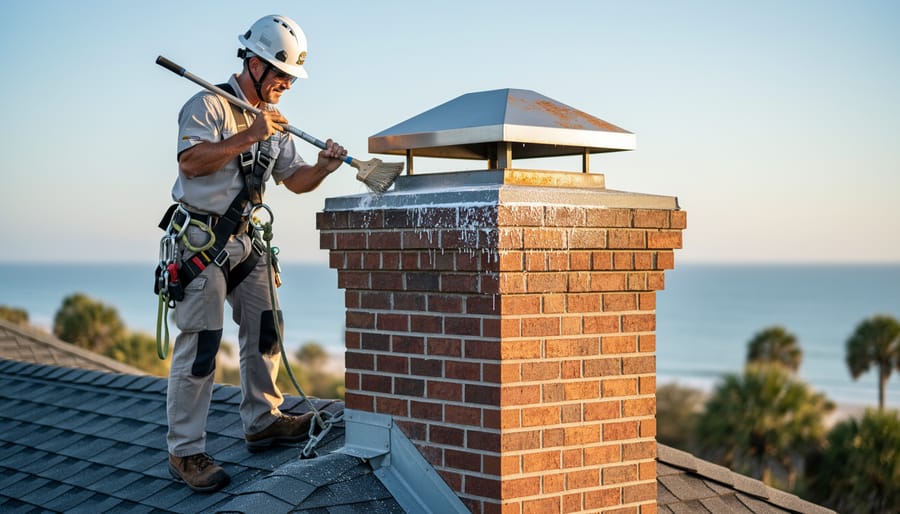
Living along Florida’s stunning shoreline means your coastal property faces challenges most inland homes never encounter. Salt air, relentless humidity, and tropical storms create a perfect storm of conditions that can wreak havoc on your chimney system, often in ways you won’t notice until real damage sets in.
Schedule biannual professional inspections to catch salt-induced corrosion before it compromises your chimney’s structural integrity. The salt spray that gives us those gorgeous ocean breezes also accelerates metal deterioration and eats away at mortar joints, making regular checkups essential rather than optional.
Apply a breathable waterproofing sealant specifically designed for coastal environments every two to three years. Standard sealants won’t stand up to our unique climate, but marine-grade products create a protective barrier while allowing moisture trapped inside to escape naturally.
Clean your chimney cap and chase cover quarterly to remove salt buildup and debris. This simple maintenance step prevents rust formation and keeps water from pooling where it shouldn’t, extending the life of these critical protective components.
Replace standard metal components with stainless steel or copper alternatives that resist coastal corrosion. While the upfront investment runs higher, these materials stand strong against our salty air and save you from frequent replacements down the road.
Whether you’re enjoying your first season by the shore or you’ve called the coast home for years, understanding these unique maintenance needs protects your investment and keeps your family safe. For Tampa Bay area homeowners, professional chimney repair services in St Petersburg can provide expert assessments tailored to our regional challenges.
The Coastal Challenge: What Makes Florida Different
Salt Air and Masonry: A Destructive Combination
Living by the water is a dream come true, but that salty sea breeze carries more than just the promise of peaceful sunsets. When you’re building a coastal home or maintaining one, understanding how salt air affects your chimney is crucial for protecting your investment.
Salt-laden moisture behaves quite differently than regular humidity. Those tiny salt particles suspended in coastal air settle into every porous surface they encounter, and brick and mortar are particularly vulnerable. Once saltwater penetrates these materials, it doesn’t just sit there peacefully. The salt crystals actually expand and contract with temperature changes and humidity levels, creating a push-and-pull effect that works against the masonry from the inside out.
This process, called salt weathering, speeds up the natural aging of your chimney considerably. The mortar joints become the first casualties, developing a crumbly texture and small gaps. Meanwhile, the bricks themselves can start flaking or developing a powdery surface. What might take decades inland can happen in just a few years along our beautiful Florida coast, making regular inspections and preventive care essential for coastal homeowners.

Hurricane Season’s Hidden Toll on Your Chimney
Living along Florida’s beautiful coast means we’re no strangers to hurricane season, but many homeowners don’t realize the toll these storms take on their chimneys. While we’re busy preparing our windows and securing outdoor furniture, our chimneys often get overlooked until problems emerge.
Hurricane-force winds can loosen or completely remove chimney caps and crown sections, leaving your flue exposed to the elements. Even tropical storms pack enough punch to dislodge mortar joints and send debris crashing into chimney structures. The driving rain that accompanies these systems doesn’t just dampen your hearth—it seeps into any vulnerable spots, accelerating deterioration from the inside out.
Salt-laden winds compound the damage, depositing corrosive residue that gradually breaks down masonry and metal components. Flying branches, roof tiles, and other storm debris can crack chimney liners or knock bricks loose, creating hazards you might not spot from ground level.
After each storm passes, it’s worth having your chimney inspected, even if everything looks fine from your porch rocker. Small issues caught early prevent major repairs down the road, keeping your coastal home safe and your fireplace ready for those surprisingly cool winter evenings by the shore.
Warning Signs Your Coastal Chimney Needs Attention
What to Look for from the Ground
You don’t need to climb a ladder to spot trouble brewing with your coastal chimney. In fact, some of the most telling warning signs are visible right from your front lawn or driveway, and catching them early can save you a heap of money down the road.
Start by looking for white, chalky staining on your chimney’s exterior bricks. This is called efflorescence, and it happens when salt and moisture push through the masonry. Down here on the coast, it’s your chimney’s way of telling you that salt air and humidity are taking their toll. While a little bit might not seem concerning, heavy deposits mean water is penetrating deeper than it should.
Take a good look at the mortar joints between your bricks too. If they’re crumbling, flaking, or look softer than they used to, that’s a red flag. Coastal conditions can turn sturdy mortar into sandy powder faster than you might expect, especially if your chimney wasn’t built with the right materials for our salty environment.
Step back and eyeball your chimney’s posture. Does it lean to one side, even just slightly? A leaning chimney isn’t charming like our historic lighthouses—it’s downright dangerous and needs immediate attention.
Finally, watch for rust-colored streaks running down the brickwork. These stains suggest metal components inside are corroding, which is common with our salt air but shouldn’t be ignored.
Interior Red Flags You Shouldn’t Ignore
While you’re keeping an eye on what’s happening outside your home, don’t forget to check inside that firebox, too. Your chimney talks to you from the interior, and trust me, you’ll want to listen when it’s trying to tell you something’s not quite right.
Start by looking for moisture where it shouldn’t be. If you notice water pooling in your firebox after a rainstorm or see dampness creeping down the chimney walls, that’s your home saying the flashing or crown needs attention. In our humid coastal climate, excess moisture can quickly turn into a bigger problem than you might imagine.
Take a good look at that damper while you’re poking around. If it’s rusted, won’t close properly, or feels like it might fall apart in your hands, it’s time for a replacement. A faulty damper not only lets your air-conditioned air escape faster than sweet tea disappears at a summer picnic, but it also invites our salty coastal air right into your chimney system.
Strange smells coming from your fireplace deserve attention, especially during Florida’s steamy months. A musty or moldy odor often means moisture has taken up residence somewhere it shouldn’t. If you’re getting smoke backing up into your living room instead of drawing up the flue, or your fires just aren’t burning like they used to, these performance issues point to blockages or structural problems that need professional eyes.

Essential Maintenance for Florida Coastal Chimneys
Your Year-Round Coastal Chimney Care Routine
Living by the coast means adjusting your home care routines to match the rhythm of the seasons, and your chimney deserves that same thoughtful attention. Here’s a practical approach to keeping your coastal chimney in beautiful working order throughout the year.
Start each quarter with a simple visual inspection. Walk around your property and take a good look at your chimney’s exterior. You’re checking for loose mortar, cracks in the masonry, or any signs of rust on the cap and flashing. It’s like giving your home a friendly once-over before problems have a chance to settle in.
For the inside of your chimney, plan on a professional cleaning at least once a year, preferably before you start using it regularly in our cooler months. Even if you only light occasional fires, that salty coastal air can cause buildup that needs addressing.
Between professional visits, there’s plenty you can do yourself. Keep your chimney cap clear of debris, especially after storms when palm fronds and Spanish moss have a way of landing where they shouldn’t. Check the caulking around your flashing every few months and reapply if you notice any gaps. A little preventive care goes a long way in protecting against water intrusion.
Consider setting reminders on your phone for these quarterly checks. Your future self will thank you when you’re avoiding costly repairs and enjoying worry-free evenings by the fire.
Waterproofing: Your Chimney’s Best Defense Against Salt Air
Living by the water is a blessing, but that salty ocean breeze can be mighty tough on your chimney. Think of waterproofing as your chimney’s raincoat – essential protection against the elements, especially in our humid coastal climate.
The key is choosing a breathable waterproofing sealant designed specifically for masonry in coastal environments. Unlike regular sealants that can trap moisture inside and cause more harm than good, breathable formulas allow water vapor to escape while keeping rain and salt spray out. This is crucial for preventing that damaging freeze-thaw cycle and salt crystallization we talked about earlier.
Most coastal chimneys benefit from reapplication every three to five years, though your specific timeline depends on your home’s exposure to the elements. If your chimney faces directly into prevailing winds or gets doused with ocean spray regularly, you might need to reseal more frequently. A good rule of thumb? When water stops beading up on the surface and starts soaking in instead, it’s time for a fresh coat.
Professional application ensures complete coverage and proper preparation of the masonry surface, which makes all the difference in how long that protection lasts.

When to Call in the Professionals
While maintaining your chimney is part of caring for your coastal style living space, some situations call for expert help. Schedule professional inspections at least once yearly, ideally before cooler months when you’ll use your fireplace more. If you notice persistent moisture problems, crumbling mortar, or structural cracks, don’t wait for your annual checkup. Strange odors, smoke backing up into your home, or visible rust on the chimney cap are red flags that need immediate attention. Licensed chimney sweeps certified by the Chimney Safety Institute of America understand Florida’s unique coastal challenges and can spot issues you might miss. Think of it like this: you wouldn’t skip your home’s hurricane prep, so don’t skimp on chimney safety either.
Common Coastal Chimney Repairs and What They Cost
Mortar Joint Repointing (Tuckpointing)
If you’ve noticed crumbling mortar between your chimney bricks, you’re experiencing one of the most common coastal chimney issues in Florida. This repair, traditionally called tuckpointing, involves removing deteriorated mortar and replacing it with fresh material. Along our shorelines, that salty air and moisture work overtime breaking down those joints, sometimes requiring attention every 10 to 15 years rather than the typical 25 to 30 years inland homes might enjoy.
The good news? Catching this early prevents water from seeping behind your brickwork and causing more serious damage. Most homeowners can expect to pay between $10 and $30 per square foot for professional repointing, though prices vary based on chimney height and accessibility. A standard chimney repair might run anywhere from $500 to $2,500, depending on how extensive the damage has become. While it’s not the most glamorous home project, keeping those mortar joints sound protects your home’s character and structural integrity for years to come.
Crown and Cap Repairs
Your chimney crown serves as the first line of defense against Florida’s salt-laden winds and driving coastal rains. Think of it as the protective cap that keeps water from seeping down into your chimney’s masonry – and y’all know how important that is when you’re living by the shore. When cracks develop or the crown starts deteriorating from constant salt exposure, water finds its way in faster than a summer thunderstorm rolls across the Gulf.
A damaged crown in coastal areas accelerates wear throughout your entire chimney system, making repairs a smart investment rather than an optional fix. Most homeowners can expect to pay between $300 and $1,200 for crown repairs, depending on the extent of damage. Complete crown replacement typically runs $900 to $3,000, with coastal properties sometimes on the higher end due to the need for specialized waterproofing treatments and salt-resistant materials that stand up to our beautiful but demanding seaside conditions.
Flashing Replacement and Rust Prevention
Living by the water means dealing with salt air’s relentless effects on metal components, and your chimney’s flashing takes quite a beating. That salty breeze that makes coastal living so delightful can turn standard galvanized steel flashing into a rusty mess faster than you can say “beach house.”
Here’s the thing about chimney flashing in Florida’s coastal regions – it’s your first line of defense against water intrusion, so you want materials that can stand up to our marine environment. Traditional metals just won’t cut it long-term. Instead, consider stainless steel or copper flashing, which resist corrosion beautifully and can last decades even with constant salt exposure.
When you’re replacing flashing, it’s worth investing in quality materials upfront. Copper develops that gorgeous patina over time that actually protects it further, while marine-grade stainless steel maintains its integrity without the maintenance fuss. Your contractor should also apply a corrosion-resistant sealant specifically formulated for coastal conditions.
Regular inspections help catch rust early, before it compromises your flashing’s seal. Look for orange discoloration, pitting, or separation where the flashing meets your chimney or roofline. Catching these issues early saves you from more extensive water damage repairs down the road.
Choosing Materials That Stand Up to Coastal Conditions
Masonry and Mortar Choices for Salt Air Exposure
When living by the beautiful Florida coast, choosing the right materials for your chimney makes all the difference between years of worry-free enjoyment and constant repairs. Standard masonry products just weren’t designed for our salty breezes and humidity.
For coastal chimneys, look for Type S mortar instead of the regular Type N you’d use inland. Type S contains higher lime content and creates a stronger bond that stands up better to salt exposure. Some folks also have good success with polymer-modified mortars that add an extra layer of protection against moisture infiltration.
When selecting bricks, go with dense, low-absorption varieties rated SW (severe weathering). These beauties resist the freeze-thaw cycles and salt damage that can plague standard bricks. Concrete masonry units should meet ASTM standards for severe weather exposure.
Consider adding a crystalline waterproofing admixture to your mortar mix. It’s like giving your chimney an invisible shield that keeps moisture out while letting it breathe naturally.
Metal Components: Stainless Steel Is Worth the Investment
Here along the Florida coast, that salty sea breeze might feel like heaven, but it’s pure mischief for standard chimney components. If you’re considering repairs, this is your golden opportunity to upgrade to marine-grade stainless steel – and trust me, it’s money well spent.
Regular steel chase covers and chimney caps rust through faster than a cast-iron skillet left out in the rain. Stainless steel components, particularly 316-grade marine stainless, stand up beautifully to our coastal conditions. While the upfront cost runs about 40-60% higher than standard materials, you’ll recoup that investment by avoiding replacements every few years.
Think of it like choosing quality outdoor furniture for your lanai – you want pieces that’ll last through countless sunrises over the Gulf. The same principle applies to your chimney. Marine-grade components resist corrosion, maintain their appearance, and protect your home’s interior from water damage that could cost thousands to repair. For coastal homeowners committed to protecting their investment, stainless steel isn’t just smart – it’s essential.
Finding the Right Chimney Professional in Coastal Florida
Finding the right chimney professional down here on Florida’s coast isn’t quite the same as hiring one for a mountain cabin up in the Smokies. Your chimney faces saltwater spray, humidity that won’t quit, and weather that can turn from sunshine to sideways rain in the blink of an eye. You need someone who truly understands these coastal challenges, not just general chimney maintenance.
Start by looking for credentials that matter. The Chimney Safety Institute of America certification is your gold standard—it shows a professional has invested in proper training. But here’s the thing: ask specifically about their experience with coastal properties. A chimney sweep who’s worked primarily inland might miss the telltale signs of salt corrosion or moisture damage that we deal with regularly by the shore.
Don’t be shy about asking questions during your initial conversation. How often do they recommend inspections for coastal homes? What’s their approach to preventing salt damage? Can they provide references from other homeowners in your area? A qualified professional should light up when discussing these coastal-specific concerns, not fumble through generic answers.
Request a detailed written estimate before any work begins. This protects both parties and shows the professional takes their craft seriously. The estimate should break down each service, from inspection to repairs, so you know exactly where your investment is going—kind of like creating a budget for refreshing your coastal beach cottage interior.
Insurance and licensing aren’t negotiable. Verify that your chimney professional carries both liability insurance and workers’ compensation. It’s not being fussy—it’s being smart about protecting your home and your peace of mind. After all, your chimney is just as important to your home’s character and safety as any design element you’ve carefully chosen.
Your chimney works hard year-round in Florida’s coastal climate, standing strong against salt spray, humidity, and those sudden afternoon showers we all know so well. Taking care of it isn’t just about checking off a maintenance task—it’s about protecting your family’s safety and preserving the investment you’ve made in your home by the sea.
The beauty of proactive maintenance is that it puts you in control. A little attention now, whether it’s scheduling annual inspections or keeping an eye out for those telltale signs of moisture damage, can save you from costly emergency repairs down the road. Think of it as giving your chimney the same loving care you’d give any cherished part of your home.
Working with qualified professionals who understand the unique challenges of our coastal environment makes all the difference. They know how salt air affects different materials and can recommend solutions that’ll stand the test of time in our beautiful but demanding climate.
Your chimney is more than just a functional feature—it’s part of what gives coastal Southern homes their character and charm. By staying on top of maintenance and addressing issues promptly, you’re not only ensuring safe operation but also preserving that timeless appeal that drew you to coastal living in the first place. Here’s to many more years of cozy evenings and worry-free enjoyment of your home sweet coastal home.


